

Oncology
Latest News
Advertisement
Latest Videos








Advertisement
More News

Coverage of patient-centered care from Patient-Centered Oncology Care, November 16-17, 2017.
Coverage of patient-centered care updates from Patient-Centered Oncology Care, November 16-17, 2017.

Magnetic resonance imaging (MRI) really makes a difference when studying men who’ve had a negative prostate biopsy, but their prostate-specific antigen goes up overtime or something changes and there’s a continuing concern for prostate cancer, said Christopher Kane, MD, professor of urology, University of California, San Diego.
A special issue of Evidence-Based Oncology™ provides full coverage of the conference, which The American Journal of Managed Care® presented November 16-17, 2017, in Philadelphia.
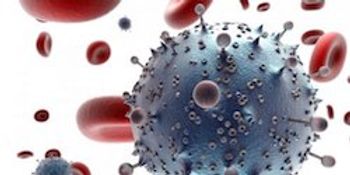
The National Comprehensive Cancer Center (NCCN) has released new NCCN Clinical Practice Guidelines in Oncology to help ensure that people living with HIV who are diagnosed with cancer receive safe and necessary treatment.
Coverage of regulatory changes from Patient-Centered Oncology Care, November 16-17, 2017.
Coverage of regulatory changes from Patient-Centered Oncology Care, November 16-17, 2017.
Coverage of regulatory changes from Patient-Centered Oncology Care, November 16-17, 2017.
Coverage of digital technology updates at Patient-Centered Oncology Care, November 16-17, 2017.
Coverage of digital technology updates from Patient-Centered Oncology Care, November 16-17, 2017.
Coverage of digital technology updates from Patient-Centered Oncology Care, November 16-17, 2017.
Coverage of the Keynote Address from Patient-Centered Oncology Care, November 16-17, 2017.
Traditionally, objective response rate (ORR) is used as the primary end point for phase 2 trials assessing the efficacy of anticancer therapies. However, in phase 2 trials of immune checkpoint inhibitors for advanced solid cancers, progression-free survival (PFS) is recommended as a primary end point over ORR, according to a study published in JAMA Oncology.
Blood or marrow transplantation (BMT) can have an impact on a patient’s cognitive functioning, affecting a survivor’s ability to integrate with a group of people and return to work. In addition, BMT recipients can experience a weakened memory, a loss of attention and concentration, and difficulty learning.

Kazia Therapeutics Limited, an oncology-focused biotechnology company, announced on Friday that it has received the FDA’s Orphan Drug Designation for its investigational drug, GDC-0084, for the treatment of glioblastoma multiforme, the most aggressive form of primary brain cancer.
Dr Alvarnas is editor in chief and director of Value-Based Analytics at City of Hope, Duarte, California.

A study to be published in the Journal of the American College of Surgeons found that a safety-net hospital in Florida could perform an esophagectomy, a highly complex operation, with fewer complications and shorter hospital stays than the national average.

Every week, The American Journal of Managed Care® recaps the top managed care news of the week, and you can now listen to it on our podcast, Managed Care Cast.

Recent study results showed larotrectinib was effective in patients with tropomyosin receptor kinase fusion-positive cancer, regardless of the age of the patient or the tumor type. In addition to implications for the treatment of genetic alterations across tumor types, these study results underscore the importance of molecular profiling of tumors, through which patients were identified for the studies, on ensuring precision medicine is used in practice while simultaneously providing a cost-effective tool.

This week, the top managed care stories included the Trump administration proposed extending the duration of short-term health plans; a report found that CAR T-cell therapies are worth their high price tags; the new issue of Evidence-Based Oncology® examined current issues in immunotherapy.

Coverage of our peer-reviewed research and news reporting in the healthcare and mainstream press.

Cell-free DNA derived from liquid biopsy offers the potential for minimally invasive genome-wide profiling of tumor alterations without tumor biopsy and can predict patient survival outcomes for patients with metastatic triple-negative breast cancer, according to a team of researchers.
Advertisement
Advertisement
Trending on AJMC
1
Bepirovirsen Approval Offers New Option for Chronic HBV Treatment
2
Inhaled Amikacin Raises Culture Conversion in New MAC Lung Disease
3
Bronchiectasis GWAS Highlights Candidate Targets Shared With COPD
4
Extension Studies in TPIP Show Promise in PAH, PH-ILD
5