Oncology
Latest News
Advertisement
Latest Videos





Advertisement
More News

The Cancer Surveillance and Outcomes Research Team at the University of Michigan Comprehensive Cancer Center recently developed an interactive online tool to help patients with breast cancer understand their treatment options more fully.

Providers should be involved in new reimbursement model development from day 1, said Roger Brito, DO, national director for oncology, Aetna.

Chimeric antigen receptor (CAR) T-cell therapy has been named the Advance of the Year in ASCO’s Clinical Cancer Advances 2018. According to the annual report, CAR T-cell therapy is “poised to transform the outlook for children and adults with certain otherwise incurable cancers."

As a result of the Medicare Outpatient Prospective Payment System rule that took effect on January 1, 85% of 340B hospitals will see net payment increases in 2018. Rural hospitals will reap the largest benefits, according to an analysis conducted by Avalere and commissioned by Community Oncology Alliance.

Nat Turner, co-founder and CEO of Flatiron Health, explains how data can be used for finding potential patients to be included in clinical trials.

A team of 20 scientists in the fields of informatics, statistics, epidemiology, systematic reviews, cancer biology, and nutrition have developed a tool that will assess the links in published human studies between lifestyle factors and cancer.
As health information technology (IT) tools are continually being introduced into the healthcare sphere, organizations are utilizing these tools to optimize care coordination, patient experience, and patient outcomes. Today, 2 organizations join us; 1 uses a 2-way text messaging platform to support patients and increase medication adherence, and the other is teaming up with a pharmaceutical company to develop health IT solutions in order to enhance precision medicine in oncology.

Even though much more remains to be done on an island where half of its US residents still lack power, the situation is improving for cancer patients in Puerto Rico, doctors and organizations said recently in interviews with The American Journal of Managed Care®. In Puerto Rico, more than 75% of the cancer care is delivered in the community, not hospitals.

When a drug becomes first-line, I would like to think that as a clinician I would have access to that, but most importantly that my patients would not have to have a bake sale or take out a second mortgage on their homes to get therapies that are designed specifically for them, said A. Mark Fendrick, MD, director of the Center for Value-Based Insurance Design at the University of Michigan.

The American Society of Clinical Oncology (ASCO) recommends that CMS guard cancer patients from high out-of-pocket costs that will impede patient access to life-extending cancer drugs, according to the society’s comments regarding proposed financial revisions to the Medicare Prescription Drug Benefit Program (Part D).
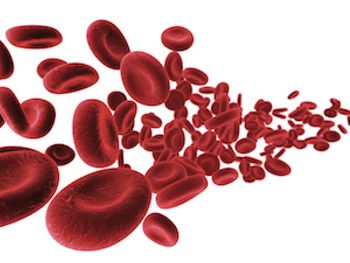
Every year, central lines are associated with causing blood infections in an estimated 400,000 patients with cancer. However, new research has found that changes in the microbiome may be responsible for some or many of the infections usually attributed to central lines.
Bo Gamble, director of Strategic Practice Initiatives at the Community Oncology Alliance (COA), explains how COA plays a role in supporting practices in preparing for Oncology Care Model.
Via Pathways covers more than 2000 different patient representations in cancer care.

Non-Hispanic black women diagnosed with HER2-negative, lymph node-negative breast cancer who had recurrence score testing had higher estimated risks of distant recurrence than their non-Hispanic white counterparts.

High cost sharing is associated with reduced and/or delayed access to targeted therapies under Medicare Part D for patients with metastatic renal cell carcinoma, suggesting that financial barriers play a significant role in treatment decisions, according to a study published in Cancer Medicine.

Patients diagnosed with cancer want their doctors to ask them their desire location for end-of-life (EOL) care, according to a recent study published in the Journal of the National Comprehensive Cancer Network.

Over the next years, these spheres (ACOs, primary care, and oncology) that are going on in CMMI need to be coalesced together so that when we have learning collaboratives, not only do we have learning collaboratives within each of these spheres, but we learn from each other in these similar projects, said Peter Aran, MD, medical director of Population Health Management at Blue Cross Blue Shield of Oklahoma.
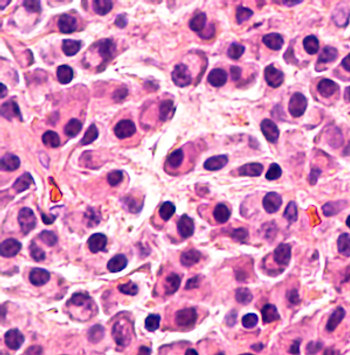
The FDA has approved a supplemental New Drug Application to add new overall survival (OS) data for carfilzomib (Kyprolis). The label will now show that carfilzomib and dexamethasone reduced the risk of death by 21% and increased OS by 7.6 months compared with bortezomib and dexamethasone in patients with relapsed or refractory multiple myeloma (MM).
Estimating episodic target prices for each patient in the Oncology Care Model (OCM) can be challenging and time consuming. Applying that time to quality-focused care management tactics, based on observed utilization and patient outcomes, may wind up being more valuable, and help to reduce unnecessary spending.

Researchers at The University of Texas MD Anderson Cancer Center recently reported in Lancet Oncology that a pair of targeted therapies given before and after surgery for melanoma produced a 6-fold increase in time to progression of the disease, compared with standard-of-care surgery for patients with stage 3 melanoma.
Podcast: This Week in Managed Care—Kentucky's Medicaid Work Requirement and Other Health News
By
Every week, The American Journal of Managed Care® recaps the top managed care news of the week, and you can now listen to it on our podcast, Managed Care Cast.
Aetna is focusing on the healthcare triangle (patients, providers, and payers) and connecting those lines, said Roger Brito, DO, national director for oncology, Aetna.

This week in managed care, the top stories included the announcement that Kentucky is the first state approved to require patients work to receive Medicaid benefits; FDA Commissioner Scott Gottlieb, MD, reveals a new program to improve clinical trial transparency; research finds the worst cases of attention-deficit/hyperactivity disorder could lower life expectancy.

Although risk targeting may improve screening efficiency in terms of early lung cancer mortality per person screened, the gains in efficiency are modest in terms of life-years, quality-adjusted life-years, and cost-effectiveness, according to a study recently published in Annals of Internal Medicine.
In order to adapt to the Oncology Care Model (OCM), Regional Cancer Care Associates had to undergo the process of adjusting and customizing its electronic medical records, explained CEO Terrill Jordan.
Advertisement
Advertisement
Trending on AJMC
1
Bepirovirsen Approval Offers New Option for Chronic HBV Treatment
2
Inhaled Amikacin Raises Culture Conversion in New MAC Lung Disease
3
Bronchiectasis GWAS Highlights Candidate Targets Shared With COPD
4
Extension Studies in TPIP Show Promise in PAH, PH-ILD
5