






Ophthalmology
Latest News
Advertisement
Latest Videos


CME Content


Advertisement
More News
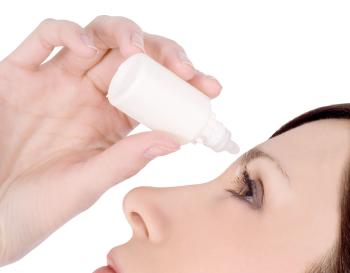
A study that focused on children aged 5 to 12 years who lived in the United States found no difference between atropine 0.01% and placebo in treating myopia progression.

A search of residency programs in the United States found that women made up about a quarter of all academic vitreoretinal specialists.

A smartphone app was found to be useful and reliable by clinicians when testing vision for children during the COVID-19 pandemic.

Infants who received parenteral nutrition for at least 14 days had a higher risk of retinopathy of prematurity and receiving treatment.

A new study estimated that 9.60 million people are living with diabetic retinopathy and 1.84 million people are living with vision-threatening diabetic retinopathy in the United States.

Gene therapy is only one exciting area of treatments in the pipeline to potentially treat inherited retinal disease, said Byron L. Lam, MD, professor of ophthalmology, University of Miami Miller School of Medicine's Bascom Palmer Eye Institute.

Social risk factors, such as patient characteristics and where they live, informed the severity of microbial keratitis in a sample of patients.

Fundus photographs of eyes with diabetic macular edema (DME) could be used to estimate best-corrected visual acuity (BCVA) when artificial intelligence examines the pictures.
The most exciting treatment for inherited retinal disease was approved in 2017, but there are many novel treatments in phase 2 or phase 3 trials at this point, said Byron L. Lam, MD, professor of ophthalmology, University of Miami Miller School of Medicine's Bascom Palmer Eye Institute.

Childhood myopia progression could be treated with low-dose atropine due to the safety and efficacy displayed in this study.

Adalimumab had a slight advantage over infliximab in terms of adverse events when used to treat patients with noninfectious uveitis (NIU).
Insurance is by far the most important factor of whether patients followed up with treatment after getting screened for glaucoma, said Byron L. Lam, MD, professor of ophthalmology, University of Miami Miller School of Medicine's Bascom Palmer Eye Institute.

About 69% of pediatric patients had discontinued amblyopia therapy during COVID-19 even as their parents reported that adherence was good.

Gene therapies like RGX-314 are looking to treat very common diseases in ophthalmology, which would represent a tremendous opportunity for chronic disease management, said Charles C. Wykoff, MD, PhD, of Retina Consultants of Texas and the Blanton Eye Institute at Houston Methodist Hospital.

Aflibercept was a less cost-effective treatment for retinal vein occlusion (RVO) compared with bevacizumab, although visual acuity outcomes were similar.

There is a concerted effort to identify biomarkers to understand the risk of progression of diabetic eye disease, but many studies have not been performed in diverse populations, explained Jennifer K. Sun, MD, MPH, associate professor of ophthalmology and chief of the Center for Clinical Eye Research and Trials, Harvard Medical School; and chair, DRCR Retina Network.
The relationship between myopia and primary open-angle glaucoma (POAG) was stronger in Asian, Black, and Hispanic individuals compared with White individuals.

When presented with a set of multiple choice questions used to help trainees practice for the ophthalmology board certification exams, the artificial intelligence (AI) chatbot ChatGPT was able to answer only half correctly.
The DRCR Retina Network is undertaking research to develop preventive strategies for diabetic eye disease, explained Jennifer K. Sun, MD, MPH, associate professor of ophthalmology and chief of the Center for Clinical Eye Research and Trials, Harvard Medical School; and chair, DRCR Retina Network.
Researchers found that eyeglasses with traditional steps of 0.25D were less effective and less preferred by participants compared with those refracted in 0.05D steps.
Gene therapy has the promise of being one and done, but it isn’t always that way for all patients, which leaves questions about where these therapies fit in the commercial landscape, said Charles C. Wykoff, MD, PhD, of Retina Consultants of Texas and the Blanton Eye Institute at Houston Methodist Hospital.

Retinopathy of prematurity (ROP) was found to have increased from 2003 to 2019, especially in Black and Hispanic children.

Retinopathy of prematurity (ROP) that occurs in preterm babies can progress fast, which requires quick decisions early about treatment, explained Darius M. Moshfeghi, MD, chief, Retina Division, and professor at the Horngren Family Vitreoretinal Center, Byers Eye Institute, Department of Ophthalmology, Stanford University School of Medicine.
Perfluorohexyloctane (NOV03) was able to reduce the signs and symptoms of dry eye disease (DED) when compared with hypotonic saline control and was well tolerated.
While there are benefits of gene therapy, some patients will continue to need anti–vascular endothelial growth factor (VEGF) therapy to treat wet age-related macular degeneration (AMD), said Charles C. Wykoff, MD, PhD, of Retina Consultants of Texas and the Blanton Eye Institute at Houston Methodist Hospital.
Advertisement
Advertisement
Trending on AJMC
1
TrumpRx Launch Brings Savings—and Uncertainty
2
How Do GLP-1 Agonists Fit Into Stroke Care?
3
Addressing Disparities at Every Step of the Stroke Care Pathway: Luke Messac, MD, PhD
4
5 Things to Know About the Oral GLP-1 Era
5