
Mike Koroscik, vice president, Oncology, Allina Health Cancer Institute, presented “Preparing for Population Health in Oncology,” during the Association of Community Cancer Centers 39th National Oncology Conference, which concluded Friday.
Mike Koroscik, vice president, Oncology, Allina Health Cancer Institute, presented “Preparing for Population Health in Oncology,” during the Association of Community Cancer Centers 39th National Oncology Conference, which concluded Friday.
Patients have to always come first, and technology can enhance their care experience, stated Anne Marie F. Rainey, MSN, RN, CHC, director of quality and value-based care at Clearview Cancer Institute.
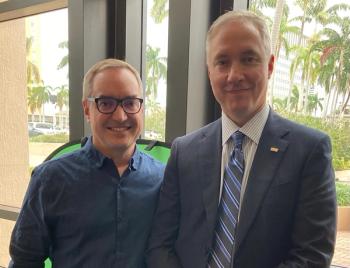
On day 1 of this year’s Association of Community Cancer Centers’ (ACCC) National Oncology Conference, The American Journal of Managed Care® sat down for a conversation with David Penberthy, MD, MBA, ACCC’s president for the 2022-2023 term, and his brother Scott Penberthy, PhD, MS, director, Applied AI, Office of the CTO, at Google.
There have been many silver linings of the pandemic, including improvements in financial, operational, and clinical advancement efficiencies, as well as addressing the total cost of care in population health management, said Mike Koroscik, MBA, MHA, vice president of oncology, Allina Health and the Allina Health Cancer Institute.
Winners of the Association of Community Cancer Centers 2022 Innovator Awards, presented at the National Oncology Conference, include a program to embed primary care in a cancer center and an effort to increase compliance with giving patients same-day medication education.
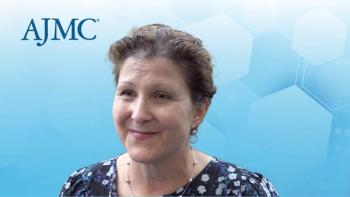
It’s important that patients are the healthiest they can be when going into treatment for cancer, emphasized Debra Delaney, MSN, FNP-BC, primary care nurse practitioner at ChristianaCare’s Helen F. Graham Cancer Center & Research Institute.

Ochsner Health's program was among the recipients of the 2022 ACCC Innovator Awards, given to projects that improve patient care, are cost-effective, and are replicable.
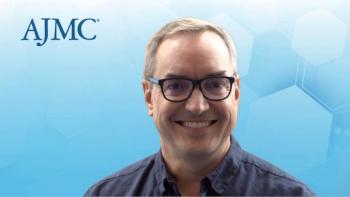
Much of artificial intelligence (AI) is now being used in the more mundane areas of health care, figuring out where to be most helpful, so doctors can do what they do best, which is diagnostic care, noted Scott Penberthy, PhD, MS, director, Applied AI, Office of the CTO, at Google.
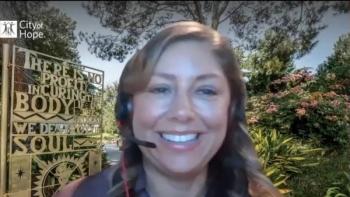
Leana Cabrera Chien, MSN, RN, GCNS-BC, GNP-BC, is a geriatric nurse practitioner at City of Hope, working in its Aging Wellness Clinic.
The sessions align with the yearlong theme selected by this year’s ACCC president, David R. Penberthy, MD, MBA, when he took the helm in March: “Leveraging Technology to Transform Cancer Care Delivery and the Patient Experience.”
Carmen Guerra, MD, MSCE, FACP, is a general internist and professor of medicine at the University of Pennsylvania's Perelman School of Medicine.

David Penberthy, MD, MBA, medical director of radiation oncology at Southside Regional Medical Center, discusses his theme as president-elect of the Association of Community Cancer Centers (ACCC) and what initiatives and discussions he looks forward to addressing over the next year.
A session moderated by the president of the Association of Community Cancer Centers (ACCC) examined the business case for having oncology pharmacists and oncology social workers on community cancer care teams.
The panel said the prior authorization system was intended not just to make sure treatments are necessary but also to ensure that practices get paid; however, it needs a lot of work.
A session on industry reconfiguration covered differed business models for oncology, including payer acquisition of networks and collaboration with academic centers and primary care.
The session opened the 48th Annual Meeting and Cancer Center Business Summit, which is the first in-person meeting in 2 years for the Association of Community Cancer Centers. The meeting is taking place March 2-4 in Washington, DC.

An administrator in the Geisinger Cancer Institute discusses the rollout of ClinicalPath.

A panel at the Association of Community Cancer Centers discusses lessons from the year of COVID-19.
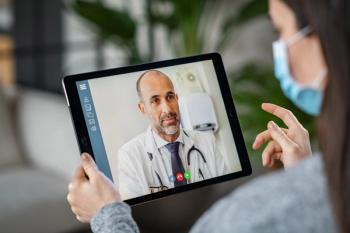
Quick policy changes and the necessity to alter care delivery amid a global health crisis helped larger facilities adapt to the new realities of COVID-19.

A presentation at the ACCC 47th Annual Meeting & Cancer Center Business Summit gave virtual attendees an overview of research on PROs and how RSM can be incorporated into an oncology practice.
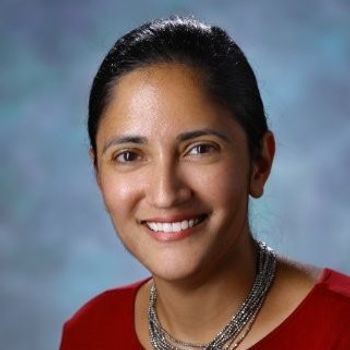
Kavita Patel, MD, MS, FACP, a fellow at the Brookings Institution Center for Health Policy, touched on key topics in health care at the ACCC 47th Annual Meeting and Cancer Center Business Summit.
We think that the ACCC is uniquely positioned to bridge the gap between the needs in clinical trials and the patients who are in the community. Most clinical oncology is delivered in the community. That's where the patients are, that's where the need is, said Randall Oyer, MD, medical director of the Oncology Program at Penn Medicine Lancaster General Health and president of ACCC.
Ensuring that all frontline clinicians are equipped, confident, and engaged in executing skilled communication, which is at the core of palliative care, will make a significant difference for how value-based care unfolds, how payment reform happens, and how the lived experience plays out for patients and families to be a better one, said Rebecca Kirch, JD, executive vice president, Health Care, Quality and Value, National Patient Advocate Foundation.

The theme of ACCC Immediate Past President Ali McBride, PharmD, MS, BPS, BCOP, for his 2019-2020 term was “Collaborate. Educate. Compensate: A Prescription for Sustainable Cancer Care Delivery.” Nowhere was that more evident than in the panel discussion he led on day 2 of this year’s annual conference.
I think a lot of it is, do you trust the people that you're going to be working with? What does it come down to economically? And then I would say on the third end is what can really be done to enhance patient care? As it relates to the decision that you make, said Bradley Prechtl, MBA, chief executive officer of the American Oncology Network.

Can we predict which patients are at high risk of hospitalization? How can we reduce this risk? Debra Patt, MD, MPH, MBA, executive vice president of policy and strategy at Texas Oncology, posed these questions during the ACCC 46th Annual Meeting and Cancer Center Business Summit.
As we move from the mono-therapy era into the combination era, we have to think of new arrangements, perhaps value-based arrangements that will work with the payers and the manufacturers so that patients will have access to these drugs and also have the best ability to get value from them, said Lee Schwartzberg, MD, FACP, chief medical officer and board member at OneOncology.
Healthcare is not political, it’s personal, Senator Debbie Stabenow, D-Michigan, told an audience at the ACCC 46th Annual Meeting and Cancer Center Business Summit, imploring them to come together in a nonpartisan way to improve care access and quality and to reduce costs.
My Presidential theme was to look at the interdisciplinary care team involved in the actual delivery of cancer therapies and cancer care, said Ali McBride, PharmD, MS, BCPS, BCOP, clinical coordinator of hematology/oncology in the Department of Pharmacy at The University of Arizona Cancer Center and outgoing president of ACCC.

Evolution. Disruption. Innovation. Telemedicine. A virtual exchange of information. Healthcare has lagged behind in these aspects, but it’s necessary to transcend time and distance, according to Susan Dentzer, senior policy fellow at the Duke-Margolis Center for Health Policy.