

Two abstracts presented at the 2023 American Society of Clinical Oncology annual meeting evaluated biosimilar adoption across oncology practices and highlighted the role payers play in preventing or promoting adoption.
Two abstracts presented at the 2023 American Society of Clinical Oncology annual meeting evaluated biosimilar adoption across oncology practices and highlighted the role payers play in preventing or promoting adoption.

Speakers elaborated on health care delivery and regulatory policy posters presented at the 2023 American Society of Clinical Oncology (ASCO) Annual Meeting. This article will appear in the ASCO recap edition of Evidence-Based Oncology.
The study's lead author said patients would experience improved quality of life due to fewer transfusions and fewer trips to the clinic to receive treatment.
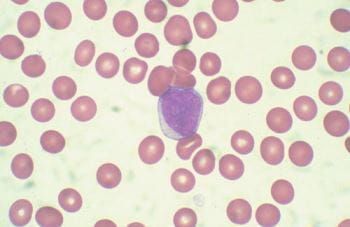
Presentations on the first day of the 2023 American Society of Clinical Oncology Annual Meeting covered data on a split dose CAR T-cell therapy and a CAR T therapy manufactured with TKI.

Abstracts were presented in a session on metastatic lung cancer on the final day of the 2023 American Society of Clinical Oncology Annual Meeting.

The study was conducted to provide insight into real-world Bruton tyrosine kinase (BTK) inhibitor treatment patterns in mantle cell lymphoma, as current data are limited.

A panel of experts at the American Society of Clinical Oncology Annual Meeting presented the latest research and equity considerations for chimeric antigen receptor (CAR) T-cell therapy in hematological cancers.

A session chaired by ASCO and ESMO leadership included experts on the latest lung and colorectal cancer screening technologies and persistent disparities in screening access and uptake.

Initiating targeted therapy for eligible patients with advanced non–small cell lung cancer (NSCLC) was found to improve outcomes, even when patients were started on nontargeted therapy but switched in a timely manner.

The therapy is designed to target multiple receptors and could address an unmet need in metastatic colorectal cancer.
A second study will evaluate the treatment and financial burden and quality of life of a program of subcutaneous daratumumab administered at home.

A study presented at the American Society of Clinical Oncology Annual Meeting found practice- and provider-level racial and ethnic inequities in rates of next-generation sequencing (NGS) testing for patients with advanced non–small cell lung cancer (NSCLC) treated in the community setting.

An abstract at the American Society of Clinical Oncology Annual Meeting showed disparities in lung cancer screening rates in an urban, multiethnic community, and patient navigation increased rates overall.

The autologous CAR T-cell therapy axicabtagene ciloleucel (axi-cel) demonstrated effectiveness and safety consistent with the ZUMA-5 trial when used in real-world settings to treat a broader population of patients with follicular lymphoma (FL).
Barb Kunz, MS, LCGC, senior genetic counselor at the US Oncology Network, discussed the importance of germline genetic testing in patients with triple-negative breast cancer and other cancer types.

Research presented at the American Society of Clinical Oncology Annual Meeting found prostate-specific membrane antigen ligand positron emission tomography (PSMA-PET) to be associated with worse overall survival in prostate cancer without distant metastasis based on conventional imaging.
If payers can agree on consensus criteria to improve care quality or costs, that will help physicians remember and try to be compliant, said Samyukta Mullangi, MD, MBA, incoming medical director at Thyme Care.

While efforts are underway to improve access to cutting-edge oncology clinical trials for underserved patients, more work is needed to get the job done, said a panel of experts at the 2023 American Society of Clinical Oncology Annual Meeting.

The session, “Payment Reform: Lessons Learned from the Oncology Care Model (OCM) and Implications for the Enhancing Oncology Model (EOM)," comes less than a month before the EOM is set to begin.

Jason Westin, MD, MS, FACP, director of the Lymphoma Clinical Research Program at the University of Texas MD Anderson Cancer Center, gave insight the ZUMA-7 trial of axicabtagene ciloleucel (axi-cel) in relapsed or refractory large B-cell lymphoma (R/R LBCL) and the study's implications in the broader LBCL landscape.
Judy Wang, MD, medical oncologist and clinical trials investigator at Sarah Cannon Research Institute at Florida Cancer Specialists & Research Institute, discussed the mechanism of action and rationale for studying CLN-619, an anti-MICA/B antibody, with and without pembrolizumab in patients with solid tumors.
In early findings, the antibody drug conjugate created strong responses in multiple tumor types where patients have unmet need.
Bhagirathbhai R. Dholaria, MD, assistant professor of medicine in the Department of Hematology-Oncology at Vanderbilt University Medical Center, discussed findings from the phase 2 TRiMM-2 trial of talquetamab plus daratumumab in multiple myeloma.

Barb Kunz, MS, LCGC, senior genetic counselor at the US Oncology Network, shared insight on a study of social determinants of health in the context of germline genetic testing for triple-negative breast cancer (TNBC) in the community oncology setting.

The confirmatory trial showed limited side effects relative to physician's choice of chemotherapy.

Roy S. Herbst, MD, PhD, deputy director of Yale Cancer Center and lead investigator for ADAURA, said the results erase any doubts about the use of osimertinib in early non–small cell lung cancer (NSCLC) for patients with EGFR mutations.
The landmark trial harmonized treatment between adult and pediatric patients with classic Hodgkin lymphoma, who historically have received different chemotherapy regimens; young patients have received more treatment with radiation.
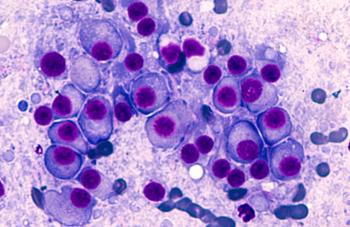
Combining talquetamab and daratumumab could create a synergy to get more from talquetamab to attack multiple myeloma.
"It's really important that oncologists are on level footing along with the rest of their medical peers," said Samyukta Mullangi, MD, MBA, incoming medical director at Thyme Care.

Interim findings from the DUO-O trial could signal new options for women diagnosed with ovarian cancer at later stages who do not have a BRCA mutation.