
Camille Hertzka, vice president and head of oncology, US Medical, AstraZeneca, speaks on how the OlympiA findings may warrant greater need of genetic testing for BRCA mutation and the efficacy of olaparib by patient subgroup.
Camille Hertzka, vice president and head of oncology, US Medical, AstraZeneca, speaks on how the OlympiA findings may warrant greater need of genetic testing for BRCA mutation and the efficacy of olaparib by patient subgroup.

Rajat Bannerji, MD, PhD, Chief, Section of Hematologic Malignancies at Rutgers Cancer Institute of New Jersey/RWJBarnabas Health, speaks on the efficacy and safety findings of the CAPTIVATE study examining the fixed-duration regimen of ibutinib and venetoclax combination therapy in CLL.
Camille Hertzka, vice president and head of Oncology, US Medical, AstraZeneca, discussed updated findings of the PACIFIC trial that indicated a third of patients with unresectable non-small cell lung cancer are stable at 5 years.
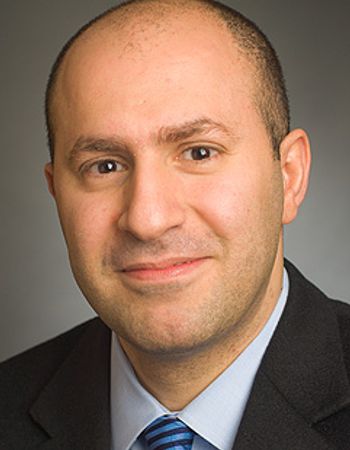
The study's lead author said researchers have searched for a generation for an effective therapy to give to high-risk patients with renal cell carcinoma after initial surgery for the tumor.

Antoine Italiano, MD, PhD, head of Early Phase Trials and Sarcoma Units at Institut Bergonié, Bordeaux, France, addresses findings of an extended follow-up of larotrectinib in patients with TRK fusion cancer that indicated prolonged progression-free survival in those undergoing the NTRK inhibitor.

Also, phase 2 results for atezolizumab presented during the 2021 Annual Meeting of the American Society of Clinical Oncology could help patients in same setting who need another option.

Biomarker testing and remote patient monitoring are just 2 areas of research presented during the annual meeting of the American Society of Clinical Oncology (ASCO).
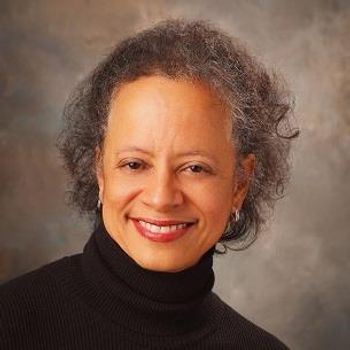
Equality in cancer care is not sufficient, said Lori Pierce, MD, FASTRO, FASCO, a radiation oncologist from the University of Michigan and president of the American Society of Clinical Oncology (ASCO). Equity—which means that patients have similar outcomes, regardless of circumstance—is harder to achieve.

Kirk Shepard, MD, chief medical officer, senior vice president, and head of Global Medical Affairs, Eisai, discusses findings of a study showcasing similar health-related quality of life (HRQOL) scores between lenvatinib/pembrolizumab vs chemotherapy in patients with advanced endometrial carcinoma.

Christopher Arendt, PhD, head, Oncology Therapeutic Area Unit, Takeda, speaks on efficacy and safety findings of the OPTIC study examining dose optimization of ponatinib in patients with chronic-phase chronic myeloid leukemia (CP-CML) resistant to second-generation tyrosine kinase inhibitor therapy.

During the first day of the 2021 Annual Meeting of the American Society of Clinical Oncology, a discussion on disparities in women's cancer care highlighted challenges in the United States and overseas.

Robert Iannone, MD, MSCE, executive vice president of research and development for Jazz Pharmaceuticals, addresses findings of an abstract presented at ASCO 2021 which showed preliminary efficacy of lurbinectedin in combination with irinotecan in patients with advanced endometrial carcinoma.

Davey Daniel, MD, hematology/medical oncology specialist, Tennessee Oncology, discusses findings of an abstract presented at ASCO 2021 showing a lower total cost of care paid by Medicare for episodes of care for patients in the Oncology Care Model (OCM) enrolled in clinical trials vs those receiving routine care.

ASCO officials characterized the results as practice changing and said they highlighted the need for genetic testing in patients who receive a diagnosis of high-risk breast cancer.
A multidisciplinary team of oncologists, health care providers, caregivers, and the patients themselves benefits everyone, and telehealth-based interventions can help to foster these relationships, but we should understand when patients do not want to involve their families in their care, noted Sara L. Douglas, PhD, RN, the Gertrude Perkins Oliva Professor in Oncology Nursing and associate dean for research at the Frances Payne Bolton School of Nursing at Case Western Reserve University in Cleveland, Ohio.

Blocking TIGIT, a T-cell immunoreceptor, benefits patients with non–small lung cancer in that it can restore their immune system’s antitumor response, leading to a greater objective response and progression-free survival, noted Melissa L. Johnson, MD, associate director for Lung Cancer Research at Sarah Cannon Research Institute and partner in Tennessee Oncology, discussing the results of the CITYSCAPE trial.

Coronavirus disease 2019 disparities persist in our most vulnerable communities because of the financial necessity to continue working, as well as the lack of employment opportunities that enable their residents to work remotely. They are more likely to be considered essential workers, and that increases their exposure to the virus, explained Blythe Adamson, PhD, MPH, principal quantitative scientist at Flatiron Health.

Getting the full picture of genetic testing results requires that patients have access to genetic counselors who can evaluate individual risk.
A picture is emerging picture of what patients with cancer face under coronavirus disease 2019 (COVID-19): They are more likely to be older or have underlying health problems, which are known to make the virus more deadly. But the treatments that can stop cancer could also put that at risk.

Compared with ibrutinib, zanubrutinib appears to have more of a benefit for patients with regards to less atrial fibrillation, hypertension, and other cardiac effects, explained Constantine S. Tam, MBBS, MD, clinical hematologist, Peter MacCallum Cancer Centre in Melbourne, Australia.
Telemedicine has grown from about 10% of all patient visits, before the coronavirus disease 2019 pandemic, to almost 90% at present, and it isn’t going away anytime soon, noted Sara L. Douglas, PhD, RN, the Gertrude Perkins Oliva Professor in Oncology Nursing and associate dean for research at the Frances Payne Bolton School of Nursing at Case Western Reserve University in Cleveland, Ohio.
"Our patients are the reasons we do what we do. They are the reason we do the work," said outgoing ASCO President Howard A. “Skip” Burris III, MD, FASCO, FACP, during his opening address on the second day of this year’s American Society of Clinical Oncology conference.
Zanubrutinib, a second-generation BTK inhibitor, is approved by FDA to treat mantle cell lymphoma.

An experimental glioblastoma therapy with promising 12-month results may also have potential with other treatment-resistant cancers, according to Jeffrey Skolnick, MD, vice president, clinical development, Inovio Pharmaceuticals Inc. Results are being presented during the American Society of Clinical Oncology 2020 annual meeting.
Inadequate access to health care can truly be a life or death matter, so health care policy designed to improve access to care, as the Affordable Care Act (ACA) is, can have a fundamental effect on making progress against cancer-related mortality and improving the quality of the care delivered, noted Fumiko Chino, MD, assistant attending radiation oncologist at Memorial Sloan Kettering Cancer Center in New York.
The results have important implications for managed care. Many patients in the study who today would receive surgery and chemotherapy would see a recurrence. In addition, the ability to treat these patients more effectively at earlier stages raises new questions about the need to conduct more lung cancer screening.
The lead author said the findings were a step forward for biomarker studies and would change clinical practice.
Results of the CLL14 trial, which were presented today at the 2019 Annual Meeting of the American Society of Clinical Oncology in Chicago, Illinois, resulted in the approval of the venetoclax combination for these patients in May.
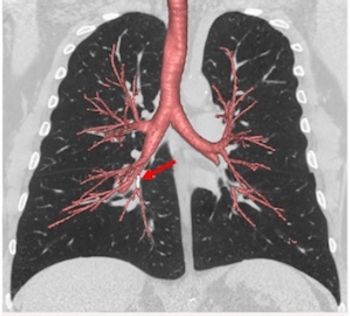
A number of abstracts at the 2019 American Society of Clinical Oncology Annual Meeting, held May 31 to June 4, 2019, in Chicago, Illinois, featured studies that focused on using real-world data to advance research and cancer care in non–small cell lung cancer (NSCLC).

During the American Society of Clinical Oncology’s Annual Meeting which took place May 31-June 4, 2019 in Chicago, Illinois, oncologists and representatives from UnitedHealthcare and the Center for Medicare and Medicaid Innovation (CMMI) took the stage to discuss oncology reimbursement reform and whether there are changes on the horizon for the promotion of higher value care.