

ASH: American Society of Hematology

Advertisement

ASH 2025 reveals groundbreaking trial data on fixed-duration therapies for chronic lymphocytic leukemia, non-Hodgkin lymphoma, and multiple myeloma, enhancing patient outcomes and reducing costs.
ASH 2025 highlighted innovative cancer treatments, including in vivo CAR T therapy and options that enhance quality of life while reducing burdens.

Real-world evidence highlights the effectiveness of lisocabtagene maraleucel in treating relapsed or refractory chronic lymphocytic leukemia (R/R CLL).

Advertisement

Linvoseltamab shows promise as a first-line therapy for multiple myeloma, offering high response rates and a simplified treatment approach.
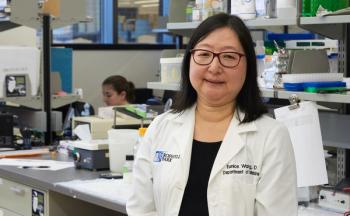
Eunice Wang, MD, highlights breakthroughs in menin inhibitors for acute leukemias, showcasing promising combination therapies and addressing treatment challenges at ASH 2025.
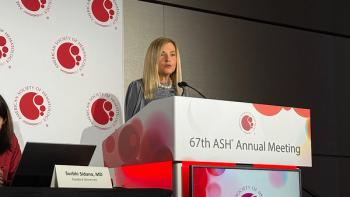
New research reveals teclistamab and daratumumab significantly enhance progression-free survival in multiple myeloma, reshaping treatment standards.

Blinatumomab enhances survival in pediatric B-cell ALL, yet homecare challenges hinder its outpatient delivery.
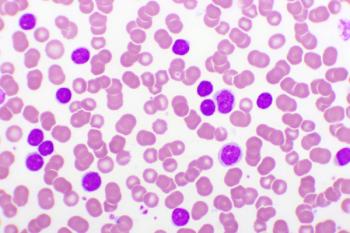
Pirtobrutinib significantly improved progression-free survival in treatment-naïve CLL compared with bendamustine plus rituximab.

Adding ianalumab to eltrombopag significantly prolongs time to treatment failure, boosts 6-month response rates, and improves fatigue for adults with primary ITP.

Financial and social barriers hinder access to specialized care and impact treatment outcomes for adolescents and young adults with leukemia.
Joanna Rhodes, MD, MSCE, highlights significant racial and ethnic disparities that persist in access to preferred CLL treatments.
Ira Zackon, MD, discusses bispecific antibody use in multiple myeloma among community practices, reflecting real-world treatment trends.

A groundbreaking in vivo CAR T-cell therapy shows promise for treating multiple myeloma, potentially revolutionizing cancer care with quicker, safer treatments.

New research highlights INCA033989's potential in treating mutCALR-driven essential thrombocythemia and myelofibrosis, achieving significant molecular responses.
Shayla Bergmann, MD, explains that recombinant von Willebrand factor is both safe and highly effective in controlling perioperative bleeding in children with severe von Willebrand disease.
PARADIGM showed azacitidine and venetoclax outperform induction chemotherapy in initial treatment of acute myeloid leukemia (AML).

Epcoritamab combined with rituximab and lenalidomide significantly improves outcomes for relapsed follicular lymphoma, setting a new treatment standard.
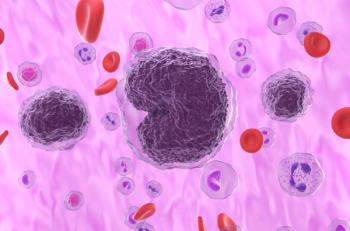
Updated results highlight the promise of epcoritamab combined with chemotherapy for newly diagnosed DLBCL.

Ivo Carre, PhD, shares subgroup data that points to potential benefit in younger patients with high-risk MDS.

A panel at the American Society of Hematology highlights the urgent need for genetic diversity in cancer studies, addressing disparities in treatment outcomes across different ancestries.

Families of children with acute lymphoblastic leukemia face significant financial toxicity, with many experiencing severe economic hardship during treatment.

New trial results reveal fixed-duration venetoclax regimens match continuous ibrutinib therapy in CLL, enhancing patient quality of life and adherence.

Andrew Evens, DO, MBA, MSc, shares insights from a study on improving prognostic accuracy for advanced-stage Hodgkin lymphoma.

Rusfertide shows promise in maintaining hematocrit control and improving quality of life for polycythemia vera patients, reducing phlebotomy needs significantly.
New data in high-risk MDS, emerging menin inhibitors in AML, and evolving care needs in rare bleeding disorders set the stage for major ASH 2025 discussions.

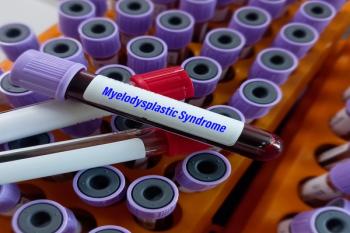
Patients with myelodysplastic syndromes (MDS) who undergo allogeneic hematopoietic stem cell transplantation (allo-HSCT) are older and face worse outcomes compared with non-MDS patients, according to posters presented at the 2024 American Society of Hematology meeting.
Advertisement
Advertisement
Trending on AJMC
1
TrumpRx Launch Brings Savings—and Uncertainty
2
5 Things to Know About the Oral GLP-1 Era
3
Exploring Identity, Appearance Experiences Among Patients With Alopecia
4
As Cencora Closes With OneOncology, Patton Says Terms Show “Trust”
5