
Broader integration of artificial intelligence (AI) in precision oncology depends on overcoming barriers such as trust and transparency, according to Davey Daniel, MD.
Broader integration of artificial intelligence (AI) in precision oncology depends on overcoming barriers such as trust and transparency, according to Davey Daniel, MD.
Patients with hematologic malignancies face ongoing survivorship challenges as providers struggle to coordinate care, according to Brian Koffman, MDCM, DCFP, FCFP, DABFP, MSEd.

Panelists discussed the ingredients of successful handoffs at the time of cancer diagnosis and ways to collaborate as screening capabilities evolve.
Consolidation in oncology is creating access and cost challenges, whereas advocacy helps improve patient care and treatment availability, according to Sucharu "Chris" Prakash, MD.
Oncology utilization management often frustrates patients and payers, but collaboration and artificial intelligence can streamline processes and improve care quality, according to Vishnukamal Golla, MD, MPH.

As therapeutic advances enable patients with cancer to live longer, greater attention is needed to support the goal of survivorship, starting at diagnosis.

Explore cutting-edge discussions on patient-centered oncology, value-based care, AI innovations, and survivorship strategies Thursday and Friday at PCOC 2025 in Nashville.

Patient-Centered Oncology Care (PCOC) conference co-chairs Kathy Oubre, MS, and Davey Daniel, MD, explain how the event unites experts to explore evolving oncology care and patient-centered strategies.
The Quadruple Aim—a framework originally rooted in improving patient experience, enhancing population health, and achieving cost savings—has evolved to include a fourth dimension: provider well-being.
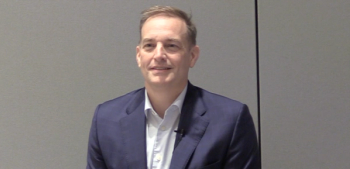
Davey Daniel, MD, chief medical officer at OneOncology, stresses the need for real-world evidence in genomic testing to improve patient outcomes and cost-effectiveness.

It’s hard for practicing oncologists to stay on top of the latest clinical data, but good partnerships and clinical decision support tools can assist.

Panelists discussed how the Inflation Reduction Act and the Enhancing Oncology Model are impacting value in cancer care and access to treatment.

The work might take long, but cancer advocate and survivor Matthew Zachary drove home the importance of advocacy to continue improving the lives of patients with cancer and provide them better options.
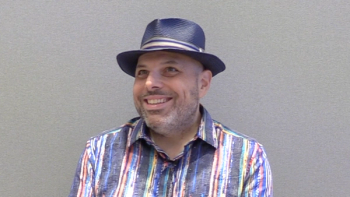
Matthew Zachary, founder of Stupid Cancer, and keynote speaker at the Patient-Centered Oncology Care® (PCOC) 2024 meeting advocated for addressing provider burnout and mental health, arguing that it is essential for delivering quality patient-centered care.
Lalan Wilfong, MD, senior vice president at Thyme Care, highlights the substantial advantages of patient navigation in enhancing patient outcomes and the need for balancing cost and performance when integrating these services into payment models.
With the advances in cancer care, focus has mostly been on lamenting the high cost of these innovations instead of making patients and populations healthier, said A. Mark Fendrick, MD, director of the Center for Value-Based Insurance Design at the University of Michigan.
Sarah Hogue, PharmD, director of oncology services at St. Luke's Cancer Institute, discusses trends of pharmacists and technicians taking on more clinical responsibilities in oncology, improving patient care, and efficiency.

During the first fireside chat at the Patient-Centered Oncology Care® meeting, Alyssa Schatz, MSW, of National Comprehensive Cancer Network, discussed work being done to improve care for patients with cancer.
Samyukta Mullangi, MD, MBA, medical director at Thyme Care, explained her excitement to meet with industry leaders, share best practices, and learn about new innovations in oncology care at Patient-Centered Oncology Care® (PCOC) 2024.

Susan Sabo-Wagner, MSN, RN, OCN, of the American Oncology Network, expressed excitement toward networking, innovative discussions, and panels on patient advocacy at Patient-Centered Oncology Care® (PCOC) 2024.
As the pharmacist’s role has evolved in the last decade, they’ve become an important part of reducing costs and better managing patients, explained Scott Soefje, PharmD, MBA, BCOP, FCCP, FHOPA, assistant professor, Mayo Clinic College of Medicines and Science.
The annual meeting of oncology stakeholders presented by The American Journal of Managed Care® takes place September 12-13, 2024.
Experts discussed the Enhancing Oncology Model and themes in the movement toward value-based care in oncology during Patient-Centered Oncology Care 2023.
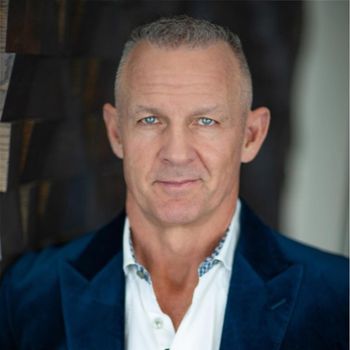
The former NFL running back shared his story of overcoming cancer and encouraged an audience of oncologists, pharmacists, payers, and policy leaders to continue pushing to advance cancer treatment.
Coverage from the panel discussion, "Can Clinical Pathways Have Burnout, Too?" at Patient-Centered Oncology Care 2023.
Coverage from "Navigating the PBM Landscape: How a Heath Care Economist Sees It," at Patient-Centered Oncology Care 2023.
UnitedHealthcare is incorporating real-world evidence into pathways design and policy formulation, leveraging its members' data to evaluate the impact of different regimens on health resource utilization and costs, explains Lucy Langer, MD, MSHS, national medical director of oncology and genomics at UnitedHealthcare.
UnitedHealthcare's oncology payment mode initially involved a pay-for-performance program based on pathways adherence, and will be transitioning in 2024 to a broader system with graded quartiles to incentivize greater participation and pathway adherence.
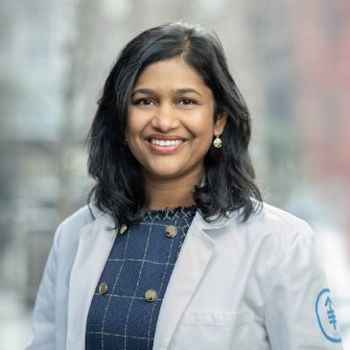
The Thyme Care virtual navigation program demonstrated a $594 reduction in total costs per member per month for navigated cancer patients compared with a control group, emphasizing the scalability of the independent virtual navigation model across various contracts, with opportunities to adapt to different populations and needs in the evolving landscape of value-based care arrangements.
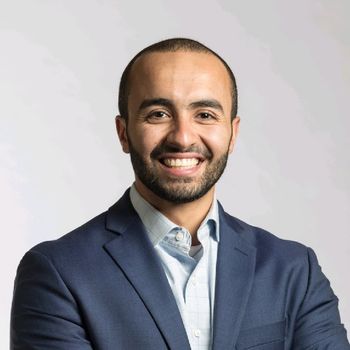
Especially during shortages, Kirollos S. Hanna, PharmD, BCPS, BCOP, FACCC, director of pharmacy services at Minnesota Oncology, says practices should carve out areas where going to a different therapeutic approach isn't considered off-pathway.