
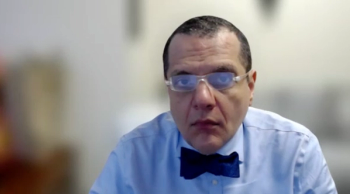
Hrayr Attarian, MD, professor of neurology, Northwestern Feinberg School of Medicine, shares findings on sleep inequities that have greatly impacted refugees.
Hrayr Attarian, MD, professor of neurology, Northwestern Feinberg School of Medicine, shares findings on sleep inequities that have greatly impacted refugees.
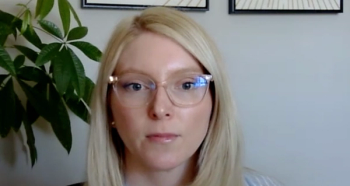
Caitlin Kindberg, patient advocate in Nashville, Tennessee, discusses her lived experience as an individual with idiopathic hypersomnia, and how the sleep disorder impacts her day-to-day life.

The relationships among bipolar disorder, sleep, and circadian rhythms were emphasized in a panel held at SLEEP 2024.

The session held at SLEEP 2024 focused on the challenges of collecting data on sleep and circadian rhythms in adolescents, as well as the difference between home and lab measurements.
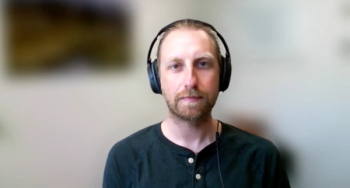
Christopher Depner, PhD, professor of health and kinesiology, University of Utah, shares the challenges of measuring sleep with wearable devices due to nonadherence and the need for metrics like the Sleep Regularity Index.

The annual conference taking place from June 1 to June 5, 2024, will feature sessions on the relationship between mental health and sleep, artificial intelligence in sleep, and different sleep conditions.

Melissa B. Jones, MD, staff neuropsychiatrist, Michael E. DeBakey VA Medical Center; assistant professor of psychiatry, Baylor College of Medicine, shares what she is looking forward to at this year's SLEEP 2024 conference.
Key highlights from SLEEP 2023: long COVID-19's impact on sleep, racial disparities in sleep health, idiopathic hypersomnia prevalence, disrupted nighttime sleep's link to narcolepsy in children, and the ease of transitioning to lower-sodium oxybate in narcolepsy treatment while maintaining effectiveness.

Sheila Garland, PhD, MSc, Memorial University in Newfoundland, Canada talks about the cognitive effects cancer can have on patients, beyond treatment side effects, and the direct impacts these can make on patients’ lives and care.

Dayna Johnson, PhD, MPH, MSW, MS talks about the necessity of community partnerships as the recipient of this year’s Associated Professional Sleep Societies (APSS) Diversity, Equity, and Inclusion Leadership Award at SLEEP 2023 and how inquiring into the community is vital for integrating healthy sleep practices.

Judite Blanc, PhD, is lead author on the abstract, “Social Determinants of Sleep Disorders Among Multiethnic Americans in the NIH All of Us Research Program,” which was presented on June 5th at the SLEEP 2023 conference.

Judite Blanc, PhD, University of Miami Miller School of Medicine, discusses how total sleep needs vary among ages and the consequences of these changing hourly totals.

In this interview from SLEEP 2023, Andrew McHill, PhD, of Oregon Health and Science University (OHSU), explains the importance of individualizing sleep hygiene recommendations.

In this interview from SLEEP 2023, Dayna Johnson, PhD, MPH, MSW, MS, addresses the various pathways through which cardiovascular health is adversely affected by suboptimal sleep health.

Children with narcolepsy often have disrupted nighttime sleep (DNS), which could lead to other effects, such as memory issues.

In this interview with The American Journal of Managed Care®, Symielle A. Gaston, PhD, MPH, of the National Institute of Environmental Health Sciences (NIEHS) of the National Institutes of Health, explores the relationship between sleep health and outcomes disparities among patients of various races and ethnicities.

Panelists at SLEEP 2023 presented preliminary data on how sleep interventions could close the gap in treating Black children and families in sleep health.

Posters presented at the SLEEP 2023 conference showed that transition between medications was easy but 1 medication felt more effective to patients.

Targeting insomnia with cognitive behavior therapy is almost like a frontline therapy, because by doing so, you’re able to improve a whole host of other symptoms that would coexist with insomnia, explained Sheila Garland, PhD, MSc, Memorial University in Newfoundland, Canada.

A panel at SLEEP 2023 discussed the ways that long COVID-19 has affected numerous areas of sleep health.
Research is finding that there is an intricate connection between sleep and inflammation, such that lack of sleep can increase inflammation, noted Andrew McHill, PhD, an assistant professor at Oregon Health and Science University.
Dayna Johnson, PhD, MPH, MSW, MS, the Rollins School of Public Health at Emory University, discusses principal findings from the analysis of a 35-day sleep intervention study that utilized a mobile mindfulness app to manage stress and anxiety combined with healthy sleep practices.

Posters presented at SLEEP 2023 estimated the prevalence of idiopathic hypersomnia as well as incidence of comorbidities.

Presenters at SLEEP 2023 revealed research that linked childhood sleep patterns to weight in young children.

It’s important to consider the social context, the social ecology, and the family environment when investigating behavioral sleep problems among children and adults, noted Arielle Williamson, PhD, DBSM, Children's Hospital of Philadelphia and the University of Pennsylvania Perelman School of Medicine.

Judite Blanc, PhD, is lead author on the abstract, “Social Determinants of Sleep Disorders Among Multiethnic Americans in the NIH All of Us Research Program,” which was presented today at SLEEP 2023.

The SLEEP 2023 conference will be held in Indianapolis from June 3 to June 7 and promises to feature topics including sleep health disparities, hypersomnia, geriatric medicine, and new technologies.

In this preview interview for SLEEP 2023, Rebecca Spencer, PhD, chair of the Associated Professional Sleep Societies Program Committee, highlights how bringing patients and clinicians together can inspire new ideas in sleep medicine.

Personalizing treatment for narcolepsy requires shared decision-making between patients and clinicians to understand the most important symptoms that need to be treated and the right therapy, said Michael Thorpy, MD, director of the Sleep-Wake Disorders Center at Montefiore Medical Center and professor of neurology at Albert Einstein College of Medicine.
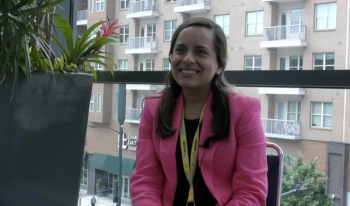
Many socioeconomic factors, such as neighborhood factors, access to care, and education can influence sleep, explained Cinthya Pena Orbea, MD, assistant professor of medicine, Cleveland Clinic.