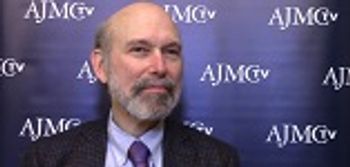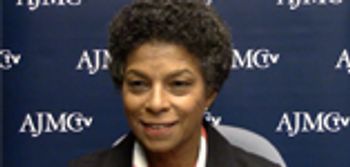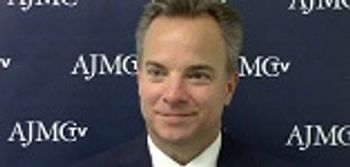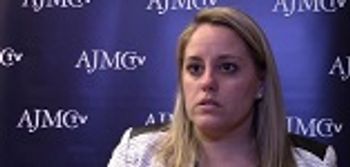
Bruce Feinberg, DO, Vice President and Chief Medical Officer, Cardinal Health Specialty Solutions, says that the healthcare system today is fragmented, if not broken.

Bruce Feinberg, DO, Vice President and Chief Medical Officer, Cardinal Health Specialty Solutions, says that the healthcare system today is fragmented, if not broken.

Susan Dentzer, Senior Policy Adviser, Robert Wood Johnson Foundation, says that there is growing interest in protecting healthcare providers from medical liability if they are following evidence-based protocols.

Patrick Gleason, PharmD, Director of Health Outcomes, Prime Therapeutics, says by 2017, 50% of all expenditures for drugs will be in the specialty drug space.

To create a strong sense of co-ownership between health systems and physicians, Robert Williams, MD, Director, Deloitte, Consulting LLP, says it's important to encourage physician engagement with organizations.

In this video, Karen Ignagni, President and Chief Executive Officer, America's Health Insurance Plans (AHIP), addresses the importance of joining The American Journal of Managed Care's Strategic Alliance Partner Program.

Charles Kennedy, MD, MBA, CEO, Accountable Care Solutions, Aetna Inc., says that part of an Accountable Care Organization's (ACOs) objective is changing how care is delivered.

"I think it's a really exciting time from a technology perspective," said George Van Antwerp, VP, Product Development, InVentiv Medical Management.

Michael Cropp, MD, MBA, President and Chief Executive Officer, Independent Health, believes Accountable Care Organizations (ACOs) are one of the current models redesigning the healthcare system.

Jeff Goldsmith, PhD, President, Health Futures, Inc, Associate Professor of Public Health Sciences, University of Virginia, says that the biggest barrier that accountable care organizations (ACOs) face is the lack of collaboration between physician communities and hospitals.

Paul Ginsburg, PhD, President, Center for Studying Health System Change, says that consolidation plays a role in healthcare costs regarding the shift in hospital and provider market power.

Rebecca P. Snead, RPh, the executive vice president and CEO of the National Alliance of State Pharmacy Associations discusses the current movement towards pharmacist provider status, and elaborates on the challenges and opportunities encountered.

In this video, Vandana Abramson, MD, assistant professor of medicine, Division of Hematology/Oncology, Vanderbilt University, Nashville, TN, discusses the various strategies utilized in the treatment of metastatic breast cancer.

Jacques Sokolov, MD, chairman and CEO, SSB Solutions Inc, says CIOs and ACOs are the foundation for many value-based products.

Patrick Gleason, PharmD, Director of Health Outcomes, Prime Therapeutics, says benefit design trends in specialty pharmacy show that the preferred specialty tier is generally a cost share of around one hundred dollars for a 30-day supply.

Renee Rayburg, RPh, Manager Clinical Pharmacy, OptumInsight, states that if providers narrowly focus on the traditional top down approach in specialty drug management they may miss out on opportunities for additional cost savings.

Christine Solberg Strahl, PharmD, Specialty Pharmacy Program Manager, HealthPartners, says that by managing specialty drugs before utilization patterns are established there is less member and provider dissatisfaction.

Jan Berger, MD, MJ, President & CEO, Health Intelligence Partners, Editor-in-Chief, The American Journal of Pharmacy Benefits, says although Pharmacy Benefit Management (PBM) is becoming more sophisticated, providers are working to reduce confusion about benefit tier explanations.

Steve Melnick, President, SM Innovations, says that accountable care organizations (ACOs) will impact the pharmacy benefit by moving the healthcare system from a volume-based to a value-based model.

Richard Snyder, MD, Senior Vice President and Chief Medical Officer, Independence Blue Cross, says patient adherence programs can result in reduced emergency room visits and fewer hospitalizations.

George Van Antwerp, VP, Product Development, InVentiv Medical Management, suggests the pharmacy benefit manager (PBM) industry is truly exploring new ways of interacting with payers and providers.

Dea Belazi, PharmD, Vice President, Payer & Healthcare Solutions, Source Healthcare Analytics, says that medication adherence is a major keystone that allows a patient to achieve better outcomes in any therapeutic area.

"There is often a disconnect between research and policy," said Harlan Krumholz, MD, Department of Internal Medicine/Section of Cardiovascular Medicine, Yale University School of Medicine, New Haven, CT.

John Glaser, PhD, chief executive officer, Health Services, Siemens Healthcare, says that healthcare is going through a transformation based on payment reform changes.

Ira Klein, MD, MBA, FACP, chief medical officer, National Accounts Clinical Sales & Strategy, Aetna, addresses measurement programs used in oncology.

Cindy Bjorkquist, director of wellness, Care Management and Health Promotion Programs Development, Blue Cross Blue Shield of Michigan, discusses Blue Cross Blue Shield of Michigan's Total Health Improvement Strategy.

Dr. Mark Fendrick, MD, Professor of Medicine and Health Management and Policy, Schools of Medicine and Public Health, University of Michigan, Co-Editor-in-Chief, The American Journal of Managed Care, says that there are levers organizations and stakeholders can pull to achieve the goal of improving quality and value in cancer care.

Richard Stefanacci, DO, associate professor, Health Policy & Public Health, University of the Sciences, says that scanning and diagnostic testing are currently the most popular trend in neurodegenerative diseases.

Avik Roy, senior fellow, Manhattan Institute, says that health insurance exchanges will, over time, become the main method of delivering health insurance in the United States.

"There is a substantial number of risks associated with chemotherapy-induced nausea and vomiting (CINV)," said Susan Urba, MD, Medical Director, Symptom Management & Supportive Care Program, University of Michigan.

Ashish Jha, MD, MPH, associate professor of Health Policy and Management, Department of Health Policy and Management, Harvard School of Public Health, says that there are many challenges facing the quality of data used to transform healthcare delivery systems.

259 Prospect Plains Rd, Bldg H
Cranbury, NJ 08512
© 2025 MJH Life Sciences®
All rights reserved.