
When deciding which treatments to cover, states and commercial payers must wrestle with opportunity costs as new therapeutics come to market. A panel at Virtual ISPOR 2020 discussed some of the factors that go into those decisions.
When deciding which treatments to cover, states and commercial payers must wrestle with opportunity costs as new therapeutics come to market. A panel at Virtual ISPOR 2020 discussed some of the factors that go into those decisions.

In 2 abstracts presented at the Virtual ISPOR 2020 meeting, researchers discuss how “OFF” episodes among patients with Parkinson disease may contribute to an increased degree of burden for respective caregivers, with patient preferred on-demand treatments for these episodes also detailed.

At the opening session of this year's Virtual ISPOR 2020 conference, panelists shared their views on what future health care systems can learn from the current pandemic crisis.

Two of the panelists appearing during the Virtual ISPOR 2020 meeting preview what's needed in improving value assessment: Lou Garrison, PhD, of the University of Washington, and Leah Howard, JD, of the National Psoriasis Foundation.
Despite the immediate distraction from coronavirus disease 2019 (COVID-19), panelists at the 2020 Virtual Community Oncology Conference said community oncologists must keep pressure on pharmacy benefit managers (PBMs) as the 2020 campaign heats up—lest they lose the momentum to rein PBM practices within the umbrella of drug pricing reform.
The bright spot of telemedicine's success during the coronavirus disease 2019 pandemic cannot overshadow the stresses on patients and practices, which will both have ongoing challenges when the pandemic ends, said panelists during a legislative update on day 2 of the 2020 Virtual Community Oncology Conference, convened by the Community Oncology Alliance.
There's a way to boost participation in clinical trials and modernize the cumbersome process of patient accrual, noted current ASCO President Howard A. “Skip” Burris, MD, FACP, FASCO, on day 2 of Virtual COA 2020. It means shifting clinical trials out of hospitals and tertiary care centers and bringing them to the patients.
Day 1 of Virtual COA 2020, this year’s Community Oncology Conference, kicked off with the panel discussion, “Top Oncology Issues Now & Looking Ahead,” led by Bo Gamble, director of Strategic Practice Initiatives at the Community Oncology Alliance. Topics covered ran the gamut: from Zoom being everyone’s new middle name to telehealth to caring for patients’ medical and social needs and beyond.
Oncology practices could use more time to become accustomed to 2-sided risk even without a global pandemic, but the current crisis makes the need more urgent, say payment reform leaders at the Community Oncology Alliance virtual conference.
COVID-19 has affected the pace of clinical trials, and the FDA’s most recent notice has been that there will be no “near-term” affect on approvals, said Leslie Fish, RPh, PharmD, who co-presented with Jeffrey Casberg, MS, RPh, in Tuesday’s session, "Drug Pipeline: Traditional Pharmaceuticals and Bisoimilars," at AMCP eLearning Days, which replaced the annual meeting of the Academy of Managed Care Pharmacy.
The American Journal of Managed Care® (AJMC®) recently spoke with Dinesh Kapur, MD, of Eastern Connecticut Hematology and Oncology, also known as ECHO, an advanced community oncology conference. Kapur spoke about how the value of community oncology, clinicial trials, and how staff are spending remote work days developing artificial intelligence (AI) tools for predictive patient analytics to improve care.
In a preview interview for this year’s 2020 Community Oncology Conference, The American Journal of Managed Care® speaks with Anshu Jain, MD—radiation oncologist at Ashland Bellefonte Cancer Center in Ashland, Kentucky; assistant clinical professor at the Yale School of Medicine; and Community Oncology Alliance board member—on how important it is to always strive for excellence in medicine.
Douglas M. Long, MBA, vice president of industry relations for IQVIA, surveyed the effects of COVID-19 as he kicked off AMCP eLearning Days, a webinar series held in place of the annual meeting of the Academy of Managed Care Pharmacy (AMCP).
At the 2020 Community Oncology Conference, hosted by the Community Oncology Alliance, Howard "Skip" Burris III, MD, FACP, FASCO, president, chief medical officer, and executive director of drug development for Sarah Cannon Research Institute, will discuss "The Now and Future of Clinical Trials in the Community Oncology Setting." The American Journal of Managed Care® recently spoke with Burris, who is wrapping up his term as president of the American Society of Clinical Oncology, about how the coronavirus disease 2019 pandemic is affecting clinical trials as well as other aspects of the future of patient care in community oncology settings.
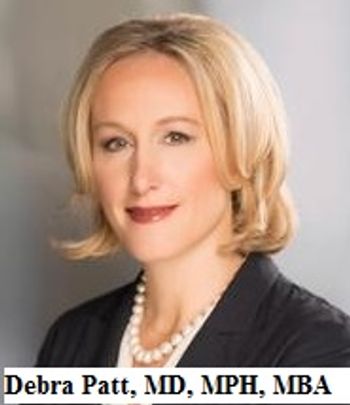
The American Journal of Managed Care® discussed integrating applied informatics into the oncology care setting with Debra Patt, MD, MPH, MBA, executive vice president of policy and strategy at Texas Oncology.
In this preview interview for this year’s virtual 2020 Community Oncology Conference, The American Journal of Managed Care® speaks with Kathy Oubre, MS, chief operating officer of Pontchartrain Cancer Center in Louisiana, on why it is her privilege to work with patients who have cancer, as well as her thoughts on telehealth after the pandemic and why being in a hurricane-prone area necessitates healthcare that is flexible.
In the second part of a 2-part preview interview in advance of this year’s virtual 2020 Community Oncology Conference, The American Journal of Managed Care® speaks with Cheryl Larson, president and chief executive officer of the Midwest Business Group on Health, about how she is helping employer organizations navigate their pharmacy benefits managers and manage employee expectations.
Individuals should register for Community Oncology Alliance's virtual meeting to hear "amazing" speakers present groundbreaking research, said Lalan Wilfong, MD, medical oncologist and vice president of value-based care and quality programs at Texas Oncology.
In the first part of a 2-part preview interview in advance of this year’s virtual 2020 Community Oncology Conference, The American Journal of Managed Care® speaks with Cheryl Larson, president and chief executive officer of the Midwest Business Group on Health, about how she is helping employer organizations navigate their pharmacy benefits managers and manage employee expectations.
At this year's Community Oncology Conference, Antonio Ciaccia, the chief strategy officer of 3 Axis Advisors, will present about pharmacy benefit managers (PBMs) and drug pricing issues. The conference, hosted by the Community Oncology Alliance, takes place virtually on April 23 and April 24, and The American Journal of Managed Care® (AJMC®) is previewing some of the speakers and topics.

The Community Oncology Alliance's annual conference is a space where industry experts and key opinion leaders can share ideas on improving patient care and advocate for community oncology, said Kathy Oubre, MS, chief operating officer at Pontchartrain Cancer Center.
The 2020 Community Oncology Conference, hosted by the Community Oncology Alliance (COA), will take place virtually on April 23 and April 24. The American Journal of Managed Care® (AJMC®) is bringing you a series of previews so you can learn more about what to expect when you attend this virtual meeting. In this interview we speak with Debra Patt, MD, MPH, MBA, executive vice president of policy and strategy at Texas Oncology, who is presenting on applied informatics in oncology at the virtual meeting.
The 2020 Community Oncology Conference, hosted by the Community Oncology Alliance (COA), takes place virtually on April 23 and April 24. The American Journal of Managed Care® (AJMC®) is bringing you a series of previews so you can learn more about what you'll hear when you attend this virtual meeting. In this interview we're speaking with Lee Schwartzberg, MD, FACP, the chief medical director of West Cancer Center and the chief medical officer of OneOncology, and who is moderating a stakeholder panel discussion on genomic profiling in cancer.
The American Journal of Managed Care® (AJMC® ) interviewed Martha Gulati, MD, cardiologist at Banner – University Medicine Heart Institute, on findings of eicosapentaenoic acid (EPA) levels in relation to cardiovascular outcomes and smoking cessation with e-cigarettes. These studies are part of the 2020 American College of Cardiology / World Congress of Cardiology Virtual Experience.
Higher levels of the omega-3 fatty acid eicosapentaenoic acid (EPA) found in the blood appear to explain why icosapent ethyl drives down the risk of a cardiovascular (CV) event, according to findings presented at the 2020 American College of Cardiology/World Congress of Cardiology Virtual Experience.
Patients with homozygous familial hypercholesterolemia saw average reductions in low-density lipoprotein cholesterol of 47.1% over 24 weeks. Reductions began to appear as early as 2 weeks after patients started taking the drug in the double-blind trial.
The American Journal of Managed Care® (AJMC® ) interviewed Craig I. Coleman, PharmD, University of Connecticut, School of Pharmacy/Hartford Hospital Evidence-Based Practice Center, on bleeding-related hospitalizations in both patients at high thrombotic risk and those administered andexanet alfa or 4-Factor prothrombin complex concentrate (4FPCC).
The American Journal of Managed Care® discussed an indirect comparison of andexanet alfa and prothrombin complex concentrate therapy with Alexander T. Cohen, MBBS, MSc, MD, Guy’s and St Thomas’ Hospitals NHS Foundation Trust.
Results for ISCHEMIA and ISCHEMIA-CKD, first presented at the American Heart Association (AHA) and due to publish shortly, continued to generate discussion Sunday, when the 2020 American College of Cardiology / World Congress of Cardiology Virtual Experience featured a pair of online presentations with additional insights into these trials.

In VICTORIA, patients within the first 3 quartiles of peptide elevation had results more impressive than the overall findings. However, patients with the highest quartile did not seem to benefit. This raises the question whether the sickest of the sick patients will benefit from vericiguat, said Javed Butler, MD, MPH, MBA, chairman for the Department of Medicine at the University of Mississippi.