

A phase 3 trial for dapagliflozin finds that the SGLT2 inhibitor is effective in reducing the risk of cardiovascular death and worsening heart failure in patients with preserved ejection fraction.
A phase 3 trial for dapagliflozin finds that the SGLT2 inhibitor is effective in reducing the risk of cardiovascular death and worsening heart failure in patients with preserved ejection fraction.

Coverage, equity, and value-based payments are critical areas of focus for the Biden administration’s health care agenda leading up to the midterm elections, according to 3 experts from Avalere.

New research shows that cortisol and cortisone levels in the hair of people living with HIV were negatively associated with CD4 count, but not with HIV viral load.

In patients with liver involvement, intrahepatic cholangiocarcinoma was a common diagnosis among some patients with cancer of unknown primary (CUP).
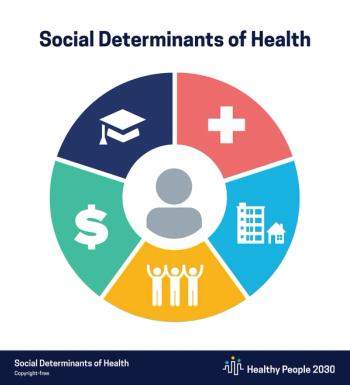
At the Pharmacy Quality Alliance (PQA) 2022 Annual Meeting Wednesday, participants heard about some unexpected insights arising from a workshop held this week between patients and pharmacists who are creating a patient-centered outcomes research agenda focused on addressing social determinants of health (SDOH) in the community pharmacy setting.

Panelists discussed results of a survey conducted among 171 benefits leaders representing more than 40 million covered lives.

Alexis Garcia, PharmD, senior director of business development at Tabula Rasa HealthCare, explains the importance of up-to-date data when implementing medication therapy management programs.

A recent review found that home-based pulmonary rehab had comparable short-term benefits to outpatient pulmonary rehab, although the outcome quality was low.

A recent study found a J-shaped association between sleep duration and mortality in people with type 2 diabetes (T2D), with a length of 5 to 7 hours associated with the lowest risk of mortality.

Atopic dermatitis was associated with the greatest burden of disease compared with 2 other types of dermatitis, in which high incidence and disability-adjusted life-years rates corresponded with high sociodemographic index areas.

Using socioeconomic status (SES) as their primary exposure, investigators from McGill University, University of Manitoba, Institut National de Santé Publique du Québec, and Laval University investigated reasons behind insulin pump uptake disparities in the Canadian provinces of Manitoba and Québec.

Half of US states are expected to restrict or ban abortion following the Supreme Court’s leaked draft majority opinion; Bayer’s darolutamide (Nubeqa) received FDA priority review as a treatment for metastatic hormone-sensitive prostate cancer; Biogen stops marketing its controversial Alzheimer drug as its CEO plans to step down.

The authors said that to their knowledge, this is the first report of cytomegalovirus (CMV) that developed during the treatment of eosinophilic enteritis in an adult.

Adam Fein, PhD, of Drug Channels Institute, and Doug Long of IQVIA discussed trends in the specialty pharmacy market in the United States.

With survival of multiple myeloma ranging from less than 1 month to over 10 years, the researchers highlighted the importance of risk stratification to quickly identify patients who are high risk with poor prognosis and could benefit from different treatment strategies and close surveillance.

Health plans and payers have plenty of options for how to analyze the effectiveness of digital therapeutic tools, as there are several effective strategies, according to Soumya Vishwanath, PharmD, of Magellan Rx Management.

The drug, oteseconazole, is an azole antifungal indicated to reduce the incidence of recurrent vulvovaginal candidiasis in females who are infertile or postmenopausal.

Representatives from employers, pharmacy benefit managers, and others discussed methods of improving pharmacy access and affordability in health plans.
Sharon Phares, PhD, MPH, discussed her new appointment as the chief scientific officer of the National Pharmaceutical Council (NPC) and her main priorities in honor of Women's Health Month.

Among patients with rheumatoid arthritis (RA) in clinical remission, patient-physician discordance when assessing disease activity may be associated with the inability to achieve remission.

The intent of metastatic disease treatment is palliative, not curative, so we try to prolong life and provide quality of life as much as we can, said Hatem Soliman, MD, medical director of the Clinical Trials Office, Moffitt Cancer Center.

Scott Gottlieb, MD, and Adam Fein, PhD, discussed potential fallout of the FDA Aduhelm approval and lessons learned from the COVID-19 pandemic.

Patients with aspirin-exacerbated respiratory disease (AERD) who initiated treatment with dupilumab as an add-on asthma or chronic rhinosinusitis with nasal polyps therapy reported rapid clinical improvement that was sustained after 3 months.

Of the 5800 patients included in study, 20% were Black, which the researchers say adequately represents disease incidence among the population.

Patients with type 2 diabetes who used the Omnipod 5 had lower A1C after 8 weeks. Those who had been using multiple daily injections achieved the greatest benefits in reduced hypoglycemia and reduced insulin use.

These investigators wanted to better understand the reasons for the increased risk for acute myocardial infarctions among young women, who have the largest increase in hospitalization for heart attacks.
The Supreme Court may vote to overturn abortion rights; Washington state reaches a $518 million settlement with 3 opioid distributors; a new study finds 7 hours of sleep is the optimal total for people of middle and old ages.

A recent study found that inflammatory parameters were reduced in patients with obstructive sleep apnea syndrome after using continuous positive airway pressure (CPAP) treatment.

A new meta-analysis found that more severe emphysema is associated with an increased risk of lung cancer.

Nicoleta Dascalu, founding member and advocacy manager of Asociaţia Română Anti-SIDA (ARAS; Romanian Association Against AIDS), discusses the status of care for persons living with HIV/AIDS (PLWH) in Romania, including health care coverage and lack of adequate medication access.

259 Prospect Plains Rd, Bldg H
Cranbury, NJ 08512
© 2025 MJH Life Sciences®
All rights reserved.