
Our top content from the Spring Association of Cancer Care Centers (ACCC) Annual Meeting & Cancer Center Business Summit featured topics on health care worker retention, advancements in precision medicine, and more!
Our top content from the Spring Association of Cancer Care Centers (ACCC) Annual Meeting & Cancer Center Business Summit featured topics on health care worker retention, advancements in precision medicine, and more!

Discover strategies for identifying, treating, and supporting those affected by seasonal affective disorder (SAD).

More than 70% of patients continued treatment with secukinumab after the first year, a study finds.

Older adults in the United States are disproportionately affected by health care costs compared with their counterparts in other wealthy nations.

While race-aware models showed superior statistical calibration across racial and ethnic groups, their benefits in clinical decision-making were less pronounced than expected.

A new study revealed divergent policies on artificial intelligence (AI) use in peer review among leading medical journals, with confidentiality concerns driving prohibitions.
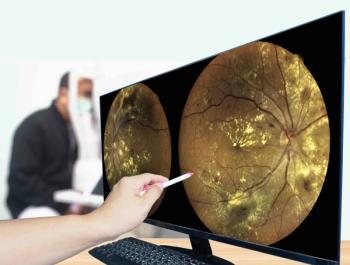
Gene therapy partially restores visual processing in the geniculostriate pathway of patients with Leber congenital amaurosis type 2 while maintaining compensatory activity in the retinotectal pathway.

Women who had children had a higher risk of reaching a visual acuity below 6/24 compared with those who did not have children.

With new CDC data expressing optimism about the epidemic of sexually transmitted infections (STIs), take a look at the current novel approaches in STI care and learn about crucial next steps to combat this public health issue.

Recent insights shed light onto the most effective diagnostic tools for laryngeal myasthenia gravis (MG), a poorly understood and often misdiagnosed condition, is most reliably.

Experts are now urging the inclusion of sickle cell disease in the global health agenda to address disparities in treatment access.
Presentations at the 2024 Asembia Specialty Pharmacy Summit focused on reshaping specialty pharmacy while keeping patients front and center.

Cancer drug prices rose post-launch in the US, while they declined in Germany and Switzerland.

The 6-year mandatory Increasing Organ Transplant Access Model aims to boost kidney transplants and address disparities by incentivizing hospitals, enhancing care coordination, and measuring transplant outcome performance.

Meaningful change thresholds for the EORTC Quality of Life Questionnaire in chronic lymphocytic leukemia (CLL) or small lymphocytic lymphoma (SLL) are: −11/+11 for symptom burden, −16/+16 for physical condition/fatigue, and −16/+13 for worries/fears.

Changes in cardiorespiratory fitness from youth to adulthood was associated with colorectal cancer (CRC) incidence risk.

Investigators were seeking clarification on optimal sequencing of the immune checkpoint inhibitor atezolizumab following treatment failure and disease progression after receipt of nivolumab and pembrolizumab.

The approval of Yesintek (ustekinumab-kfce), the sixth biosimilar to reference Stelara, will be used to treat patients with various immunology conditions, including psoriatic arthritis and inflammatory bowel disease.

Matias Sanchez, MD, assistant professor in the Department of Medicine at the University of Illinois Chicago, discussed recent advancements in multiple myeloma treatment, including the potential of cell therapies and bispecific antibodies.

Researchers review the safety, efficacy, and considerations for COVID-19 vaccination in multiple sclerosis patients, especially those on disease-modifying therapies, affirming the vaccine's overall benefit in reducing severe COVID-19 risks without significantly increasing MS relapse rates.

Tislelizumab's inclusion in the National Comprehensive Cancer Network (NCCN) guidelines for hepatocellular carcinoma (HCC) as a category 1 recommendation marks an advancement in the treatment landscape for HCC.

COVID-19 vaccination significantly reduced anxiety and depression in patients with idiopathic pulmonary fibrosis (IPF), improving their mental health one month after the first dose.

Phase 2 data show about half of patients with high-risk or secondary acute myeloid leukemia achieved a complete response or complete response with incomplete hematologic recovery after one or two cycles of induction therapy with CPX-351.

This analysis provides much-needed robust data on the efficacy of heat-cold therapy for mitigating discomfort and insomnia in restless legs syndrome (RSL).

Deuruxolitinib showed significant efficacy and safety in hair regrowth stimulation among adult patients with alopecia areata, particularly in those with moderate to severe hair loss.

The Center on Health Equity & Access highlights news and expert insights on research, social determinants of health, and health policy.

The findings show that increases in serum glial fibrillary acidic protein throughout B-cell depletion therapy are associated with disability worsening despite not relapsing—known as progression independent of relapse activity.

Sandra Cuellar, PharmD, from the University of Illinois Chicago, highlights the critical role of real-world data in shaping reimbursement models for oncology therapies and emphasizes the growing importance of patient-centered care through shared decision-making, precision medicine, and patient-reported outcomes.

Despite found associations, due to small sample sizes the researchers suggest readers interpret their findings with caution.

High cumulative doses of epipodophyllotoxins were associated with the highest risk for survivors of childhood cancer of developing late subsequent leukemia.

259 Prospect Plains Rd, Bldg H
Cranbury, NJ 08512
© 2025 MJH Life Sciences®
All rights reserved.