

The Hospital Frailty Risk Score, Secondary Care Administrative Records Frailty index, and the frailty syndromes measures were able to assess frailty in patients diagnosed with colorectal cancer (CRC).
The Hospital Frailty Risk Score, Secondary Care Administrative Records Frailty index, and the frailty syndromes measures were able to assess frailty in patients diagnosed with colorectal cancer (CRC).

Further acknowledgement and study of the tumor microenvironment in diffuse large B-cell lymphoma (DLBCL) could eventually result in much more personalized—and effective—treatments.

In the course of investigating the use of Bacillus Calmette-Guérin for high-risk individuals who have type 1 diabetes (T1D), researchers hoped—and found—that BCG could substantially reduce the chance of those with T1D contracting COVID-19; BCG has historically been used to prevent tuberculosis (TB).

Fauci’s first testimony since leaving government service set to address alleged misconduct and pandemic management; vaccine makers advised to focus on JN.1 and derived subvariants; AstraZeneca and Boehringer Ingelheim introduce $35 monthly cap on inhalers.

For June and Pride Month, we are bringing you our newest limited-edition podcast series. In this first episode, we speak with Lancaster, Pennsylvania, native and president of Lancaster Pride, Tiffany Shirley.

The findings can help reduce barriers that delay the onset of recommended palliative care in advanced cancer.

The proof-of-concept study showed that antisense oligonucleotides developed by the researchers successfully restored cellular development and brain cell function in patients with the disease characterized by multiorgan dysfunction.

Attendees packed a session on multicancer early detection (MCED) on the first day of the 2024 American Society of Clinical Oncology annual meeting.
The annual session on newly approved drugs reviewed adverse effects, mechanisms of action, and real-world experiences.

This week, the Center on Health Equity and Access covers news related to AI integration, disparities in pediatric hospitalizations, new advancements presented at the 2024 CMS Health Equity Conference, and an expert discussion on the cardiovascular field.

A large US study showed population-based multigene testing might be a cost-effective way to identify women at risk for breast and ovarian cancer, potentially preventing more cases but raising concerns about generalizability and cost.

There are effective strategies that can be employed concurrently to promote adherence to medications for schizophrenia, including but not limited to pharmacological, technological, and psychosocial interventions.

Distinct retinal vessel atrophy patterns may be associated with multiple sclerosis (MS), but further research is needed to assess retinal vessel changes and their underlying role in MS.

Among patients with rheumatoid arthritis (RA) and psoriatic arthritis (PsA), intense pain symptoms were associated with poor sleep, fibromyalgia, depression, and sleep apnea.

Data presented at the recent American Thoracic Society 2024 international conference identified the top barriers to lung cancer screening in Asian Americans, and common risk factors among this population.

Ronesh Sinha, MD, attributes the rising rates of heart disease to sedentary lifestyles, stress, and health inequities, while advocating for digital health solutions to improve preventive care.

A large Medicare cohort study found that the most common locations of procedurally treated keratinocyte cancers in the US were the head and/or neck for both squamous cell carcinomas and basal cell carcinomas.

Presenters from CMS and the CDC explored the importance of standardizing health equity data collection at the 2024 CMS Health Equity Conference.

The FDA approved mRNA-1345, a Moderna vaccine for the treatment of respiratory syncytial virus (RSV). This single-dose vaccine offers protection against lower respiratory tract disease in adults over 60 years, with data suggesting long-term effectiveness.

Black children with asthma are disproportionately exposed to asthma triggers and access barriers, according to one study.

An analysis that overviewed dermatologic mobile apps with artificial intelligence (AI) features led researchers to voice concerns about the use of this technology in its current state.

There has been a lack of visible progress from RECOVER, the $1.6 billion initiative launched by the National Institutes of Health to research long COVID; the CDC has detected a third human case of bird flu linked to sick dairy cows; small businesses and their workers are struggling to receive weight-loss drug insurance coverage.

An analysis of patient preferences in provider search and scheduling
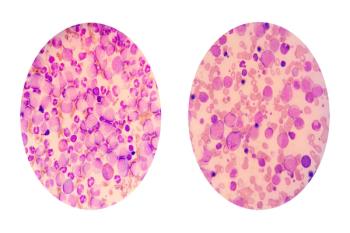
BET inhibition in chronic lymphocytic leukemia (CLL) significantly reduces leukemic cell burden and restores T-cell function by modulating the immune microenvironment and reversing T-cell exhaustion.

A recent review highlighted several candidate biomarkers for diagnosing axial spondyloarthritis associated with inflammatory bowel disease in early phases.

Coverage of our peer-reviewed research and news reporting in the health care and mainstream press.

Test your knowledge of the April 2024 issue of AJMC with a quick quiz!

A case controlled study suggests a gene variant may offer some protection from frontal fibrosing alopecia (FFA), but only if there is no prior history of oral contraceptive pill use, which appears to increase the risk for carriers of this variant.

The treatment showed effectiveness in achieving local control of acute myeloid leukemia (AML) that developed in the eyes of a pediatric patient.

Shawn Kwatra, MD, dermatologist, John Hopkins University, recounts his study assessing the use of nemolizumab in prurigo nodularis presented at the American Academy of Dermatology conference.