

Industry leaders discuss how policy, pricing, and innovation will shape the future of oncology care and patient access.
"Finding Our Rhythm: Embracing Change in Oncology Care"
Industry leaders discuss how policy, pricing, and innovation will shape the future of oncology care and patient access.

Experts discuss the evolution, challenges, and next steps for value-based oncology payment models.
Leaders from the American Oncology Network discuss they help practices navigate the implementation of complex therapies, in ways that make sense for patients and work financially for practices.

Community oncology practices can enhance their presence in the community by offering innovative service lines such as multispecialty infusions, and by offering enrollment assistance for better outcomes.
Leaders of OneOncology share how the managed services organization empowers independent oncology practices through advanced technology, clinical trials, and value-based care, enhancing patient-focused cancer treatment.
Leaders describe how shared data, theranostics programs, and coordinated clinical trials support independent practices and advance value-based cancer care.

How strategic partnerships in oncology can enhance patient care by addressing diverse needs through collaboration.

Experts discuss the evolving dynamics between payers and providers in oncology, emphasizing value-based care, data transparency, and collaborative reform opportunities.
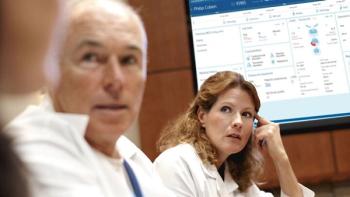
The integration of AI has the potential to enhance oncology clinical pathways, but there are important judgment calls that must be made before this technology can be fully implemented.
The US Oncology Network comprises over 3200 health care providers and 700 sites of service, with more than 70% of physicians participating in the Enhancing Oncology Model.

Oncology leaders warn that declining reimbursements and policy gaps threaten patient access and drive inequities in cancer care.
Many cancer survivors face ongoing physical and mental health challenges, which peer support and online resources can help address, says Brian Koffman, MDCM, DCFP, FCFP, DABFP, MSEd.
Artificial intelligence, automation, and expanded pharmacist roles help reduce administrative burdens, improve workflow, and support providers in delivering cancer care, according to Scott Soefje, PharmD, MBA, BCOP.
Artificial intelligence (AI) is expanding clinical trial access and enabling drug repurposing, according to Vivek Subbiah, MD.

Artificial intelligence (AI) holds the potential to democratize precision oncology, but it must be implemented thoughtfully.

In a time of skyrocketing oncology drug costs, the role of pharmacists in managing patients’ treatment and keeping care in the outpatient setting is more urgent than ever.

Teamwork between primary care providers and oncologists helps patients get needed care and achieve better results, according to Mark Fendrick, MD, at the Patient-Centered Oncology Care (PCOC) conference.

Panelists discussed the ingredients of successful handoffs at the time of cancer diagnosis and ways to collaborate as screening capabilities evolve.

As therapeutic advances enable patients with cancer to live longer, greater attention is needed to support the goal of survivorship, starting at diagnosis.