

Physicians and scientists are worried about the future pandemic preparedness, and the reasons why are largely due to social and political influences, according to a keynote speech and panel discussion on the first day of Kidney Week 2022.
Physicians and scientists are worried about the future pandemic preparedness, and the reasons why are largely due to social and political influences, according to a keynote speech and panel discussion on the first day of Kidney Week 2022.

The American Heart Association (AHA) will hold its annual conference in person in Chicago and online from November 5-7, with sessions on health equity and gene editing receiving particular focus.
Sessions at Kidney Week 2022 range from combatting medical misinformation to learning about the latest clinical advances, as well as championing health equity for patients with kidney disease.
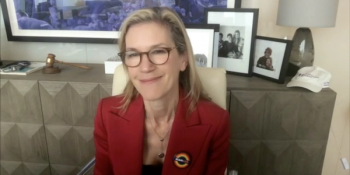
Susan E. Quaggin, MD, FASN, president of the American Society of Nephrology (ASN) for the 2021-2022 term, discussed the major focuses and breakthroughs in nephrology to be presented at Kidney Week 2022, which include novel treatments for common and rare kidney diseases, as well as efforts to address disparities for transplant and care access.
Brian Corvino, MBA, managing director, Life Sciences and Health Care Practice, Deloitte Consulting, LLP, offered an overview of how the surge of innovation in oncology—and resulting drug approvals—dominate the biopharmaceutical sector. He spoke at the Community Oncology Alliance's Payer Exchange Summit.
The quest to deliver better cancer care—with better outcomes and patient experience—is not a one-size-fits-all journey, as seen in panels during the Community Oncology Alliance (COA) Payer Exchange Summit, held in Tyson’s Corner, Virginia.
Making value-based payment models work in cancer care requires close attention to the financial and quality measures and a commitment to culture change, said experts gathered October 25 at the Community Oncology Alliance Payer Exchange Summit.
Panelists who have reviewed the Enhancing Oncology Model (EOM) say it puts additional requirements on practices with reduced monthly payments, and its risk modeling could put a small practice out of business.

A medical student at the University of Kansas discusses a research project she started in her first year of school—2020—looking at whether a racial bias in pulse oximetry was present in patients with acute hypoxemic respiratory failure.

The latest updates in lung cancer screening guidelines will help address disparities in certain populations, but multiple barriers including access to programs and payer coverage remain issues.

Arianne Baldomero, MD, MS, a pulmonologist in the Veterans Health Administration, discusses findings of a study looking at chronic obstructive pulmonary disease (COPD) disease management for veterans in rural areas.
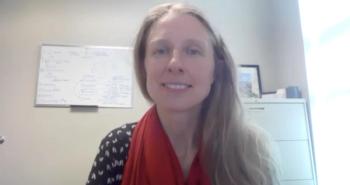
Urban areas face a concentration of various pollutants that will be exacerbated by the increasing temperatures caused by climate change, and low-income residents likely have fewer resources to withstand negative health impacts, according to Emily Brigham, MD, MHS, of the University of British Columbia.

Youths and young adults are the target demographic of sleek, colorful e-cigarette devices with flavorful nicotine.

Martin Runnström, MD, a fourth-year fellow at the Emory University School of Medicine, describes a study he presented at CHEST 2022 showing a reduced response to a 2-dose immunization series for SARS-CoV-2 among patients using biologics to treat severe asthma or atopic dermatitis.
In the Roger C. Bone Memorial Lecture in Critical Care at CHEST 2022, E. Wesley Ely, MD, MPH, of the Vanderbilt University School of Medicine, highlights the need for humanism in the intensive care unit and how the COVID-19 pandemic destroyed what had been built up.

As understanding of COVID-19 evolves and more evidence on treatments emerges, making sense of it can be a challenge for physicians.

Some atopic diseases affect asthma outcomes more than others, said Basil Kahwash, MD, an assistant professor of medicine on the clinical educator track in the Department of Medicine at Vanderbilt University Medical Center, who spoke at CHEST 2022.
There are several closely watched randomized trials examining catheter-directed therapies for acute pulmonary embolism, according to Parth Rali, MD, an associate professor of thoracic medicine and surgery at the Lewis Katz School of Medicine and director of the Temple University Health System Pulmonary Embolism Response Team.
While more research is needed, obesity does play a role in the response to viral infections as well as immunizations, said Kara Dupuy-McCauley, MD, a pulmonologist at the Mayo Clinic in Rochester, Minnesota.

The first 5 minutes of a patient’s visit with a doctor can help improve communication and build more trusting relationships, explained panelists during a session on lung health disparities in America at CHEST 2022.
Tam C. Phan, PharmD, AAHIVP, assistant professor of clinical pharmacy, USC School of Pharmacy, explains why it's important for pharmacists to learn about and advocate for their patients who are transgender or gender nonbinary.

Panelists at an Academy of Managed Care Pharmacy (AMCP) Nexus 2022 session discussed enhanced utilization management strategies to manage the rising cost of specialty drugs, while providing members with support for rare, complex conditions.
Chelsee Jensen, PharmD, senior pharmacy specialist at Mayo Clinic, talks about the importance of patient, provider, and nursing education as the US biosimilars landscape evolves.
Leaders from City of Hope National Medical Center discussed how the cancer research and treatment center addressed challenges with attracting and retaining oncology pharmacists through a restructuring during the ACCC 39th National Oncology Conference.
The concluding keynote address at the Academy of Managed Care Pharmacy Nexus 2022 meeting discussed new and emerging oncology drugs in the pipeline and their potential impact on the treatment landscape as it pertains to managed care providers.
Mike Koroscik, vice president, Oncology, Allina Health Cancer Institute, presented “Preparing for Population Health in Oncology,” during the Association of Community Cancer Centers 39th National Oncology Conference, which concluded Friday.
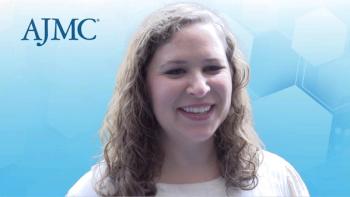
Patients have to always come first, and technology can enhance their care experience, stated Anne Marie F. Rainey, MSN, RN, CHC, director of quality and value-based care at Clearview Cancer Institute.
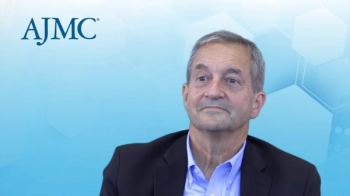
Chester "Bernie" Good, MD, MPH, senior medical director of the Center for Value Based Pharmacy Initiatives at UPMC Health Plan, talks about the evolution of value-based contracts.
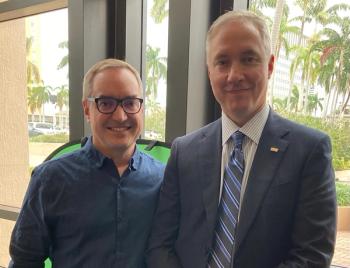
On day 1 of this year’s Association of Community Cancer Centers’ (ACCC) National Oncology Conference, The American Journal of Managed Care® sat down for a conversation with David Penberthy, MD, MBA, ACCC’s president for the 2022-2023 term, and his brother Scott Penberthy, PhD, MS, director, Applied AI, Office of the CTO, at Google.
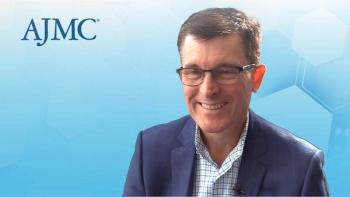
There have been many silver linings of the pandemic, including improvements in financial, operational, and clinical advancement efficiencies, as well as addressing the total cost of care in population health management, said Mike Koroscik, MBA, MHA, vice president of oncology, Allina Health and the Allina Health Cancer Institute.