

Ishani Ganguli, MD, MPH, assistant professor of medicine at Harvard Medical School, physician at Brigham and Women’s Hospital, reacts to receiving the 2022 Seema S. Sonnad Emerging Leader in Managed Care Research Award.
Ishani Ganguli, MD, MPH, assistant professor of medicine at Harvard Medical School, physician at Brigham and Women’s Hospital, reacts to receiving the 2022 Seema S. Sonnad Emerging Leader in Managed Care Research Award.

Population health brings an important lens to both oncology practice and research, said Neil Iyengar, MD, associate attending physician, breast medical service, Memorial Sloan Kettering Cancer Center.

A panel including several experts in cardiology discussed the ways that heart failure (HF) can be diagnosed and treated using the new 2022 AHA/ACC/HFSA Guidelines.
Patient-Centered Oncology Care® (PCOC) begins Wednesday in Tennessee with 2 days of discussions on how to achieve the related goals of closing health care disparities and eliminating barriers for patients.
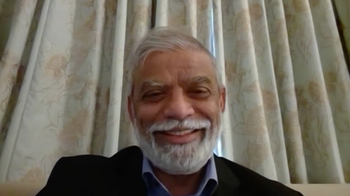
Kashyap Patel, MD, president of Community Oncology Alliance and chief executive officer of Carolina Blood and Cancer Care Associates, previews the Patient-Centered Oncology Care® (PCOC) 2022 meeting happening this week in Nashville, Tennessee.

Tochi M. Okwuosa, DO, cardiologist and director of cardio-oncology at Rush University Medical Center, delivered several presentations at the American Heart Association’s Scientific Sessions this year. Chief among them were the importance of cardiovascular health in cancer survivors and cardio-toxicity from cancer treatments.
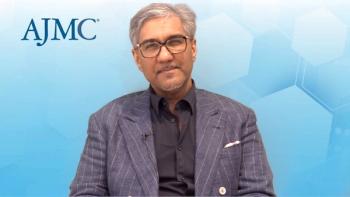
Kausik K. Ray, MB ChB, MD, MPhil, is professor of public health and a consultant cardiologist at Imperial College London in the United Kingdom. At this year’s American Heart Association’s Scientific Sessions, he presented findings from a 4-year open-label extension study of inclisiran, a small interfering RNA that targets proprotein convertase subtilisin kexin type 9 to lower low-density lipoprotein cholesterol (LDL-C).

Keith C. Ferdinand, MD, FACC, FAHA, FASPC, FNLA, professor of medicine and the Gerald S. Berenson Endowed Chair in Preventative Cardiology, Tulane University School of Medicine, discusses the results of the recently halted FRESH trial, why there is such a great need for new antihypertensive agents, and possible contributory factors to outcome disparities between Black and White patients.

Posters presented at the American Heart Association's Scientific Sessions elaborated on the results of out-of-pocket expenses and adherence for guideline-directed medical therapies in patients with heart failure with reduced ejection fraction (HFrEF).

The DELIVER trial is the largest trial to date of SGLT2 inhibitor use in heart failure, and these latest data on dapagliflozin in heart failure with mildly reduced or preserved ejection fraction show an extensive benefit on health status, noted Mikhail Kosiborod, MD, cardiologist at St. Luke's Mid America Heart Institute in Kansas City, Missouri.

A panel at the annual American Heart Association conference held in Chicago, Illinois, discussed ways in which cardiovascular disease (CVD) care was affected by equity issues between White and Black patients.

The latest real-world clinical practice data from the VICTORIA trial of vericiguat bolster previous data on the medication’s benefit by showing that 92% of patients hospitalized for a worsening heart failure event would be eligible to start the therapy and that doing so would reduce their risk of heart failure hospitalization and cardiovascular death, noted Stephen J. Greene, MD, Duke University Medical Center and the Duke Clinical Research Institute.

Posters presented at the American Heart Association conference in Chicago, Illinois, evaluated the insights from the VICTORIA trial and their generalizability to patients hospitalized with heart failure with reduced ejection fraction (HFrEF).
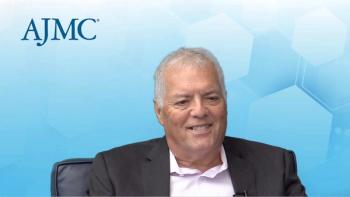
In the ENNOBLE-ATE trial, Michael A. Portman, MD, FAHA, director, Pediatric Cardiovascular Research, Center for Integrative Brain Research, and professor of pediatrics at Seattle Children's, and his team evaluated the safety and efficacy of edoxaban, a direct oral anticoagulant previously only used among adult patients, among pediatric patients with cardiac disease.
Daniel E. Weiner, MD, MS, board certified nephrologist and lead navigator at Tufts Clinical and Translational Science Institute, spoke on the limitations and future potential of value-based payment systems for chronic kidney disease (CKD), including the End-Stage Renal Disease (ESRD) Treatment Choices (ETC) Model and the Kidney Care Choices (KCC) Models.

Curtis Warfield, MS, senior quality analyst, Indiana State Department of Health, and regional leader of National Kidney Foundation's Kidney Advocacy Committee, spoke on limitations regarding the current process of educating and managing lifestyle interventions for patients with chronic kidney disease (CKD), and how nephrologists can better integrate these strategies.
More than 1 in 4 adults have 1 or more conditions that fall into the cardio-renal-metabolic category, according to findings released during Kidney Week 2022.
Douglas L. Mann, MD, professor of medicine at Washington University School of Medicine in St. Louis and editor-in-chief of JACC: Basic to Translational Science discussed the first set of data reported on NTLA-2001, a novel investigative intravenous agent that targets the TTR gene and TTR protein levels, which have been shown to play a role in development of cardiac transthyretin (ATTR) amyloidosis.

It has been 3 years since new kidney care payment models were announced by HHS, and at a session at Kidney Week 2022, the associate division director of nephrology at the University of Alabama at Birmingham described his organization’s participation in Kidney Care First, one of the value-based care models announced in 2019.

Research presented at the American Heart Association (AHA) Scientific Sessions in Chicago, Illinois, found that the Kansas City Cardiomyopathy Questionnaire-12 (KCCQ-12) was able to assess patients’ symptoms more accurately for clinicians.

Posters presented at the American Heart Association (AHA) Scientific Sessions in Chicago, Illinois, found that the neighborhood income and socioeconomic status had an effect on heart failure and all-cause readmission rates.
Jen Gunter, MD, obstetrician and gynecologist, author, and specialist in chronic pain medicine and vulvovaginal disorders, spoke on the change in perspective regarding the medical and scientific community's role in dispelling health care misinformation on social media and in the press.
Jennifer Green, MD, professor of medicine at Duke University School of Medicine, member of Duke Clinical Research Institute, and EMPA-KIDNEY collaborator, discussed findings of the EMPA-KIDNEY trial presented at Kidney Week 2022, which showed a 28% improvement for patients with chronic kidney disease (CKD) on empagliflozin, whether in reduced mortality from cardiovascular disease or progression of CKD.

With no sign that medical misinformation is going away, a session at Kidney Week 2022 delved into how nephrologists and researchers can educate and inform the public.

A study presented at Kidney Week 2022 examined the effect of combining diet coaching with financial assistance for Black adults with hypertension and advanced chronic kidney disease.
Access to care remains a key issue when trying to deliver equitable kidney health care to patients, explained O.N. Ray Bignall II, MD, assistant chief diversity and health equity officer at Nationwide Children’s Hospital.
Brent W. Miller, MD, board certified nephrologist and professor of clinical medicine at Indiana University School of Medicine, discussed new and emerging technologies for at-home hemodialysis and peritoneal dialysis, as well as efforts that have been made to address uptake issues for patients with kidney disease.
340B was developed with positive intentions, but has resulted in unintended consequences, said Edward J. Licitra, MD, PhD, chairman and chief executive officer, Astera Cancer Care.
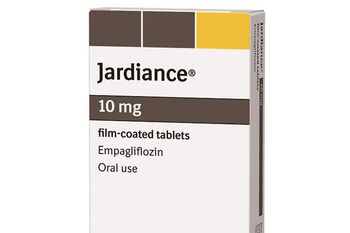
Empagliflozin, a sodium-glucose cotransporter 2 (SGLT2) inhibitor, reduced the risk of death or worsening progression of chronic kidney disease (CKD) by 28%, according to results published Friday at Kidney Week 2022.

"We need to get rid of all obstacles that are getting in the way of the patient getting their care," said Bo Gamble, director of strategic practice initiatives at Community Oncology Alliance (COA).