





Clinical
Latest News
Advertisement
Latest Videos




Advertisement
More News
The researchers explained that future studies should explore how the physical, emotional, and social impact of hepatitis B on patients could be measured and incorporated into clinical management.

Patients who had concurrent thrombotic thrombocytopenic purpura (TTP) and COVID-19 had elevated risk of mortality and other complications.

FDA Approves Enfortumab Vedotin Plus Pembrolizumab for Locally Advanced or Metastatic Bladder Cancer
In the phase 3 EV-302/KEYNOTE-A39 clinical trial, the antibody-drug conjugate enfortumab vedotin plus PD-1 inhibitor pembrolizumab nearly doubled both median overall survival and progression-free survival compared with chemotherapy.
David Fajgenbaum, MD, MBA, MSc, cofounder of Every Cure, shared that the organization is able to reduce clinical trial costs to $1 to $5 million per drug trial, and that clinical trials are not always necessary to expand a drug's indication.

In our coverage of myasthenia gravis this year, the top developments show the effects of COVID-19 continue to be uncovered, a new FDA approval for generalized disease, and assessing patient outcomes following uncontrolled disease and respiratory distress.

Two doses of batoclimab were evaluated for their effectiveness in patients with generalized myasthenia gravis (MG) who were seropositive.

Kevan Herold, MD, professor of immunobiology and medicine at Yale School of Medicine, discussed recently published results from the PROTECT trial of teplizumab in patients newly diagnosed with type 1 diabetes (T1D).

Also known as Sanfilippo syndrome, this rare genetic syndrome has no known cures and what current treatment options are available are expensive and limited in supply.

A vaccine is showing promising results in treating melanoma; the Biden administration will implement inflation penalties on dozens of drugmakers to reduce out-of-pocket costs for Medicare recipients; the CDC issued an alert urging health care providers to increase immunization coverage for influenza, COVID-19, and respiratory syncytial virus (RSV).

Trastuzumab administered subcutaneously delivered unique immunomodulation effects vs intravenous trastuzumab in patients with treatment-naïve HER2-positive (HER2+) breast cancer

Givinostat, a histone deacetylase inhibitor from Italfarmaco, was supported by data from the phase 3 EPIDYS study, a randomized, double-blind, placebo-controlled, multicenter trial investigating the agent vs placebo.
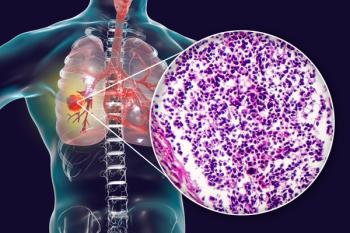
The treatment developed by Amgen could be the first therapeutic option approved for third-line treatment of advanced small cell lung cancer (SCLC).

Skeletal muscle proved to be significant in calculating chemotherapy toxicities in nonmetastatic colorectal cancer (CRC).

Mark Metersky, MD, FCCP, illustrates the pathology of bronchiectasis.

Key opinion leaders highlight the importance of identifying and treating dry eye disease to mitigate long-term economic burdens.
Professionals highlight considerations for the addition of cost-effective, statistically significant therapies to payer formularies.

New research shows that adding navy beans to one’s usual diet may be a viable dietary strategy for modulating the gut microbiome and regulating host markers associated with metabolic obesity and colorectal cancer.
The rate of invasive pneumococcal disease in children plummeted by 72% from 2002 to 2021; health care spending in the United States rose 4.1% in 2022 to $4.5 trillion; roughly two-thirds of Americans who have a mental health condition were unable to access treatment in 2021 despite having health insurance.

While past studies have shown the connection between poor sleep and job performance, this research dives deeper into the experience of this specific population.
Key opinion leaders underscore the importance of a multidisciplinary approach that can break down barriers and advance CSCC and BCC therapy.
The US Preventive Services Task Force (USPSTF) recommended that children with obesity receive intensive counseling at age 6 to promote healthy diet and exercise habits; a new survey found that the majority of American patients are wary of their doctors using artificial intelligence (AI); a class-action lawsuit was filed Tuesday against health insurer Humana for using an AI algorithm that systemically denies seniors rehabilitation care recommended by their doctors.
Experts explore the optimal sequencing of immunotherapy relative to radiation therapy in CSCC and BCC care.

From 2013 to 2022, the all-cause mortality rate among patients with HIV in China declined from 5.4% to 2.7%.

Patients with metastatic colorectal cancer (CRC) who experience colon perforation may have similar survival times to those without perforation.

Elaine Siegfried, MD, of Saint Louis University School of Medicine discusses the use of biologics to treat atopic dermatitis (AD) and how they differ from other treatments.
Advertisement
Advertisement
Trending on AJMC
1
Oral JAK Inhibitors Boost Hair Regrowth Odds in Alopecia Areata
2
CMS Rule Ends Medicaid, CHIP Funding for Pediatric Gender Care
3
Panel Calls for Earlier Detection, Clearer Pathways in Rare Glomerular Disease
4
Medicare Drug Price Negotiations Yield Uneven Out-of-Pocket Savings
5