


Insurance
Latest News
Advertisement
Latest Videos
CME Content


Advertisement
More News
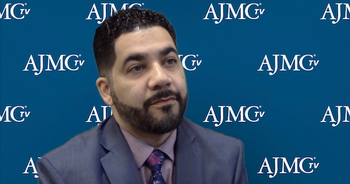
The long time between when a performance period ends and when the report comes out in the Oncology Care Model (OCM) can make it difficult to measure the impact specific changes are making, said David Ortiz, OCM program director at Montefiore Einstein Center for Cancer Care.

A study of readmission rates by primary care providers (PCPs) finds a lack of variation and calls into question implementing pay-for-performance programs that incentivize or penalize PCPs for readmissions.

The Trump administration is backing off a proposal that would have allowed private Medicare plans to refuse to pay for certain drugs for chronic conditions that experience steep price hikes; 5 more states have sued Purdue Pharma, alleging the company llegally marketed and sold opioids; bariatric surgery may offer more benefits for adolescents than adults.

The Oncology Care Model (OCM) has set off a ripple of change in cancer care that extends beyond the patients who are in the model, said David Ortiz, OCM program director at Montefiore Einstein Center for Cancer Care.

Even though Northwestern Medicine is projected to sustain a loss in the new Bundled Payments for Care Improvement Advanced, it plans to participate because doing so will position Northwestern Medicine as best possible to manage future challenges in episodes of care.

Every week, The American Journal of Managed Care® recaps the top managed care news of the week, and you can now listen to it on our podcast, Managed Care Cast.

This week, the top managed care news included HHS announcing a finalized rule requiring the disclosure of drug prices in television ads; a report finding high satisfaction with employer health coverage despite the cost; a study finding heart failure is surging among young adults.

Triage pathways can transform practices and save practices and CMS money by keeping people out of the emergency department and hospital, said Ray Page, DO, PhD, president and director of research at The Center for Cancer and Blood Disorders.

Hospital prices of privately insured patients are more than twice the price that Medicare pays, according to a new report from RAND and supported by the Robert Wood Johnson Foundation, the National Institute for Health Care Reform, the Health Foundation of Greater Indianapolis, and participating employers.

Tennessee is set to become the first state to transition its Medicaid program to a block grant; a federal judge has blocked cuts to Medicare rates for 340B hospitals but did not grant permanent injunction; Senator Elizabeth Warren has unviled a plan to combat the opioid epidemic that would spend $100 billion over 10 years.
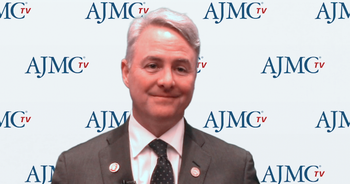
Jeff Patton, MD, chief executive officer of Tennessee Oncology, offers his reaction to CMS' proposal to ease restrictions on how Part D managed the 6 protected classes of drugs.

During World Health Care Congress 2019, healthcare stakeholders from around the globe convened to discuss all things healthcare, ranging from Medicare for All to social determinants of health.

During a session at World Health Care Congress 2019, Senator Bill Cassidy, MD, offered his alternative to Medicare for All, which is modeled after the Children’s Health Insurance Program, and discussed other healthcare issues on his radar.
Basit Chaudhry, MD, PhD, founder of Tuple Health, explains why it's important to evaluate the adequacy of the novel therapy adjustment under the Oncology Care Model (OCM).
During a session at the National Association of Accountable Care Organizations (ACOs), top performing ACOs shared lessons learned and best practices for ensuring compliance with quality measures while keeping the patient at the forefront.

Crescent Moore, PharmD, PhD, BCPS, senior consultant, BluePeak Advisors, discusses how CMS is planning on implementing care coordination programs in Medicare.

As part of CMS’ FY 2020 Medicare Hospital Inpatient Prospective Payment System and Long-Term Acute Care Hospital Prospective Payment System Proposed Rule and Request for Information, the agency is proposing an increase in how much it reimburses hospitals for chimeric antigen receptor (CAR) T-cell therapy, as well as wage index hikes for rural hospitals.
At the American Medical Association headquarters Monday, HHS Secretary Alex Azar and CMS Administrator Seema Verma announced 5 new Medicare primary care payment models designed to eventually incentivize the entire healthcare system to transition to value-based care, particulary for patients with chronic conditions.

With all the regulatory changes that CMS and HHS are rolling out, community oncology practices are facing significant changes in how they take care of patients, said Barry Russo, chief executive officer of The Center for Cancer and Blood Disorders.


Results of the landmark study, the first in a series of renal outcomes studies for SGLT2 inhibitors, will be of great interest to policy makers given the cost of dialysis to Medicare.
CMS has given plan sponsors the flexibility to choose which drug therapy categories they’d like to administer the Part B step on, explained Crescent Moore, PharmD, PhD, BCPS, senior consultant, BluePeak Advisors,

Coverage of our peer-reviewed research and news reporting in the healthcare and mainstream press.

Senator Bernie Sanders, I-Vermont, has reintroduced a Medicare for All bill while other Democrats eye an alternative; the Trump administration is appealing a federal judge's decision to toss out Medicaid work requirements in Kentucky and Arkansas; AIDS activists are pushing CDC to force Gilead to give the agency royalties for Truvada.

Pharmacy benefit manager executives told members of the Senate Finance Committee that rebates are not the cause of high drug prices, and that more must be done to end evergreening and pay-for-delay tactics. Senators were skeptical.
Advertisement
Advertisement