



Insurance
Latest News
Advertisement
Latest Videos









CME Content


Advertisement
More News

In 2016, the Next Generation Accountable Care Organization (ACO) model generated a net savings of $62 million to Medicare, representing a 1.1% net reduction in Medicare spending. In a webcast with the Accountable Care Learning Collaborative, CMS Administrator Seema Verma called the results a strong start and offered a look at what's in the future for the model.

Nebraska voters will decide on Medicaid expansion in November; a medical watchdog has called for a stop to a clinical trial for sepsis treatment; Medicare Advantage insurer Clover Health is expanding its health plans to 6 new markets.

Among Medicare beneficiaries, the relationship between fragmented ambulatory care and subsequent emergency department visits and hospital admissions varies with the number of chronic conditions. Check out our website’s new table/figure pop-up feature! Click on the name of a table or figure in the text to see it in your browser.

Coverage of our peer-reviewed research and news reporting in the healthcare and mainstream press.
Using lower-cost generic drugs that are as safe and effective as the brand-name versions could have saved more than $900 million in Medicare in 2016, according to research published in JAMA.
As skilled nursing facilities handle more complex care, the need arises for physician input before sending patients to the hospital. Study findings reported this month in The American Journal of Managed Care® show that using telemedicine for this purpose can lead to fewer hospitalizations and savings for Medicare.
Three federal officials discussed the status of research, payer coverage, and referrals for the National Diabetes Prevention Program, as well as the rollout of the Medicare program for eligible seniors.

Every week, The American Journal of Managed Care® recaps the top managed care news of the week, and you can now listen to it on our podcast, Managed Care Cast.

Persistent use of osteoporosis medications was associated with reduced risk of fracture and significantly lower total healthcare costs, a recent analysis of Medicare claims data found.

This week, the top managed care stories included CMS outlining a plan to encourage Medicare accountable care organizations to take on more risk, faster; a study found substantial growth in Medicaid managed care enrollment; an analysis showed nearly 1 in 5 inpatient hospital stays includes a claim from an out-of-network provider.

The first in a series of articles that identifies CMS' goals in updating the Medicare Shared Savings Program and how well the proposals make taking on more risk appealing for accountable care organizations.
Following CMS’ announcement of a proposed rule to overhaul the Medicare Shared Savings Program, the National Association of ACOs (NAACOS) released a statement, saying the move will “upend the ACO [accountable care organization] movement by creating havoc with a significant overhaul introducing many untested and troubling policies.”
The share of Medicare Advantage (MA) beneficiaries in the nursing home (NH) population has been steadily rising, while MA plans appear to be increasingly concentrating beneficiaries in select NHs with better performance on quality measures.

A new rule in the Medicare Access and CHIP Reauthorization Act’s 2019 Quality Payment Program and the proposed 2019 Medicare Physician Fee Schedule could negatively affect the quality of cancer care for Medicare beneficiaries, according to the American Society of Clinical Oncology.
An optimized hepatitis C virus screening and linkage-to-care process reduces the number of patients lost to follow-up and improves linkage to care for Medicare, Medicaid, and commercially insured patients.

Coverage of our peer-reviewed research and news reporting in the healthcare and mainstream press.

CMS is proposing an overhaul for accountable care organizations (ACOs) participating in the Medicare Shared Savings Program by reducing the amount of time an ACO can stay in a 1-sided risk arrangement to 2 years. CMS said it expects to save about $2.24 billion over 10 years even as the number of ACOs drop. CMS is renaming the program "Pathways to Success."

Senator Bernie Sanders, I-Vermont, has claimed his Medicare-for-all plan will cut healthcare spending by $2 trillion, but fact checking shows that's unlikely; CVS' CEO defends its pharmacy benefit manager against claims rebates are driving up drug prices; researchers have found that immigrants have healthcare costs that are half to two-thirds of the costs of people born in the United States.
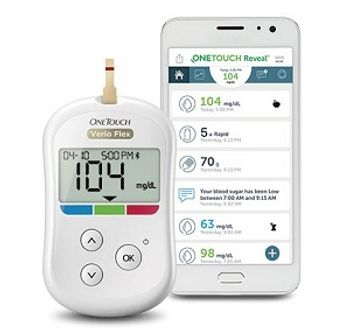
LifeScan, the diabetes division that Johnson & Johnson shed after ending US sales of its Animas insulin pump, will be the sole preferred provider of meters and testing strips for Express Scripts members in 2019.
Despite the presumption that larger practices that have more resources and are therefore better at providing care and improving outcomes, new research shows that they spend more on and have higher readmission rates for Medicare beneficiaries than smaller practices.

If patients want to be empowered to control their healthcare and if the United States wants healthcare to be economically efficient, then interoperability is critical, said Don Rucker, MD, the National Coordinator for Health Information Technology (IT), during the Office of the National Coordinator for Health IT’s 2nd Interoperability Forum. He was followed by CMS Administrator Seema Verma, who disparaged the current technological situation and painted a future where health data followed the patient and can be shared at the press of a button.

One of the reasons why hospital readmissions for the elderly are remaining high may be posthospital syndrome; priority review vouchers, which can be awarded by the FDA to 1 company and sold for a hefty price to another, are commanding a lower price than in past years; almost 8 months after Amazon, JP Morgan Chase, and Berkshire Hathaway announced their joint healthcare venture, there is little public information about it.

A new study found hospital participation in 5 common medical bundles under the Bundled Payments for Care Improvement initiative was not associated with significant changes in Medicare payments, clinical complexity, length of stay, emergency department use, hospital readmission, or mortality.
Podcast: This Week in Managed Care—Fraud in Medicare's Hospice Program and Other Health News
By
Every week, The American Journal of Managed Care® recaps the top managed care news of the week, and you can now listen to it on our podcast, Managed Care Cast.

If Medicare was allowed to negotiate drug prices, the Medicare Part D program could save $2.8 billion in 1 year on the 20 most commonly prescribed drugs alone, according to a new report from Senator Claire McCaskill, D-Missouri, the top-ranking Democrat on the Senate Homeland Security and Governmental Affairs Committee.
Advertisement
Advertisement