


Insurance
Latest News
Advertisement
Latest Videos




CME Content


Advertisement
More News

With food insecurity attributing to $77 billion in excess healthcare expenditures annually, support services such as meal programs have been implemented. A study in Health Affairs found that meal delivery programs reduce the use of costly healthcare services, such as emergency department (ED) visits, and help cut costs for dually eligible Medicare and Medicaid beneficiaries.

Government programs, especially Medicare, are stuck in the past and are not designed to accommodate advancements in modern technology, said Ed F. Haislmaier, the Preston A. Wells Jr senior research fellow at the Institute for Family Community, and Opportunity at The Heritage Foundation.

The governor of Iowa signed a law allowing health plans that are not compliant with the Affordable Care Act; custom medically designed meals keep patients healthier, a study found; the CDC is probing a teen suicide outbreak in an Ohio county.

CMS finalized its 2019 Medicare Advantage rates, raising payments it pays to insurers, and also made changes to a final rule aimed at curbing opioid misuse and abuse by Medicare beneficiaries. Payments to Medicare Advantage plans will rise an average of 3.4%, and with another 3.1% adjustment coming from a change in risk scores (which are a measure of the sickness or health of the population served) the payment increase could be as high as 6.5%.

Black–white disparities in hospital readmission rates in the United States narrowed after the introduction of the Hospital Readmissions Reduction Program (HRRP), but hospitals that serve a large number of minority patients continue to disproportionately receive penalties for their readmission rates, a study published in Health Affairs said Monday.

Some Medicare Advantage plans may not be fully ready for the requirements of this history-making preventive service.
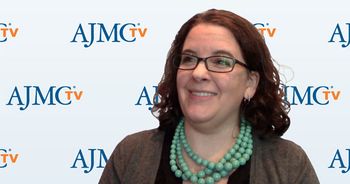
Leigh Purvis, director of Health Services Research at AARP Public Policy Institute, discusses future policies that will relieve Medicare beneficiaries from some of their expensive out-of-pocket costs.

Missed sessions are the obvious place where digital programs can find a place in the launch of Medicare's first fully reimbursed preventive service.

With most accountable care organizations (ACOs) continuing to participate in the upside-only track, the Medicare Shared Savings Program has not netted the savings that the Congressional Budget Office estimated in 2010. But some findings indicate the program will see greater savings as more ACOs transition to the downside-risk tracks and gain more years of experience.

Condition-specific readmissions measures for heart failure, pneumonia, and heart attack may not accurately or fairly reflect hospital quality, according to a study published this week in the Annals of Internal Medicine. The study found significant differences in hospitals' performance when readmissions were assessed for non-Medicare patients and for conditions other than those currently reported, showing that when these additional factors are taken into account, half of the hospitals would be subject to a change in their financial penalty status.

Dan Klein, President and CEO, Patient Access Network Foundation, discusses how the lack of a limit on cost sharing in Medicare affects patient outcomes and disease states that PAN Foundation is keeping an eye on.
Getting patients, especially in the Medicare population, to adhere to taking prescribed medications is key to preventing future complications. One health plan used personalized outreach to call Medicare beneficiaries to educate them about adherence and find out more about what barriers might exist to taking medications as prescribed by a healthcare provider.

In 2014, Maryland and CMS entered a 5-year agreement employing the All-Payer Hospital Model in the state to cut costs while improving quality. According to the year 3 performance data, Maryland has met or is on track to meet all model requirements, saving hundreds of millions of dollars as it lowers hospital readmissions and steers the state away from a volume-based system.
The report finds a connection between payment reform and hospital use patterns, but that connection may add to the debate that cardiologists have raised over the effect on patients.
The burden of high drug costs is something that everyone with health insurance coverage is facing, explained Leigh Purvis, director, Health Services Research, AARP Public Policy Institute.
Coverage of the 67th Scientific Session of the American College of Cardiology.
Healthcare reform pledged to do better for patients with heart failure, creating the incentives and team-based approaches these fragile patients need. In some cases, this has happened, but there have also been unintended consequences, according to a panel appearing Sunday at the 67th Scientific Session of the American College of Cardiology, being held in Orlando, Florida.

Savings hospitals had lower baseline spending than nonsavings hospitals during the first year of the Comprehensive Care for Joint Replacement (CJR) program, according to a Research Letter in JAMA.

In a keynote address at the 2018 National Health Policy Conference of America’s Health Insurance Plans (AHIP) in Washington, DC, HHS Secretary Alex Azar asked his audience to consider 4 areas that he said are key to “accelerating value-based transformation, and creating a true market for healthcare” through means of some sort of federal intervention that puts patients in control of their own health records.
Experts from healthcare policy organizations and advocacy groups that cater to Medicare enrollees exchanged best practices and proposed policies to help alleviate access issues during the Cost-Sharing Roundtable, co-hosted by the Patient Access Network Foundation and The American Journal of Managed Care®, on February 23, 2018, at the Barbara Jordan Conference Center in Washington, DC.
Leaders from charitable organizations that provide the safety net so patients can meet their healthcare costs and access their required medical treatment have concerns with the widening gap between patient financial needs and available resources. They were speaking at the Cost-Sharing Roundtable in Washington, DC, co-hosted by the Patient Access Network Foundation and The American Journal of Managed Care®.
The first results of the Oncology Care Model (OCM), a 5-year bundled payment demonstration from CMS, were released recently, and at a session at the National Community Oncology Dispensing Association Spring Forum 2018, Mike Fazio of Archway Health discussed the reconciliation statements from the first performance period of OCM, and where practices can look to make improvements going forward.

Patients with cancer, many who are older and on Medicare, are finding their medications are becoming unaffordable, Michele McCourt, senior director of the CancerCare Co-Payment Assistance Foundation, explained at the Cost-Sharing Roundtable, co-hosted by the Patient Access Network Foundation and The American Journal of Managed Care®.
Coverage from the National Community Oncology Dispensing Association Spring Forum 2018.
Since 2000, the number of patients undergoing gender-affirming surgery who identified as self-payers decreased. From 2012-2013 to 2014, coverage by Medicare and Medicaid of gender-affirming surgeries increased 3-fold.
Advertisement
Advertisement
Trending on AJMC
1
TrumpRx Launch Brings Savings—and Uncertainty
2
How Do GLP-1 Agonists Fit Into Stroke Care?
3
5 Things to Know About the Oral GLP-1 Era
4
Addressing Disparities at Every Step of the Stroke Care Pathway: Luke Messac, MD, PhD
5