



Sleep
Latest News
Advertisement
Latest Videos






Advertisement
More News

Poor sleep and insomnia symptoms were both associated with an increased likelihood of elevated emotional exhaustion among emergency health care workers.

Many sleep experts want to permanently stay in the standard time zone; Medicare will cover mental health counselors and marriage and family therapists beginning in January; a new Minnesota law requires hospitals to check if patients are eligible for financial assistance before referring medical debt for collections.
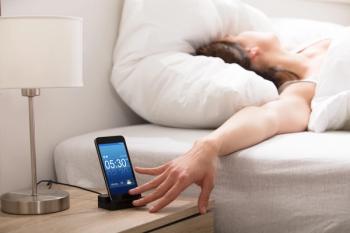
A pair of studies found the common morning ritual of hitting the snooze button doesn't dilute the quality of sleep and can improve cognitive function after awakening.
Individuals with genetic syndromes or neurodevelopmental conditions experienced shorter and poorer quality sleep, while those with heterogeneous intellectual disabilities had comparable duration but lower quality to controls.
Asian and Hispanic/Latino veterans experience insomnia at some of the highest rates, but these patient groups are also among the least likely to seek treatment for the common sleep disorder.

Lower-sodium oxybate (LXB) and sodium oxybate (SXB) were proven equally effective for cataplexy and excessive daytime sleepiness (EDS), despite LXB having 92% less sodium.

Sleep problems significantly increased between the first and second waves of the COVID-19 pandemic, which might be explained by detrimental sleep hygiene practices.

In part 3 of this 4-part series, Michael Thorpy, MD, talks about advances in sodium oxybate medication formulations and how different formulations can help patients depending on their needs.
Various health programs may shut down at the end of September without congressional action; maternal health experts push for midwife workforce expansion amidst high maternal mortality rates in the United States; studies find that heightened screen time in teens and tweens before bed can result in a lack of sleep.
Posttraumatic stress disorder (PTSD) symptoms and insomnia might be sex specific, and it is important to screen patients diagnosed with chronic insomnia for PTSD symptoms.
In part 2 of this 4-part series, Michael Thorpy, MD, discusses cases when a higher salt intake can be beneficial for some patients who have narcolepsy or daytime sleepiness.

Automated ventilatory burden can effectively assess obstructive sleep apnea (OSA) severity, estimate cardiovascular (CVD) mortality, and may present a promising alternative to apnea-hypopnea index (AHI).
Insomnia, along with other sleep disorders, were found to negatively impact workplace productivity.
In part 1 of this 4 part series, Michael Thorpy, MD, talks about salt intake and how health guidelines and individual habits shape what kind of medication is right for patients with sleep disorders like excessive daytime sleepiness or narcolepsy.
Poor quality of life and impaired functioning across many symptom domains were shown in participants in the Real World Idiopathic Hypersomnia Outcomes Study (ARISE).

Periodic limb movements during sleep (PLMS) are an added risk factor for cardiovascular disease in obstructive sleep apnea (OSA), recent study findings suggest.
It is reasonable to view stimulus control as an effective insomnia treatment, particularly for sleep initiation problems.

Sheila Garland, PhD, MSc, Memorial University in Newfoundland, Canada talks about the cognitive effects cancer can have on patients, beyond treatment side effects, and the direct impacts these can make on patients’ lives and care.
Maternal sleep duration and self-efficacy might be modifiable risk factors of maternal depression, possibly providing treatment opportunities.

Sleep processes and emotional processes are closely related, especially in terms of insomnia.

Dayna Johnson, PhD, MPH, MSW, MS talks about the necessity of community partnerships as the recipient of this year’s Associated Professional Sleep Societies (APSS) Diversity, Equity, and Inclusion Leadership Award at SLEEP 2023 and how inquiring into the community is vital for integrating healthy sleep practices.
Stress can harm different areas of sleep health in young adults who are good sleepers.

A systematic review and meta-analysis of the effects of caffeine on sleep aimed to help determine clear guidelines.

Judite Blanc, PhD, is lead author on the abstract, “Social Determinants of Sleep Disorders Among Multiethnic Americans in the NIH All of Us Research Program,” which was presented on June 5th at the SLEEP 2023 conference.
Poor sleep quality might cause cognitive difficulties, while REM sleep might be protective against these difficulties, highlighting the usefulness of a simple neurocognitive screening tool for patients with persistent insomnia disorder (pID).
Advertisement
Advertisement
Trending on AJMC
1
Coroner Reports Pennsylvania's Sixth Measles-Associated Death
2
CMS Rule Ends Medicaid, CHIP Funding for Pediatric Gender Care
3
MedHaul Closes Care Gaps With Single Stop for Getting Patients to Appointments
4
FDA Approves First Treatment for BCG-Unresponsive Bladder Cancer
5