





Technology
Latest Content

Advertisement
Finding the Best Path Forward for Adoption of Prescription Digital Therapeutics
Delve into the current state of prescription digital therapeutics (PDTs) adoption and uncover strategies for increasing payer approval and achieving widespread coverage of PDTs.

Latest Videos








Advertisement
More News

Melissa Jones, MD, shares insights into recent artificial intelligence (AI) innovations in the realm of sleep studies.

Synthesizing 11 qualitative studies, authors present a nuanced picture of how patients with type 1 diabetes (T1D), and the health care professionals (HCPs) who treat them, feel about using social media platforms as a self-management tool—and where improvements can be made.

The findings can help reduce barriers that delay the onset of recommended palliative care in advanced cancer.

Within the GAIN-S model, geriatric care assessments among older patients with cancer are combined with care interventions, and it is delivered soon before patients have an intervention on their cancer therapy, says William Dale, MD, PhD, FASCO, City of Hope.

The BE-a-PAL study investigated potential of an algorithm-based default palliative care referral among patients who have stage III or IV lung or noncolorectal gastrointestinal cancer.

An analysis that overviewed dermatologic mobile apps with artificial intelligence (AI) features led researchers to voice concerns about the use of this technology in its current state.

An analysis of patient preferences in provider search and scheduling

Telemedicine in safety-net primary care faces particular challenges. Consistent, team-based workflows can support video visit implementation and health care maintenance in telemedicine visits.
This qualitative study of patients and providers in primary care evaluated privacy and safety considerations in telemedicine following the COVID-19 pandemic.
This study identifies limited engagement with equity among academic medical centers as they develop governance processes for artificial intelligence (AI)/machine learning and predictive technologies.
An analysis of nationally representative survey data from 2019 and 2021 shows that office-based physicians participating in accountable care organizations (ACOs) reported greater documentation burden across several measures.
Procalcitonin test demand from the emergency department is growing, necessitating the implementation of strategies to address overuse. Successful interventions must be based on information technology.
This editorial discusses positions for academic medical centers to consider when designing and implementing artificial intelligence (AI) tools.
This qualitative study on primary care physicians yielded suggestions that can inform the design of an effective lung cancer screening decision aid tool and implementation into the electronic health record.
A retrospective analysis of 30-day risk-adjusted readmission rates among skilled nursing facilities (SNFs) between 2017 and 2022 compared those that had implemented an interventional analytics platform and other SNFs.
Using a microsimulation approach, this study modeled the potential multiyear health and economic benefits of participating in cardiometabolic virtual-first care programs.
This study quantified the trends over time in utilization of, spending on, and access to CT fractional flow reserve, the first artificial intelligence (AI)–enabled clinical software reimbursed by Medicare.

What We’re Reading: Clinical Trial Diversity; Nicotine-Like Vape Chemicals; Weight-Loss Drug Tracker
Despite diversity enrollment goals, clinical trials funded by the National Institutes of Health (NIH) often enroll fewer patients among underrepresented racial groups; nicotine alternatives used in vapes may be more potent and addictive than nicotine itself; telehealth company Ro built a drug supply tracker to help patients find available doses of GLP-1 drugs.
Scientists are worried that fertilized hen eggs remain the main ingredient for the H5N1 bird flu vaccine; an increased risk of preterm delivery and stillbirth exists in the US due to the worsening climate; health care executives are discussing whether they should bring in outside consultants or hire more employees in preparation for cyberattacks.

An Italian review highlighted the potential of AI to enhance early diagnosis and treatment of hidradenitis suppurativa, though challenges such as data privacy, algorithm bias, and interpretability must be addressed to fully leverage AI's benefits in dermatology.


Fatima Rodriguez, MD, MPH, from Stanford University, and Matthew DeCamp, MD, PhD, from the University of Colorado, joined Michael Howell, MD, MPH, of Google, on the stage at ATS 2024 to discuss artificial intelligence (AI) in health care.

Robot-assisted laparoscopic surgery was found to be more effective in harvesting lymph nodes compared with conventional surgery with similar outcomes.
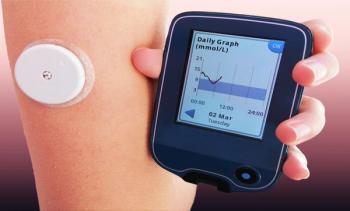
Closed-Loop Glucose Management Improves Outcomes in Youth With T1D
Published: | Updated:
Patients with type 1 diabetes (T1D) reported improved glucose outcomes, but they also said their sleep and quality of life benefited.

A new study highlights significant disparity in reimbursement rates across states between hospitals and Medicare; the first patient to receive a genetically modified pig kidney has died; research examines outcomes of over 500 patients receiving medication abortion pills by mail.
Advertisement
Advertisement
Trending on AJMC
1
IDWeek Studies Tie RSV, Flu, and COVID-19 to Harm After Acute Illness
2
Povetacicept Cuts Proteinuria by 52% in IgA Nephropathy at Week 36
3
Nephrologists Weigh Wins, Losses From 5 Years of Value-Based Kidney Care
4
Merck, Moderna Cancer Vaccine Cuts Melanoma Recurrence Risk by 42%
5