
Treatment compliance impacted by oral versus IV therapy is evaluated.
Treatment compliance impacted by oral versus IV therapy is evaluated.
A panel of experts discusses how novel agents are impacting the treatment landscape for patients diagnosed with MDS.
Experts underscore the importance of patient-reported outcomes in tailoring treatments for dry eye disease in patients.
The expert panel provides perspective on current therapeutic gaps and key barriers to care.
Leading experts discuss the evolving role of immunotherapy and neoadjuvant therapies in cSCC and BCC treatment.
Panelists discuss the current prevalence and treatment landscape of cutaneous squamous cell carcinoma (cSCC) and basal cell carcinoma (BCC).
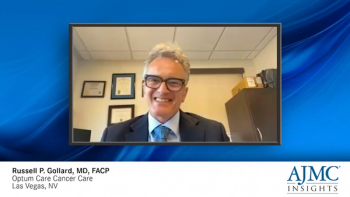
Russell P. Gollard, MD, FACP, discusses strategies for mitigating the high costs of expensive medications, addressing concerns of medication waste and hoarding.
The panelists provide their closing thoughts, highlighting their key takeaways from their discussion about updates in heart failure management.
Experts highlight the future of heart failure management.
Alice B. Gottlieb, MD, PhD, leads a discussion highlighting biosimilar utilization impact on payers and pharmacy benefit managers (PBMs).
Key opinion leaders explore financial considerations associated with switching to biosimilar products.
The panelists provide their closing thoughts from a discussion highlighting key considerations in treatment and management of HCC.
Medical experts offer strategies for assessing and allocating health care resources in HCC management.
Dr Salem opens a conversation highlighting the impact of toxicity profiles on a patient’s quality of life, and Dr. Abou-Alfa examines the consequences of treatment-related toxicities in HCC on the utilization of healthcare resources.

Joseph M. Coney, MD, FACS, emphasizes the vital role of community engagement in tackling difference in social determinants of health among patients with diabetes and highlights the significance of multilevel efforts to enhance community health outcomes.
Considerations for growth factor and stem cell transplant for patients with MDS is discussed.
Dr Haumschild leads a discussion surrounding the latest advancements in treatment algorithms for myelodysplastic syndrome.
Adverse reactions and challenges with patient adherence to therapy are explored by dry eye disease experts.
Jai G. Parekh, MD, MBA; and Alexander Kabiri, OD; explore the current treatment landscape of dry eye disease.
Russell P. Gollard, MD, FACP, explores effective collaboration among health care professionals, administrators, and specialty pharmacies in managing rare diseases like hemophilia A.
Financial considerations associated with heart failure management are dissected.
Barriers to optimal heart failure treatment are broken down by the expert panelists.
Professionals explore the importance of indication-specific data in gastroenterology.
Specialists define and discuss extrapolation, along with the importance of strong data in specific disease states.

A medical expert discusses the findings of a randomized trial investigating the use of andexanet alfa versus usual care in patients with acute intracerebral hemorrhage (ICH) and recent direct oral anticoagulant (DOAC) use.
Discussion on current and future treatments for BCG-unresponsive HR NMIBC presented at ESMO 2023.
An examination of data presented at ESMO 2023 from cohort 1 of the THOR-2 study of high-risk non–muscle invasive bladder cancer (HR NMIBC) with FGFR alterations.
Siamak Daneshmand, MD, explores unmet needs in the bladder cancer treatment landscape at ESMO 2023.
Financial considerations in MDS treatment are discussed.