

Despite a clear survival benefit, a meaningful share of eligible patients never receive consolidation immunotherapy after chemoradiation, exposing a gap between what trial data supports and what real-world practice actually delivers.
Despite a clear survival benefit, a meaningful share of eligible patients never receive consolidation immunotherapy after chemoradiation, exposing a gap between what trial data supports and what real-world practice actually delivers.
The ADRIATIC trial reshaped limited-stage treatment, extending median survival by nearly two years with consolidation immunotherapy, a shift so significant that adherence, not efficacy, is now the field's central clinical challenge.
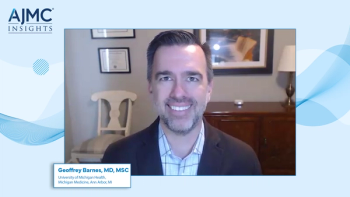
Cardioembolic stroke produces more severe strokes, greater disability, higher mortality, and frequent recurrence than other subtypes. Dr. Barnes reviews the outcome data that make prevention a clinical priority.
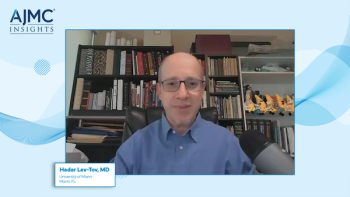
A teenager's first abscess can start a years-long cycle of misdiagnosis, shame, and fragmented care. Dr. Lev-Tov traces how untreated HS derails lives and strains both families and the healthcare system.

Separate risk systems now guide intensive and lower-intensity AML therapy, and objective fitness criteria are replacing the eyeball test in deciding which patients should receive which approach.
HS is far more common than most clinicians realize, and its origins are multifactorial. Understanding genetic, mechanical, microbial, and hormonal contributors gives clinicians a practical foundation for designing treatment plans.
Welcome back to another AJMC Insights series. In "Cardioembolic Stroke in AFib: Defining the Subtype and Its Mechanism," Dr. Barnes joins us to open the series on cardioembolic stroke in atrial fibrillation.
Acute myeloid leukemia arises from stem cell mutations and clonal expansion, and while diagnosis is rarely in doubt, genetic testing now shapes every treatment decision that follows.

Cost data in AATD depend heavily on how patients are identified. Augmentation therapy adds a substantial burden, yet survival benefit and comorbidity management complicate any simple cost comparison for payers.

An independently conducted meta-analysis confirms similar efficacy but surfaces a notable acceptability gap, underscoring why shared decision-making and patient preference remain central to prescribing.
Clinicians cannot be expected to remember every rare disease. Default order sets, testing tied to pulmonary function results, and standardized genotyping can make AATD testing the easy choice rather than an added burden.

Current biologics halve exacerbations but achieve remission in a minority of patients, and adherence often falters before therapy begins or around the 6-month mark.
Biologics can offset their acquisition cost by preventing exacerbations and cumulative steroid toxicity, yet billing structures and prior authorization continue to delay patients who need treatment.
The same AAT level can mean very different protease burdens in two patients. Severe deficiency drives the highest risk, yet carriers and unusual alleles complicate any simple relationship between numbers and disease.
The study's own senior author walks through its design, then reveals meaningful differences in weight gain, akathisia, and sedation risk that should inform how clinicians and payers evaluate these agents.
Decades of guidelines have recommended testing every patient with COPD, yet testing remains rare. The panel examines who gets missed, why clinicians believe they can spot AATD, and what health plans can do.
Asthma costs extend well beyond the emergency department, into lost schooling, reduced earning potential, and steroid harm, which sharpens the case for recognizing uncontrolled disease and escalating care promptly.
Most patients with asthma carry a type 2 inflammatory signature, and the sickest fifth of them account for the bulk of an $80 billion annual burden.
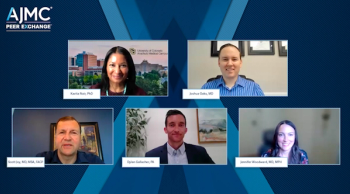
Led by the moderator, the panelists examined the core lessons from the series.
The panelists examined whether a new subcutaneous monoclonal antibody formulation, paired with telehealth cognitive evaluations, at-home phlebotomy, and remote ARIA monitoring, could extend Alzheimer's disease treatment beyond brick-and-mortar infusion centers into rural and underserved communities.
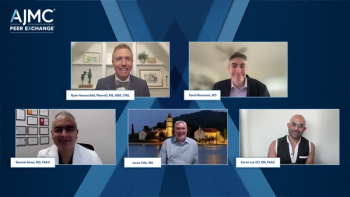
As the panel closes, cautious optimism prevails: new mechanisms, expanding access, and a deeper understanding of vitiligo's psychosocial toll all point toward meaningful, if gradual, progress for patients across every skin tone.

Realizing functional cure at scale will take more than new drugs; it requires infrastructure, testing, and patient engagement working in concert. This episode closes the series with a roadmap for that shift.
Will vitiligo treatment settle into a clear sequencing algorithm, or remain individualized? Dr. Lal and Jason weigh the absence of clinical guidelines against the reality that professional consensus typically lags well behind new therapies.
Concurrent chemoradiotherapy remains curative-intent therapy for limited-stage disease, yet cure rates without immunotherapy stall near thirty percent, a ceiling that scheduling choices and careful monitoring can only partly raise on their own.
A serum level is a snapshot, while genotype is the blueprint. Relying on levels alone misses carriers and mislabels patients, and the resulting diagnostic gap carries real clinical and economic costs.
AATD is better understood as a genetic predisposition than a single disease. Genotype, codominant inheritance, and environmental exposure together shape who develops lung or liver disease and how severe it becomes.
Before comparing therapies, clinicians need the statistical vocabulary: what a p-value actually measures, why effect size matters more, and how network meta-analysis links trials through a shared placebo comparison.
Small cell lung cancer's stark divide between curable, localized disease and systemic, incurable disease shapes every treatment decision that follows, and screening gains are slowly shifting how many patients get caught early enough to benefit.
Led by the moderator, the expert neurology and primary care panelists examined the gap between expanded coverage and real-world access.
Led by the moderator, the panelists discussed how they sequence plasma p-tau217 and beta-amyloid 42/40 testing alongside cognitive screening as a first-line workup, reserving confirmatory amyloid PET or CSF testing for inconclusive cases, and noted that payer coverage for these biomarker tests has so far been largely free of denials.