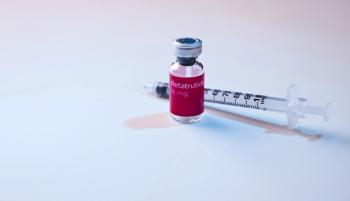
A legal fight over a single amino acid could set retatrutide's exclusivity window, its Medicare negotiation clock, and its competitive future.
Phase 2 trial finds 5-day preoperative RT in high-risk STS shows comparable wound complication rates and acceptable toxicity.
Standard preoperative radiotherapy (RT) to treat patients with
Surgery, with the addition of RT, is recommended for patients with high-grade STS. Preoperative RT may also offer benefits for patients compared with postoperative RT, such as a smaller treatment volume and a lower dose, which can result in a lower risk of late radiation-induced complications.
This single-center, open-label, phase 2 nonrandomized clinical trial (
The initial cohort enrolled 52 patients between April 2016 and May 2018 with localized high-risk STS for the extremity or trunk. Only 50 of them underwent preoperative RT and surgery. The extension cohort enrolled 83 patients between October 2018 and February 2023, of whom 60 underwent preoperative RT without preoperative systemic therapy.
The median follow-up was 64.2 months for the initial cohort and 30 months for the extension cohort. Patient demographics, such as histology, primary site, age, sex, smoking history, and time between RT and surgery, were relatively similar between the initial and extension cohorts.
After the study’s 2-year follow-up, 74 of the 110 patients were evaluable. Of them, 14 experienced grade 2 or higher radiation-associated toxic effects. These consisted of developed fibrosis, joint stiffness, and lymphedema, and 1 case of grade 3 joint stiffness and radiation fibrosis. More specifically, 10 of 40 evaluable patients in the initial cohort presented with grade 2 or higher radiation effects, whereas only 4 of 34 evaluable patients in the extended cohort did.
When assessing patients for the secondary outcome, major wound complications (MWC), 24 patients across both cohorts experienced grade 3 or higher criteria for adverse event wound complications. More specifically, 12 of 50 patients in the initial cohort and 12 of 60 patients in the expansion cohort. MWC, however, occurred in 33 patients overall: 16 of 50 in the initial cohort and 17 of 60 in the extension cohort.
The rates of MWCs were 18.4% for primary closure, 62.1% for local tissue advancement flaps, and 20% for vascularized tissue grafts. Patients who underwent surgery for local tissue advancement flaps were more likely to have MWCs (OR, 14.33; 95% CI, 4.81-48.88; P < .001) when compared with those who underwent primary closure.
This study was limited, as it was a single-institution experience, and results may not be generalizable. Additionally, this was a nonrandomized single-arm trial, as larger randomized studies for rare malignant neoplasms, like STS, can be challenging.
“Although MWC rates were consistent with those observed after standard fractionation, we observed prolonged time to wound closure in a subset of patients, warranting further evaluation of this understudied variable,” the study authors concluded. “Future randomized studies comparing 5-day preoperative RT with conventional or moderately hypofractionated regimens should carefully weigh any potential increased toxic effects risk against the benefits of a more accessible regimen.”
References:
1. Nikitas J, Kendal JK, Savjani RR, et al. Five-day preoperative radiation therapy for patients with high-risk soft tissue sarcoma: a nonrandomized clinical trial. JAMA Netw Open. 2025;8(12):e2550195. doi:10.1001/jamanetworkopen.2025.50195
2. McCrear, S. Locally recurrent soft tissue sarcoma growth rate predicts survival. AJMC. February 19, 2026. Accessed February 19, 202.