Birth centers are unavailable in 10 states, and 39% of birth center births are self-pay, as licensing and Medicaid pay limit access, a report finds.
David G. Mitchell, PharmD, MBA, CSP, FCPhA, of UC Davis Health, explains how AI-assisted prior authorizations have reduced denials and staff time without replacing pharmacist judgment.
Specialty pharmacies are being asked to manage complex therapies, heavy prior authorization requirements, and growing patient volumes without a matching increase in staff. Artificial intelligence (AI) is increasingly seen as one way to close that gap. But how health systems use it—and where they draw the line on automation—varies widely.
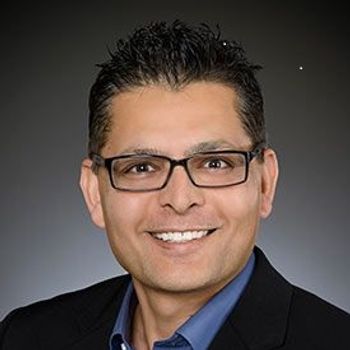
At the National Association of Specialty Pharmacy (NASP) inSPire2026 conference, David G. Mitchell, PharmD, MBA, CSP, FCPhA, assistant chief pharmacy officer for specialty pharmacy and home delivery at UC Davis Health, spoke on a panel titled “AI-enabled patient service automation in specialty pharmacy.” In an interview with The American Journal of Managed Care® (AJMC®), Mitchell explained how UC Davis Health has used AI to cut prior authorization denials and submission times. He also discussed why staff expertise stays central to the process and what pharmacy leaders should consider before piloting new technology.
This interview has been lightly edited for length and clarity.
AJMC: Can you give us an overview of the panel and where UC Davis Health is in its journey with AI and automation in specialty pharmacy? Why is this the right moment for organizations to be paying attention?
Mitchell: We shared from 3 different sites—2 academic medical centers and one private infusion company—around our own personal journeys with AI and where within the patient journey we're deploying AI and a lot of the considerations around deploying or investigating AI use.
AJMC: Of the use cases this session touches on—automated prior authorizations and appeals, financial assistance screening, AI-assisted refill outreach, and predictive risk analytics—which has delivered the most tangible impact for your team so far, and what made it a good starting point?
Mitchell: For our team, prior authorizations under the pharmacy benefit have been the primary focus for us. We have also looked at improving the fax process with AI and also AI scribe for providers on different patient visits. But the focus on the prior authorizations has shown that AI can help improve the time to submission. It's also shown to be able to decrease our denial rate and decrease the time it's taking staff to create those prior authorization requests.
AJMC: Specialty pharmacy care still depends heavily on relationship and clinical judgment. How are health systems drawing the line between what gets automated and what stays with a pharmacist or technician, and has that line moved as your team has gained experience?
We have helped develop some of the models around AI within the prior authorization space, so that's helped us get a feel for and improve the work that's generated from the AI technology and helped us become comfortable with it. The way our system works is that it still requires the expertise of our staff to select the data that's being finally utilized in the prior authorization request, but the AI helps provide summaries of chart notes and other pertinent data specific to questions that the payers and plans and PBMs are asking regarding prior authorizations. They still select which data are included and have to do the final submission, as well. It's not replacing the judgment of our staff that have expertise in this area. It's helping them simply gather data and do research and present them with what's perceived as the pertinent information, and we really have not used AI within the clinical decision-making space within our area outside of the prior authorizations. But as far as looking at different technology that do so, we're really cautious. Our outlook is not to replace judgment or final decision-making from our staff with that, who have so much expertise, but really help enable them to put their arms around the immense amount of data we have for our patients.
AJMC: Traditional staffing models are struggling to keep pace with the administrative burden in specialty pharmacy. How has automation changed the day-to-day workload or role of your pharmacists and technicians—has it freed them up for more clinical work or created new kinds of oversight work?
Mitchell: One piece that I will add that I kind of missed is that we kind of bridge those two as well. If we can decrease the time that we have to spend on the busy work of doing chart review or pulling data, what we're really trying to do is increase the time that our people with expertise can spend with patients. And maybe that's not needed for all patients, but we all have patients that have more complex cases or have other barriers that they need or maybe need further education. We're trying to increase the time that we have with those patients. Or, you know, as you're mentioning, you know, struggle to keep up. So perhaps we can then provide some of these services to another clinic that we couldn't expand to because of being so overwhelmed, but maybe because we are now more efficient, or maybe we can do an extra prior authorization per hour or something, we can then take on more to help more patients.
AJMC: For a specialty pharmacy director or operations leader who's evaluating or just starting to pilot AI in patient services, what's one lesson that you'd want them to walk away with?
I would say that you definitely need to partner with your internal IT team to help evaluate new technologies, you know, ensure that it's something that can be utilized, something that can integrate, and then also work with those teams to ensure that the technology is secure and safe and compliant with your internal criteria.
AJMC: Looking back at the conference in general, the theme was tying policy and AI and specialty pharmacy. Can you talk a little bit just about AI in general and specialty pharmacy and what's going on with that right now?
Mitchell: Yeah, I mean, I think you know we're at the brink of or at the turning point of where AI can really help us be able to improve the quality and be able to allow us to expand services to more patients and be able to use AI to automate some of the more mundane processes that take up our staff's time so that we can really then focus on our complex or difficult patients or remove some more, you know, complex or difficult barriers, and so I think that's where we're at now. You know where there's low-hanging fruit? Around prior authorizations and appeals. You know, AI as a scribe, but you know, really excited for the future where maybe we can help us identify patients that may not be adherent or maybe could benefit from a different therapy, or maybe identify patients that aren't on therapy at all. There are a lot more applications where AI can be implemented in the future as well.
At the National Association of Specialty Pharmacy (NASP) inSPire2026 conference, David G. Mitchell, PharmD, MBA, CSP, FCPhA, assistant chief pharmacy officer for specialty pharmacy and home delivery at UC Davis Health, spoke on a panel titled “AI-enabled patient service automation in specialty pharmacy.” In an interview with The American Journal of Managed Care® (AJMC®), Mitchell explained how UC Davis Health has used AI to cut prior authorization denials and submission times. He also discussed why staff expertise stays central to the process and what pharmacy leaders should consider before piloting new technology.
This interview has been lightly edited for length and clarity.