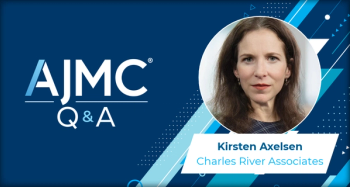
Kirsten Axelsen, MS, discusses gaps in biomarker testing, nonmedical barriers, and utilization management from a new report on access to CLL care.
In this part 2, Kirsten Axelsen, MS, discusses racial disparities, AI in prior authorization, and payers’ readiness for the next wave of CLL therapies.
Many patients with
In part 2 of this interview with The American Journal of Managed Care® (AJMC®), lead author Kirsten Axelsen, MS, a consultant at CRA, discusses what drives disparities in CLL care, how AI is shaping patient information-seeking and prior authorization, whether payers are ready for Bruton tyrosine kinase (BTK) degraders and bispecific antibodies, what health plan leaders should take away, and what forthcoming state reports show. Read
This interview has been lightly edited for clarity and length.
AJMC: The report found racial disparities in who gets preferred therapies. How much of the access gap comes from insurance design, and how much from where and by whom patients are treated?
Axelsen: That’s a good point. I don’t know how much of the issues comes from the benefit design specifically. It’s consistent across nearly every therapy that racial minorities and people who are in rural areas do not get the same standard of care. I think we could probably attribute some of the rural differences to access to providers and specialists. As far as people of color getting prescribed chemotherapy more often than a targeted therapy, that’s probably a matter of education, insurance, and awareness by the provider of the coverage. I think more evidence is warranted to determine what the contributing factors are. It’s a persistent problem in this and other therapeutic areas that does deserve more focus, because those
AJMC: The report provides a full recommendation to AI, covering both patients using chatbots for treatment information and insurers using AI in prior authorization review. Why was that important to include, and what would meaningful clinician oversight of AI-assisted denials look like?
Axelsen: AI is becoming a bigger part of everything we do. Many of the patients and providers we spoke to said patients are going—as they always have—to internet searches, which are now largely AI assisted, and going to chatbots. When someone’s diagnosed with a potentially fatal or very disruptive disease, they’re going to search for information from every source, and with AI, there is a high likelihood that they will get misinformation. I think consumers are learning to be savvy about these tools, understanding that the information they get is not necessarily curated or validated and being able to come to their provider with questions—but recognizing that it is not the final answer. Of course, they also often get sent to treatments that have absolutely no merit. We even heard from oncologists about people coming in requesting ivermectin and wanting to take a break from their chemotherapy, things like that, which may come from unreliable sources of information.
As it relates to
AJMC: With fixed-duration oral regimens, BTK degraders, and bispecifics on the way, are payers and policy ready, or will the same gaps repeat?
Axelsen: I don’t think anyone’s ready. Science has moved so much faster than law and regulation, and we have a health system that is set up to manage costs year over year, because that’s how our budgets work. Employers don’t plan for spikes in costs one year that then go down with innovation. Now that we can target so many more diseases at the genetic level, the medicines that are targeted therapeutics do tend to be more expensive. We’re going to have the opportunity to get better outcomes for patients—but at times, it’s going to cost more. More cost may mean more cost on a particular drug but less waste on untargeted chemotherapies that are not as effective.
But the fact is, living longer costs more money, and we don’t necessarily have a system set up, publicly or privately, that can really manage the cost of caring for an increasingly older and longer-lived population. With these new drugs being developed, not only are we not really set up to manage the cost, but biomarker testing is not routine and isn’t really part of general medical practice the way things like mammograms and maybe colonoscopies have become part of the standard that everyone knows they need to get. Again, I think some of this is awareness in the provider space, but people also need to know to ask for these things, because they do help you live longer if you have this disease and you do have a biomarker and can get one of these targeted therapies.
AJMC: If a health plan leader takes one thing from this report, what should it be?
Axelsen: I think it’s biomarker testing. Coverage is the right thing to do for patients, as is determining how to have biomarker testing in place so that decisions about which drugs are used are really based on clinical evidence. That both reduces waste from a therapy that is less effective than it should be and helps patients get the right information. Payers can have a big effect on what physicians do, and physicians need to be aware that these tests can save their patients’ lives and be encouraging their use, even if it is going to put the patient in the position of having to travel to a place where they can get the test done.
AJMC: The national report will be followed by state-level reports. What do those show?
Axelsen: In addition to the federal report, which really covered national
References
1. Axelsen K, Jenkins L, Garvey L, Pan M. When Innovation Outpaces Access: Closing the Gap in CLL Care. Charles River Associates; September 2026. Accessed November 4, 2026.
2. McNulty R. CLL treatment access lags behind innovation amid testing, step therapy gaps. AJMC. October 8, 2026. Accessed November 4, 2026.