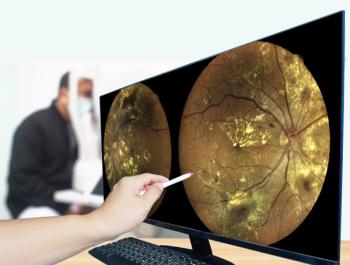
The meeting covered several topics in eye care, including how artificial intelligence (AI) can play a part in eye care.
AI could ease oncology's drug development "traffic jam," while biomarker subsetting drives more personalized cancer care, David Spigel, MD, says.
Technology, particularly
While drug developers have built a strong track record identifying new targets and designing trials to test them, Spigel said AI's role in managing the growing volume of competing therapies is still taking shape.
"It's not hard to imagine with the breadth of drugs in development, the number of clinical trials that are increasing, technology is going to be one of the key drivers of helping us sort through that clutter, that traffic jam of competing drugs, competing trials, and patients to get matched to those therapies," Spigel said.
He noted the field remains early in understanding how to apply AI across drug development, clinical trial design, patient recruitment, results assessment, and end point discovery, including whether AI-based imaging analysis could outperform traditional Response Evaluation Criteria in Solid Tumors (RECIST) measurements.
Spigel also addressed the growing complexity of trial design driven by biomarker-defined subsets and adaptive protocols. Although subsetting diseases such as lung cancer into smaller, molecularly defined groups can appear daunting, he framed it as an opportunity for more personalized care.
Improved molecular testing now allows clinicians to track treatment response through measures such as minimal residual disease in the blood, he said. Spigel predicted that subsetting will continue to expand, eventually identifying patient selection factors beyond traditional genetic markers or target expression.
"We'll probably even get to a place where we understand areas where maybe you don't think you need a target or expression of a marker to predict benefit from a therapy," he said.