

Opinion|Videos|October 19, 2026
Barriers to Implementing New Complicated UTI Treatment Guidelines
Guideline-concordant care runs into real-world friction: persistent overtreatment of asymptomatic bacteriuria, unfamiliar local antibiogram data, and clinician discomfort with shorter courses all complicate the path from published recommendation to bedside practice.
Advertisement
Episodes in this series
In "Barriers to Implementing New Complicated UTI Treatment Guidelines," our experts turn to the everyday friction between a published guideline and real-world complicated UTI practice.
Asked what barriers clinicians face in applying the new guideline broadly, Dr. Kaye identifies three. The first predates the guideline entirely: treating only genuine urinary tract infection rather than asymptomatic bacteriuria, a habit he says persists despite years of education and culturing bundles. The second is earlier transition to oral antibiotics, which he says has gained momentum at his own institution's stewardship program after a similar push faded roughly two decades ago. The third, and hardest, is limiting therapy to seven days, especially in patients who arrived critically ill with urosepsis or pyelonephritis. Dr. Kaye admits candidly that watching a patient improve dramatically within days of severe illness still makes him second-guess stopping at seven days, particularly in bacteremic patients. He emphasizes that the clock should only start once a truly active antibiotic is on board. Dr. Pogue then raises a related challenge: knowing which local antibiogram to trust, given variation across care settings, specimen sources, and organism panels. He also flags deciding when to be more conservative or more liberal with empiric breadth as a genuine skill. He credits the guideline with retreating from mandating antibiogram use in most complicated UTI cases, reserving that caution for the sickest, septic patients where even small error margins are unacceptable. Both panelists agree that building clinician confidence in narrower empiric choices will take time and additional data on patient subgroups. The conversation closes on source control: Dr. Pogue notes that the treatment clock should not start until obstructing factors like kidney stones are addressed and urine flow is restored. He adds that fluoroquinolone exposure within the past twelve months stands out in the guideline as the strongest validated predictor of subsequent antibiotic resistance.
In "Today's IV Antibiotic Options for Complicated UTI: Strengths and Limitations," the panel surveys today's intravenous antibiotic options and where their limitations show up at the bedside.
Advertisement
Related to this article

Speakers at CHEST 2026 walked through the first CHEST guideline for non CF adult bronchiectasis, then took up the harder question it leaves open: which preventive therapy to start first.

On the opening day of CHEST 2026 in Phoenix, Arizona, the organization's flagship journal highlights a trio of key papers with practice-changing results.
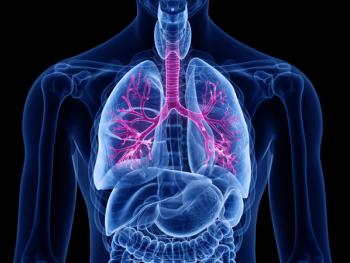
Selected presentations from “Reframing COPD: Phenotypes, Outcomes, Therapeutics, and the Future of Care Delivery,” a session on the opening day of CHEST 2026.

Non-Hodgkin lymphoma mortality trends impact lower-income, less-educated communities, highlighting health disparities and needs for health equity.
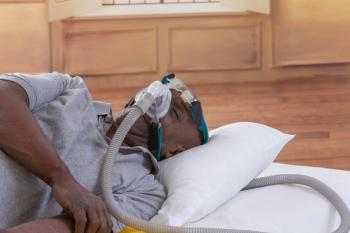
Older patients with obstructive sleep apnea (OSA) had more cardiometabolic disease and poorer reported sleep quality than younger patients.

SaTScan detects an acute HCV outbreak cluster in California, showing the potential of automated surveillance, though real-time testing is needed.

The editor in chief of Evidence-Based Oncology, who was recently named medical director of Precision Medicine for The US Oncology Network, discussed milestones met and those still to be achieved.

Genetic analysis finds 125 loci shared by insomnia and CRP, with Mendelian randomization favoring an effect from insomnia liability to inflammation.
Advertisement
Advertisement
Trending on AJMC
1
5 Things to Know About the One Big Beautiful Bill Act
2
Pathological Response Does Not Reliably Predict Survival in Sarcoma
3
Coroner Reports Pennsylvania's Sixth Measles-Associated Death
4
Income, Education NHL Mortality Gaps Widened in Canada in 2 Decades
5