

Opinion|Videos|October 12, 2026
The IDSA Guideline's Four-Step Antibiotic Selection Framework
A structured four-step framework, weighing severity, resistance risk, safety, and local antibiogram data, gives clinicians a repeatable way to choose empiric therapy, one the panel notes converges independently across two major complicated UTI guidelines.
Advertisement
Episodes in this series
In "The IDSA Guideline's Four-Step Antibiotic Selection Framework," the panel walks through the guideline's structured approach to choosing an antibiotic before culture results even return.
Dr. Gupta asks Dr. Nelson what matters beyond antibiotic selection itself in optimizing complicated UTI care. Dr. Nelson points to follow-up as the element that rises to the top. In the hospital, that means confirming symptoms have sufficiently improved before discharge, and afterward, ensuring nurses or pharmacists review culture results once patients go home. He calls this follow-up work a genuine value-add for infectious diseases pharmacists, even though it is often layered on top of other clinical duties. It confirms patients left on an appropriate agent once susceptibility data return. Dr. Gupta then turns to Dr. Kaye to walk through the new IDSA guideline's four-step approach to antibiotic selection. Dr. Kaye explains that, empirically, before culture results return, he first weighs how sick the patient is. A two-to-three percent chance of an inactive antibiotic may be acceptable in a stable patient, but is not acceptable in someone septic in the intensive care unit. Second, he considers the likelihood of a resistant pathogen, based on prior resistant infections, recent prolonged antibiotic courses, or transfer from a long-term care facility. Third, he weighs drug-drug interactions and safety concerns such as QT prolongation or acute kidney injury risk in patients with limited renal reserve. Fourth, he incorporates local antibiogram data, which he finds especially valuable for distinguishing community-acquired from hospital-acquired infection and guiding therapy in nosocomial cases. Dr. Kaye calls this stepwise framework one of the guideline's most useful features. It structures decision-making for clinicians who may feel less confident navigating these choices intuitively. Dr. Nelson adds that the same four-step logic emerged independently in the UTI WikiGuidelines he helped author, calling the convergence between the two guidelines reassuring for clinicians looking for consistent, evidence-backed direction.
The next episode in this series, "Making the Case for Early IV-to-Oral Transition in Complicated UTI," examines what it takes to safely move a patient from intravenous to oral therapy.
Advertisement
Related to this article

An intraoperative indocyanine green (ICG) fluorescence imaging protocol in sarcoma surgery detected 14 of 15 positive margins vs 4 of 15 for surgeons, though its specificity was 41.7% vs 88.9%.

Panelists engaged in a debate regarding using complement inhibitors in geographic atrophy, gauging public sentiment with a deciding vote.

A session at AAO 2026 highlighted how big data and minimally invasive glaucoma surgery (MIGS) could be utilized to help patients receive peak care.

The opening session of AAO 2026 featured a keynote speech discussing how artificial intelligence (AI) will play a part in health care.
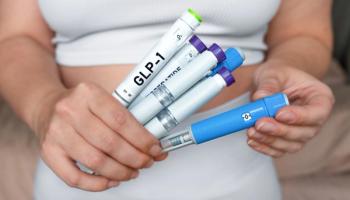
Incidence of diabetic macular edema and the need for glaucoma surgery were reduced after treatment with glucagon-like peptide-1 receptor agonists.

Medicaid expansion was associated with lower colorectal cancer mortality, with the largest reductions in Hispanic patients and stage IV disease.

TP53 mutations occurred in 3% of myeloproliferative neoplasms (MPNs) but 10% of myelofibrosis or blast-phase cohorts in a review of 11 cohort studies.

Amanda Velazquez, MD, discusses GLP-1 formulary strategies, overcoming prior authorization hurdles, and building scalable obesity care infrastructure.
Advertisement
Advertisement
Trending on AJMC
1
MASH Fibrosis, Not Resolution, Predicts Mortality: Zobair Younossi, MD
2
A New Mechanism for DME in the BRUNELLO Trial: Donald J. D’Amico, MD
3
FDA Approves Once-Monthly Subcutaneous Olanzapine for Schizophrenia
4
Full POLARGO Data Reveal OS, Safety for Pola-R-GemOx in DLBCL
5