
Opinion|Videos|November 17, 2026
BRAF V600E mCRC: Targeted Therapy and Rechallenge Strategies
Encorafenib and cetuximab have transformed outcomes for BRAF V600E-mutant colorectal cancer, while liquid biopsy-guided anti-EGFR rechallenge offers a promising, biomarker-selected path in later treatment lines.
Advertisement
Episodes in this series
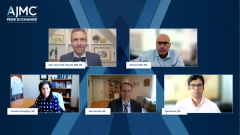
In “BRAF V600E mCRC: Targeted Therapy and Rechallenge Strategies,” the panel discusses how targeted therapy and molecular reassessment are changing treatment sequencing in metastatic colorectal cancer. Dr. Fakih reviews the movement of encorafenib and cetuximab into first-line treatment for BRAF V600E-mutant disease based on the BREAKWATER trial. As patients experience longer periods of disease control, new questions are emerging about what should happen after progression on a regimen that already includes BRAF- and EGFR-directed therapy.
One area of interest is whether targeted therapy should ever be continued beyond progression or reintroduced later. Dr. Fakih notes that slower and oligoprogressive patterns are being seen more often in patients receiving targeted therapy and raises concern that withdrawing treatment against a strong oncogenic driver could lead to rapid progression in some cases. His group has reported disease stabilization with rechallenge in selected patients, but he stresses that this strategy requires prospective study and should not be generalized.
Dr. Parseghian then discusses anti-EGFR rechallenge guided by circulating tumor DNA. Resistance alterations that emerge during therapy can decline during an anti-EGFR-free interval. If ctDNA shows that the tumor remains RAS wild-type and relevant resistance mutations are no longer detected, selected patients may be candidates for anti-EGFR rechallenge. The episode highlights how repeated molecular assessment is increasingly being used to guide targeted treatment sequencing in later-line care.
Our next episode, “Individualizing Third-Line Treatment in mCRC,” examines how molecular findings, prior treatment, clinical factors, and patient preferences come together in later-line decision-making.
Advertisement
Related to this article
Report urges payment reform, food policy changes, and wider treatment access, warning that drugs alone can't fix obesity's root causes.

FDA approves dexmedetomidine sublingual film for at-home use in adults with schizophrenia, schizoaffective disorder, or bipolar I or II disorder.

Non-US-born adults had higher CRC screening nonadherence than US-born adults, particularly those with less than 15 years of US residence.

Once weekly ribupatide, a dual GIP/GLP-1 receptor agonist, led to significantly greater weight loss than placebo at 48 weeks, according to a study.

The once weekly self-injected treatment is the first dual-binding nanobody C5 inhibitor approved for adults with AChR antibody-positive gMG.

A TriNetX retrospective cohort found adults with alopecia areata—especially women—face a nearly doubled glaucoma risk, with implications for ophthalmology and comorbidities.

β3 agonists were not linked to lower dementia incidence vs anticholinergics among 830,393 adults treated for overactive bladder, a cohort study found.

Research at ObesityWeek 2026 tracks rising obesity in Medicare, productivity losses, prior authorization denials, and GLP-1 persistence.
Advertisement
Advertisement
Trending on AJMC
1
FDA Approves Dexmedetomidine Sublingual Film as At-Home Agitation Therapy
2
ObesityWeek 2026: Studies Map GLP-1 Access Gaps, Obesity's Costs
3
FDA Approves Weekly Gefurulimab for Generalized Myasthenia Gravis
4
Nondrug Therapies Ease Cough in Lung Cancer, Pulmonary Rehab Leads Pack
5