
Opinion|Videos|November 12, 2024
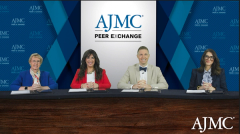
Fezolinetant in Focus: Key Findings From the SKYLIGHT Trials
Key Takeaways
- Fezolinetant's approval was based on SKYLIGHT 1, 2, and 4 trials, which were randomized, double-blind, and placebo-controlled.
- The trials focused on women with moderate to severe vasomotor symptoms, evaluating fezolinetant's safety and efficacy.
Panelists discuss the methodologies of the SKYLIGHT 1, SKYLIGHT 2, and SKYLIGHT 4 trials that supported the approval of fezolinetant for moderate to severe vasomotor symptoms (VMS) and examine the key safety and efficacy results derived from these studies.
Advertisement
Episodes in this series
Video content above is prompted by the following:
- (SMITH) The approval of fezolinetant for moderate to severe VMS was based on the
SKYLIGHT 1 ,SKYLIGHT 2 , andSKYLIGHT 4 trials. Briefly describe the methodology of these studies. - (FIFFICK) What were the key safety and efficacy results from the SKYLIGHT studies?
Advertisement
Related to this article

A traditional Medicare out-of-pocket (OOP) cap could reduce beneficiaries’ costs but increase annual federal spending by $39 billion to $96 billion.

A systemic sclerosis inception cohort and 17-study meta-analysis found a nearly 5-fold increase in lung cancer risk.

Medicare Advantage plans have varied motivations, strategies, and aspirations for addressing health-related social needs among home health beneficiaries, highlighting a need to expand the scope of supplemental benefits.

2026 Nobel Prize in Medicine honors optogenetics pioneers who turn algae light-sensing protein into neural switches, transforming brain mapping and enabling vision-restoration trials.
Medicare's Transforming Episode Accountability Model is projected to save $46.6 million by 2030, with safety-net hospitals potentially receiving the highest reconciliation payments.

A comparison of 2013 and 2022 data shows that cancer costs are not uniformly rising. Costs decreased for metastatic colorectal cancer but increased for both metastatic non–small cell lung cancer and multiple myeloma.

Employer-mandated enrollment in a high-deductible health plan did not reduce use of oral targeted anticancer medications among patients commercially insured between 2007 and 2021.
We identify the health system characteristics associated with greater or lesser documentation of patients’ social determinants of health.
Advertisement
Advertisement
Trending on AJMC
1
Pipeline Advances in Sjögren Disease Bring Targeted Therapies Closer
2
VBC Risk Is Outpacing Provider Readiness, CMS Must Act
3
FDA Approves Pirtobrutinib for Untreated CLL/SLL Without 17p Deletion
4
Oral Targeted Anticancer Medication Use Following High-Deductible Health Plan Enrollment
5