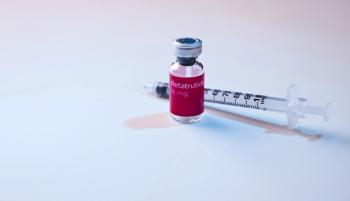
Teva's Weltruza, a once-monthly subcutaneous olanzapine injection, requires no loading doses, oral supplementation, or postinjection monitoring.
The results show that semaglutide could be a novel treatment for patients with alcohol use disorder moving forward.
The use of semaglutide, a glucagon-like peptide-1 receptor agonist (GLP-1 RA), was found to be effective in not only addressing
Only 3 medications have been approved by the FDA to treat alcohol use disorder, with most patients needing cognitive behavioral therapy.
The randomized controlled trial was conducted in a single center at the Mental Health Center Copenhagen in Copenhagen, Denmark. Advertisements on the trial webpage and patients advertising on social media were the means of recruiting participants for the study. Participants were eligible if they were aged 18 to 70 years and were looking for treatment for alcohol use disorder. Participants were diagnosed with alcohol use disorder after a diagnostic interview with a medical doctor. Participants all had a body mass index of 30 kg/m2 or higher, a minimum of 6 heavy drinking days, and an Alcohol Use Disorders Identification Test score that was higher than 15.
Participants were randomized 1:1 to receive either placebo or a once-weekly subcutaneous semaglutide dose of 2.4 mg. The primary end point was change in heavy drinking between baseline and week 26.
There were 108 participants who were enrolled in the study and received at least 1 dose, with 88 participants completing the trial. The gender distribution was nearly equal, with 51% of the participants being men, and the mean (SD) age was 52.3 (9.8) years.
Patients who received semaglutide had greater reductions in heavy drinking days when compared with the placebo group. The semaglutide group reported a mean change of –41.1 percentage points (95% CI, –48.7 to –33.5) compared with –26.4 percentage points (95% CI, –34.1 to –18.6) in the placebo group. Mean total alcohol consumption also decreased by –1550.2 g per 30 days in the semaglutide group compared with –1025.9 g per 30 days in the placebo group. Patients in the semaglutide group also had a higher decrease in mean drinks per day (–3.5 units vs –2.1 units). Patients receiving semaglutide also saw a change in body weight compared with placebo (–11.2 kg vs –2.2 kg).
Gastrointestinal symptoms were the most common adverse event in the participants; the semaglutide group experienced a higher incidence of these symptoms, which included nausea, loss of appetite, vomiting, abdominal pain, reflux, and fatigue. There were 5 participants who discontinued the trial due to adverse effects. There was 1 serious adverse event recorded in the semaglutide group for abdominal pain.
There were some limitations to this study. Alcohol consumption after the end of the trial could not be assessed due to no follow-up data being collected. Generalizability could be limited due to the population of this study primarily being White.
“To our knowledge, this [randomized controlled trial] is the first to show that once-weekly semaglutide reduces heavy-drinking days and WHO drinking-risk levels in treatment-seeking patients with alcohol use disorder and comorbid obesity,” the authors concluded. “The finding adds to the growing evidence for use of GLP-1 RAs in alcohol use disorder, supporting an expanded indication for semaglutide…”
References