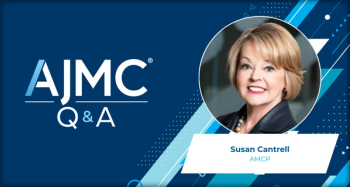
CEO Susan Cantrell previews AMCP Nexus 2026, discussing AI, drug pricing, emerging therapies, and a decade of change in managed care pharmacy.
Mark Makhinson, PharmD, launches Future-Proofing Pharmacy, exploring AI, access, and the health-system pharmacy enterprise of 2035.
Health-system pharmacy needs to shift from reacting to medication access barriers, drug shortages, and workforce gaps toward anticipating them, building organizations equipped to adapt over the next decade rather than simply predicting what comes next.
That is the founding premise of Future-Proofing Pharmacy, a new podcast from The American Journal of Managed Care® (AJMC®), explained host Mark Makhinson, PharmD, senior director of outpatient and specialty pharmacy at Mount Sinai Health System in New York City.
The series will return repeatedly to a core set of questions: what a health-system pharmacy enterprise looks like in 2035, which tasks pharmacists and technicians will stop doing, how much of the medication use process becomes automated or predictive, and where human judgment should remain essential.
Makhinson also wants to examine whether specialty pharmacy, ambulatory care, inpatient services, home infusion, and population health should continue operating as separate services or converge into a single, integrated pharmacy enterprise built around the patient. He framed these questions against a backdrop of financial pressure, workforce challenges, drug shortages, rising medication complexity, and shifting reimbursement models that health systems are navigating now.
"How do we build the pharmacy enterprise we're going to need in 5, 10, or 15 years while still solving the problems in front of us today?” Makhinson asked, describing that balance as the essence of future-proofing.
Makhinson said he wants conversations about artificial intelligence (AI) to start with the pharmacy problems it might solve, including medication access, administrative burden, clinical risk identification, and inventory management, rather than open-ended questions about the technology itself. He cautioned that AI cannot fix fragmented data or poorly designed operating models on its own and that adding technology to a broken workflow does not automatically improve it.
"Technology is an enabler. It isn't the strategy," Makhinson said. "The technology should become more sophisticated. The patient experience should become simpler."
Guests on the show will extend beyond pharmacists to include care delivery leaders, health-system operations executives, payers, and industry representatives. Makhinson said he does not want every conversation to end in agreement and instead wants guests to discuss what is working, what has failed, and what the profession is not yet talking about enough.
Episode 1 features Nilesh Desai, PharmD, chief pharmacy officer at University of Miami Health System, who previously helped lead a pharmacy transformation at Baptist Health, including development of a consolidated pharmacy service center. Their conversation opens with Desai describing the health-system pharmacy enterprise he would build in 2035, then works backward to lessons learned at Baptist and how AI, automation, data interoperability, and workforce transformation factor into decisions health systems face today.
Makhinson closed the episode by framing future-proofing pharmacy as a matter of deciding what to build, what to stop doing, and where to invest so that today's decisions strengthen pharmacy organizations and the profession over time.
Find Future-Proofing Pharmacy on