
Opinion|Videos|October 25, 2024
Key Takeaways on Recent Advances in SCLC
Key Takeaways
- Tarlatamab represents a significant advancement in SCLC treatment, offering new hope beyond first-line therapies.
- Clinical trials are investigating novel immunotherapies and targeted treatments, showing promise for SCLC management.
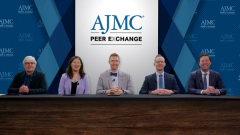
Panelists discuss how the landscape of small cell lung cancer (SCLC) treatment is rapidly evolving, highlighting key advances in immunotherapy, targeted treatments like tarlatamab, and ongoing research efforts, while emphasizing the importance of early diagnosis, appropriate staging, and personalized treatment approaches to improve patient outcomes and quality of life.
Advertisement
Episodes in this series
We’ve discussed first-line therapies and a newly approved therapy tarlatamab.
- Beyond first-line therapies, what options exist for patients, and what clinical trials are you excited about?
- What are some of the therapies being researched for small cell lung cancer (SCLC) that you are excited about?
How do you see the management of SCLC evolving in the future?
Advertisement
Related to this article

The new NCCN Guidelines for Patients: Caregiving for People With Cancer address finances, legal concerns, and household tasks alongside medical management, areas that an expert involved in their development says “often leave people reeling.”
The FDA approved talazoparib plus enzalutamide for HRR-mutated metastatic hormone-sensitive prostate cancer after TALAPRO-3 cut progression risk by 52%.

Unclear ownership often leaves survivors without support, and coverage of social and psychological services could close the gap, says Bhatnagar.

Adults with moderately to severely active Crohn disease can now start risankizumab with an on-body injector at home.
This system-level initiative significantly increased guideline-concordant venous thromboembolism prophylaxis rates in hospitalized patients through coordinated education, clinical decision tools, audit-feedback, and pharmacist integration.

For all the advances in breast cancer, there remains unmet need for patients whose cancer progresses after treatment with antibody-drug conjugates (ADCs). In the final week of Breast Cancer Awareness Month, AJMC® looks at an investigational vaccine approach that could come after ADCs, offering patients a low-toxicity regimen.

Nevena Vicic, MSc, discusses first real-world data showing mRNA-1283 protected adults 65 and older from COVID-19 hospitalization in 2025-2026.
He sees progress in Richter combination therapies, explains how patient goals shape CLL treatment, and reflects on mentoring trainees.
Advertisement
Advertisement
Trending on AJMC
1
Preparing for Hepatitis B Functional Cure: Jordan Feld, MD, MPH
2
IDWeek Studies Tie RSV, Flu, and COVID-19 to Harm After Acute Illness
3
Povetacicept Cuts Proteinuria by 52% in IgA Nephropathy at Week 36
4
FDA Approves Talazoparib Plus Enzalutamide for HRR-Mutated mHSPC
5