
Opinion|Videos|October 4, 2024
Introducing Bispecifics for Extensive-Stage SCLC
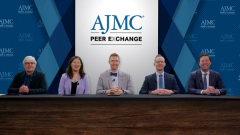
Panelists discuss how tarlatamab, a bispecific T-cell engager therapy, received accelerated approval for extensive-stage small cell lung cancer (SCLC) in May 2024, examining its mechanism of action, pivotal clinical data, management of adverse events, practical considerations for administration, and its position within the SCLC treatment algorithm.
Advertisement
Episodes in this series
Tarlatamab was given accelerated approval in May 2024 for extensive-stage small cell lung cancer (SCLC). How does this therapy work, and what was the important data the led to its approval?
- What are the main adverse events to watch for, and do you manage them?
- Are there any other clinical considerations, such as inpatient or outpatient dosing, when using a bispecific T-cell engager like tarlatamab?
- Where does this therapy fit into your treatment algorithm for patients with SCLC?
Advertisement
Related to this article

The new NCCN Guidelines for Patients: Caregiving for People With Cancer address finances, legal concerns, and household tasks alongside medical management, areas that an expert involved in their development says “often leave people reeling.”

The FDA approved talazoparib plus enzalutamide for HRR-mutated metastatic hormone-sensitive prostate cancer after TALAPRO-3 cut progression risk by 52%.

Unclear ownership often leaves survivors without support, and coverage of social and psychological services could close the gap, says Bhatnagar.

Adults with moderately to severely active Crohn disease can now start risankizumab with an on-body injector at home.
This system-level initiative significantly increased guideline-concordant venous thromboembolism prophylaxis rates in hospitalized patients through coordinated education, clinical decision tools, audit-feedback, and pharmacist integration.

For all the advances in breast cancer, there remains unmet need for patients whose cancer progresses after treatment with antibody-drug conjugates (ADCs). In the final week of Breast Cancer Awareness Month, AJMC® looks at an investigational vaccine approach that could come after ADCs, offering patients a low-toxicity regimen.

Nevena Vicic, MSc, discusses first real-world data showing mRNA-1283 protected adults 65 and older from COVID-19 hospitalization in 2025-2026.

He sees progress in Richter combination therapies, explains how patient goals shape CLL treatment, and reflects on mentoring trainees.
Advertisement
Advertisement
Trending on AJMC
1
Preparing for Hepatitis B Functional Cure: Jordan Feld, MD, MPH
2
IDWeek Studies Tie RSV, Flu, and COVID-19 to Harm After Acute Illness
3
Povetacicept Cuts Proteinuria by 52% in IgA Nephropathy at Week 36
4
FDA Approves Talazoparib Plus Enzalutamide for HRR-Mutated mHSPC
5