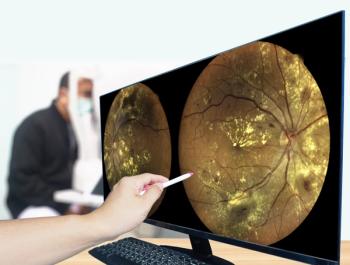
The meeting covered several topics in eye care, including how artificial intelligence (AI) can play a part in eye care.
Charge nurse–led multidisciplinary rounds caught ICU lines and catheters due for removal that academic teaching rounds often missed, said Pooja Roy, MD.
Invasive devices that are no longer needed can slip through the cracks during teaching-focused rounds in the surgical intensive care unit (ICU), but a second, safety-focused round led by the charge nurse can catch them, according to Pooja Roy, MD, chief fellow at Houston Methodist Hospital. Roy shared findings from her quality-improvement project, which compared academic and multidisciplinary rounds over 2 weeks, at
Roy said the project grew out of a contrast she noticed between ICUs. In the medical ICU, nurses and the rounding team routinely discussed whether central lines, arterial lines, or urinary catheters should come out. In the surgical ICU, the team focused on placing lines and Foley catheters instead. As she put it, “When it comes to the removal of those devices, we often overlook them.”
Academic rounds, sometimes run by intensivist fellows, center on teaching. The team reviews the patient’s primary problem, discusses relevant literature, and works through the FAST HUGS BID checklist, which includes invasive line removal, yet removals were often missed. Multidisciplinary rounds led by the charge nurse skip the educational component and focus on safety, and that second pass brought line removal back into the discussion. Roy acknowledged the extra round is resource intensive, which may be harder for community hospitals than for her tertiary teaching center.
Still, Roy argued that devices that seem harmless can cause serious harm, making the second checkpoint worthwhile for other hospitals to adopt. Because the study ran for only 2 weeks in the surgical ICU, she hopes to extend it and add medical ICUs. Through the Green ICU project, she also wants to examine peripheral vs central lines, noninvasive blood pressure monitoring instead of arterial lines, and avoiding Foley catheters when not indicated, along with the effect on patients’ quality of life.