
Commentary|Videos|July 19, 2026
Navigating Myeloma’s Crowded Treatment Frontier: Swarup Kumar, MD
Author(s)Maggie L. Shaw, Swarup Kumar, MD
Fact checked by: Giuliana Grossi
Swarup Kumar, MD, also details treating incarcerated patients with bispecifics and pursuing cure-focused therapy sequencing in myeloma.
Advertisement
Swarup Kumar, MD, assistant professor of medicine in the Division of Hematology and Medical Oncology at UConn Health and a leader of its
Kumar described his 3 years working in a Department of Corrections oncology clinic early in his faculty career, an experience he called rewarding both for mentoring fellows and for managing a patient population with
Turning to the broader relapsed/refractory myeloma landscape, Kumar said the proliferation of bispecific antibodies, chimeric antigen receptor (CAR) T-cell therapy, and antibody-drug conjugates (ADCs) is a welcome development but requires a shift in mindset, from managing myeloma as a chronic disease to pursuing the therapy most likely to produce deep remission or cure. His framework weighs age, comorbidities, and functional status: an older patient with significant comorbidities may not be a candidate for aggressive, potentially curative therapy if it risks quality of life, while a younger, highly functional patient may be steered toward more robust, fixed-duration treatment aimed at cure. Clinical trial participation is also a first consideration whenever a patient's profile fits an available research portfolio.
Among approved options, Kumar said he generally favors bispecific antibodies over ADCs given more robust data and industry momentum toward fixed-duration regimens with high minimal residual disease–negativity rates, particularly for older patients with aggressive disease needing rapid control. UConn does not yet offer CAR T-cell therapy on site but partners with nearby centers, with in-house capability expected soon. He reserves ADCs, such as belimumab, largely for patients who have not responded to CAR T-cell therapy or bispecifics, citing manageable but notable ocular toxicity monitored with ophthalmology support.
Advertisement
Related to this article
These phase 3 EXCALIBER-RRMM findings build on earlier MRD-negative complete response results supporting FDA approval of the iberdomide-based regimen.

The editor in chief of Evidence-Based Oncology, who was recently named medical director of Precision Medicine for The US Oncology Network, discussed milestones met and those still to be achieved.

Cleveland roundtable panelists across 4 disease states name access, not evidence, as the shared barrier to care.
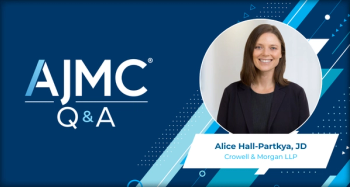
Alice Hall-Partyka, JD, a partner at Crowell & Moring explains the lawsuits challenging CMS' Medicaid rule on pediatric gender care and its legal weak points.

Siva Mohan, MD, explains how drug costs drive silent nonadherence, PA burden, and biosimilar hesitancy, and what payers can do about it.

On National Latinx AIDS Awareness Day, experts outline HIV prevention gaps in Hispanic communities and how payers can ease PrEP access.

HR 1 brings Medicaid work requirements and narrower immigrant eligibility by January 2027, and CBO projects 10 million more uninsured by 2034.

CMS ends ACA subsidies for 189,000 enrollees with duplicate Medicare, Medicaid, or CHIP coverage or listed as deceased, with a 30-day dispute window.
Advertisement
Advertisement
Trending on AJMC
1
5 Things to Know About the One Big Beautiful Bill Act
2
Coroner Reports Pennsylvania's Sixth Measles-Associated Death
3
ACA Subsidies End for 189,000 Duplicate or Deceased Enrollees
4
FAQ: How Payers Can Close HIV Prevention and PrEP Access Gaps
5