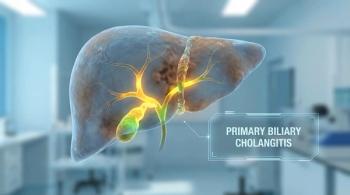
Elafibranor and seladelpar normalized ALP in most patients with primary biliary cholangitis whose ALP was below the usual escalation threshold.
Cancer care demand is constantly shifting, with panelists at PCOC 2026 debating the benefits of automation vs retaining live patient access.
Community oncology practices say they cannot staff to optimal levels at present because of the constantly changing demand for cancer care. However, the automated processes meant to close these care gaps have a limit: Seriously ill and often older patients prefer to speak to a live human being. This tension ran through the panel discussion, “Scaling the Oncology Practice for Tomorrow’s Patients,” at the
The panel, moderated by Sibel Blau, MD, president of Northwest Medical Specialties and cochair of the ONCare Alliance, included leaders from practices ranging from 6 sites in Myrtle Beach, South Carolina, to a national network of 400 providers in 21 states.
Panelists argued that the hardest part of growth is not deciding to expand but finding people who fit. Emily Touloukian, DO, FASCO, president and CEO of
Barry Russo, MBA, CEO of The Center for Cancer and Blood Disorders, said prior authorization and coding roles are especially hard to fill. His practice is testing artificial intelligence (AI) for both, as well as AI documentation tools for physicians.
Josh Eaves, MBA, chief development and strategy officer of
Todd Schonherz, CEO of
Russo said his practice checks on patients every 2 hours after infusion with chimeric antigen receptor T-cell therapy and ensures phones are answered around the clock. He said these capabilities cannot be staffed by people alone, so proactive bots and remote monitoring reach out first. Further, this approach extends beyond cell therapy. “This is the future of what community oncology should look like,” he said.
The Center for Cancer and Blood Disorders works with Reimagine Care on postinfusion monitoring, and the platform’s CEO said that without connected devices and AI check-ins, nurses would need to call patients several times a day—a workload that will not scale as more practices adopt cell therapy.2 Touloukian said the
Her practice replaced a menu-driven phone system with a single button that connects callers to a live person, a change she said appeared to increase patient satisfaction and help patients requiring urgent care reach that care faster; approximately 75% of her patients are on
“I’m not convinced we’re quite there yet,” she said.
Schonherz described a hybrid approach: automating routine tasks such as intake and phone trees while keeping care coordination and care management staffed by people. Eaves said that narrowly defined tasks, such as monitoring patients after cell therapy, are well suited to AI that can carry out multistep tasks independently (agentic AI), but that broad, variable tasks are harder to reliably automate at scale. He added that poorly informed human call centers can fail patients as badly as a bot.
Russo said cell therapy is changing his organization’s identity. With rheumatologists now in the group and a lupus cell therapy trial being considered, the practice is rebranding so that patients with lupus or multiple sclerosis see it as a cell therapy center rather than only a cancer center.
Blau said
Touloukian said the most valuable platforms are “the ones that give your team members time back,” citing ambient scribes that free pharmacists for face-to-face patient time. Schonherz was blunt about the economics: “We’re not going to be paid more tomorrow for what we’re doing today.”
Payment policies may shape how fast monitoring spreads, with previous expert conversations explaining that remote monitoring investments have not always paid for themselves, and that patients without supplemental
In closing, Eaves borrowed a line from economics—“There are no solutions, only trade-offs”—and said practices should weigh each new tool against the goal of delivering better care tomorrow.
References
about 1 month ago
IRA, 340B, Medicaid: The Policy Pressures on Community Oncologyabout 2 months ago
Community Oncologists Ready to Innovate, but Barriers Remainabout 2 months ago
NCCN Concordance Doesn't Guarantee Cancer Drug Coverageabout 2 months ago
Surrogate End Points, Drug Costs Complicate Oncology Formularies