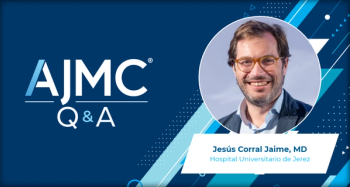
In this Q&A, Jesús Corral Jaime, MD, discusses real-world CEMI-LUNG data on cemiplimab in advanced NSCLC presented at the ESMO 2026 Congress.
Rita Shane, PharmD, of Cedars-Sinai joins Mark Makhinson, PharmD, MBA, on medication safety, care transitions, and AI in pharmacy.
California now requires pharmacy staff to obtain medication lists for high-risk patients at admission, and the push behind that law began with one pharmacy leader's experience of her father's care transition in 1998.
That is the story Rita Shane, PharmD, vice president and chief pharmacy officer at Cedars-Sinai in Los Angeles, shared on the second episode of Future-Proofing Pharmacy, a podcast from The American Journal of Managed Care® (AJMC®) hosted by Mark Makhinson, PharmD, MBA, senior director of outpatient and specialty pharmacy at Mount Sinai Health System.
Shane has spent more than 4 decades at Cedars-Sinai, a large academic medical center, rising from intern to executive leader. She said pilot programs in pediatrics, oncology, and the emergency department showed physicians and nurses what pharmacists could add, and demand for clinical roles followed.
“Great pharmacists create demand for more great pharmacists,” Shane said.
Shane described medication reconciliation as an ownership problem: each member of the care team assumes someone else is responsible, and electronic health record options to continue or discontinue all medications can discourage review. A randomized controlled trial in the emergency department found about 8 medication history errors per high-risk patient, which informed the California bill that passed in September 2018.
A later quality improvement study across 11 hospitals found an average of 6 errors per patient, with patients taking 14 to 16 medications and about 25% of errors serious or life threatening. Discharge medication review was later added to California law, which Shane said took effect in January.
Shane said artificial intelligence (AI) could assemble medication histories with patient context and recommendations for pharmacist review, freeing time from transactional work. She estimated that up to 30% of the medications on a patient's list could be reevaluated. Whether pharmacists move into patient-facing roles, she added, depends on their own motivation, though organizations can offer training and mentoring.
Find Future-Proofing Pharmacy on