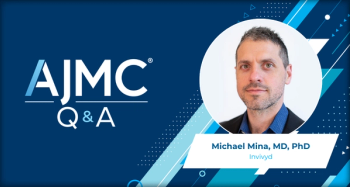
Michael Mina, MD, PhD, explains Invivyd's accelerated approval path for VYD2311 and how it could change the timing of COVID-19 protection.
The politicization of public health is eroding vaccine confidence, risking lower uptake and potential disease outbreaks, says Noel T. Brewer, PhD.
Following the CDC’s
In the second and final part of this conversation, Brewer explained that declining trust in health institutions, fueled by politicization, threatens vaccine confidence and may affect parental decisions. He also warned that without evidence-based policies and political will to restore public health-driven immunization guidance, preventable
Read part 1 of this Q&A
This transcript has been lightly edited for clarity.
AJMC: Given the recent decline in public trust in health institutions, how might these updates influence vaccine confidence and parental decision-making, and how should clinicians approach this situation?
Brewer: The loss of trust in public health institutions was not accidental. It came directly as a result of the politicization of them. We can argue about who started that process, but the politicization of public health has fundamentally damaged trust. Public health is a trustworthy endeavor; politics is not. By mixing those 2, we ran for the lowest level and arrived.
AJMC: What indicators should clinicians and public health officials monitor to identify the unintended consequences of these changes? How quickly might these emerge?
Brewer: It's going to be highly variable and depend a lot on the specific pathogen and how well the vaccines work, how high coverage currently is, and so on. Measles vaccines already have uneven uptake. There are regions of the country where we have fallen well below herd immunity, so seeing a nation in the throes of endemic spread is no surprise. That's something we've done to ourselves actively over a number of years.
Other vaccines, it's harder to say. The HPV vaccine can prevent 40,000 cancers a year in men and women. That's a wild benefit; that's huge. Because of a modest to high uptake of the vaccine, the nation likely has herd immunity against many types of HPV. It's unclear how fast that will wane if uptake drops.
AJMC: If unintended consequences do emerge, how feasible would it be to reassess and revise the recommendations?
Brewer: There has to be political will. This process right now is being driven by a political process and by political appointees, so either the political process and calculus have to change, or the people in charge of it have to be replaced so that they can turn this over to a public health process again. Insofar as it's a political process, we're going to lose; this is not going to be a good outcome.
The coming wave of infectious disease that will put more people in the hospital and kill children and adults is avoidable. We need rational health policies that are based in what works, not in the feelings that some small minority of people have.