Shields Health Solutions leaders say GLP-1 discontinuation is a support problem, not a medication problem, and pharmacist-led care can help close it.
In TRANSCEND-T2D-2, retatrutide lowered A1C 2.2 points vs 1.8 with semaglutide 2 mg and more than doubled weight loss at 80 weeks.
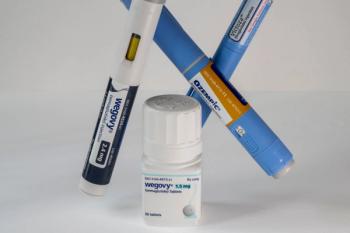
Once-weekly retatrutide produced greater reductions in glycated hemoglobin A1c (HbA1c) and more than twice the weight loss of the highest approved dose of semaglutide for type 2 diabetes (T2D), according to topline phase 3 results announced by Eli Lilly.1
"Head-to-head trials show patients and physicians how a potential new medicine compares with treatments that are available and reimbursed today,” said Kenneth Custer, PhD, executive vice president and president of Lilly Cardiometabolic Health,
TRANSCEND-T2D-2 (
At 80 weeks, both retatrutide doses lowered HbA1c by an average of 2.2 percentage points from a mean baseline of 8.3%, compared with 1.8 points with semaglutide. The primary objective was to show that retatrutide 12 mg was noninferior to semaglutide on HbA1c reduction; the 12-mg dose also demonstrated superiority (P < .001). Noninferiority of the 9-mg dose was met as a key secondary end point, while its superiority over semaglutide on HbA1c reached nominal significance (P < .001) as a prespecified secondary end point outside the trial's family-wise type 1 error control.
Retatrutide also produced greater improvements than semaglutide in non-high-density lipoprotein cholesterol, triglycerides, and systolic blood pressure, although Eli Lilly did not report the size of those differences, and the systolic blood pressure advantage with the 9-mg dose reached only nominal significance. All results reflect the efficacy estimand, which assumes participants remained on treatment for 80 weeks without starting additional glucose-lowering medication.
From a mean baseline weight of 225.8 lb (BMI, 36.8), participants lost 19.5% (44.3 lb) of body weight with retatrutide 9 mg and 20.9% (47.4 lb) with retatrutide 12 mg, compared with 9.4% (20.9 lb) with semaglutide (P < .001 for both doses).
The results fall in line with the weight reductions reported in TRIUMPH-2, in which adults with T2D and obesity taking the highest retatrutide dose lost an average of 20.8%. In
Gastrointestinal events were the most common adverse events across all arms. Diarrhea occurred in 28.3% and 32.7% of participants taking retatrutide 9 mg and 12 mg, respectively, vs 26.4% with semaglutide; nausea in 21.2% and 23.8% vs 21.3%; and vomiting in 10.2% and 15.0% vs 13.2%.1 Constipation (14.2% and 13.1% vs 19.8%) and dyspepsia (10.4% and 8.5% vs 11.6%) were less frequent with retatrutide.
Dysesthesia, an abnormal or unpleasant skin sensation, was reported in 4.8% and 6.5% of retatrutide recipients vs 2.7% with semaglutide, and urinary tract infections in 5.8% and 4.2% vs 5.8%. Most events were mild to moderate and typically resolved during treatment. Treatment discontinuation due to adverse events occurred in 4.8% and 7.9% of participants taking retatrutide 9 mg and 12 mg, respectively, vs 2.7% with semaglutide.
Detailed results will be presented at a future medical meeting and published in a peer-reviewed journal. Eli Lilly is also comparing retatrutide head-to-head with tirzepatide in TRIUMPH-5, an ongoing phase 3 trial in adults with obesity with or without T2D.
References