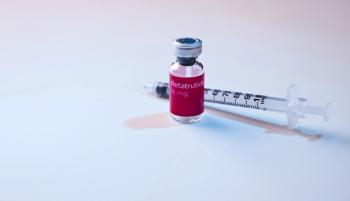
A legal fight over a single amino acid could set retatrutide's exclusivity window, its Medicare negotiation clock, and its competitive future.
A large UK cohort study found atopic dermatitis raises the risk of shingles by 28%, with the steepest risk in severe disease and younger adults.
Adults with
The elevated risk held up even after accounting for oral corticosteroids and immunosuppressants, treatments long known to raise the risk of shingles on their own, suggesting AD itself, and not just how it's treated, leaves patients more vulnerable to the virus that causes shingles.
“Considering vaccine developments and a broader rollout of vaccination and prevention schemes, further and more precise investigation of the possible association can help adequately inform vaccination guidelines and stratified risk assessments for people with AD,” the authors noted.
Data from the Clinical Practice Research Datalink (CPRD) Aurum database, which captures more than 46 million primary care records in England, were analyzed. The researchers identified more than 2.4 million observations from people with AD and matched them by age, sex, and general practice to nearly 11.6 million observations from people without the condition, tracking both groups from 1997 through March 2023 for a first diagnosis of shingles.
Over the study’s 84-million-plus person-years of follow-up, shingles struck people with AD at a rate of 4.90 per 1000 person-years compared with 3.68 among unexposed comparators. After adjusting for asthma, allergic rhinitis, chronic obstructive pulmonary disease, cardiovascular disease, diabetes, depression, smoking, alcohol use, obesity, and more, AD carried an adjusted (aHR) of 1.28 (95% CI, 1.27-1.29) for shingles. Risk climbed with disease severity: mild AD carried an aHR of 1.22, moderate AD an aHR of 1.28, and severe AD an aHR of 2.33 (95% CI, 2.22-2.45).
The study's design let investigators tease apart how much of the excess risk traced back to AD treatments vs the disease itself. Systemic corticosteroids and immunosuppressants are established shingles risk factors, and Janus kinase (JAK) inhibitors carry the same warning. The 2024 American Academy of Dermatology guidelines call for shingles vaccination before starting JAK inhibitor therapy, given the elevated infection risk associated with the drug class.2 Yet in this cohort, adjusting for oral corticosteroid exposure only modestly attenuated the AD-shingles association, from an aHR of 1.28 down to a range of 1.24 to 1.27 depending on how exposure was defined, and adjusting for systemic immunosuppressants left the estimate at 1.27.1
The authors concluded that AD confers an elevated baseline risk of shingles independent of comorbidities and conventional systemic treatment, likely reflecting the altered skin immune response and broader susceptibility to infection already documented in people with the condition. Because treatment intensity was also used as a proxy for AD severity in the analysis, the study's authors cautioned that fully separating the effects of severity from treatment exposure remains methodologically difficult and flagged it as a limitation.
One of the study's more notable findings was that the relative risk of shingles tied to AD was strongest in adults younger than 50 and specifically highest among those aged 30 to 40 years (HR, 1.51), before declining steadily in older age groups. The authors pointed to a plausible explanation: adults 70 years and older have been eligible for shingles vaccination in the UK since 2013, which could be masking the true magnitude of AD-associated risk in that population if vaccine uptake differed between exposed and unexposed groups.
That pattern is notable because current shingles vaccination guidance is built around age, with the CDC recommending the Shingrix vaccine for immunocompetent adults starting at age 50, rather than underlying skin disease.3 The current findings suggest a meaningful subset of younger adults with AD, particularly those with severe disease, may be accumulating elevated shingles risk well before they age into standard vaccination eligibility.
The study's authors argued their findings could help inform shingles vaccination guidelines and stratified risk assessments for patients with AD, especially as newer AD therapies with their own shingles signal, such as JAK inhibitors, become more widely prescribed.1
The authors also flagged several limitations that temper how directly the results should shape practice today: AD severity was approximated from treatment patterns rather than validated clinical scores, hospital-based diagnoses were not captured, and patients with AD may have been more likely to be diagnosed with shingles simply because they see their general practitioner more often, a form of consultation bias that sensitivity analyses suggested may have inflated the main estimates.
Even so, the size and consistency of the association—replicated across incident-only cohorts, unrestricted age ranges, and models adjusted for ethnicity and deprivation—led the authors to characterize the evidence as strong.
Going forward, the study's authors called for research into the biological mechanisms linking AD to shingles susceptibility, along with data on zoster recurrence,
“With emerging treatment options and broader implementation of [shingles] vaccination programs, incorporation of the evidence from this study into clinical practice and vaccination guidelines could improve the standard of care for patients with AD and help prevent [shingles],” the authors wrote.
References