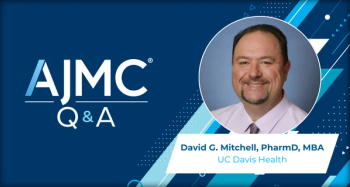
David G. Mitchell, PharmD, MBA, CSP, FCPhA, of UC Davis Health, explains how AI-assisted prior authorizations have reduced denials and staff time without replacing pharmacist judgment.
Kirk Campbell, MD, sees sparsentan as the beginning of a new treatment era for FSGS, a condition that has lacked approved therapies until now.
The
He explained that FSGS has long resisted effective treatment for 2 key reasons. One is that its underlying heterogeneity, spanning more than 60 gene mutations, immunologic causes, obesity-related disease, and medication effects, made consistent classification difficult. Second, the field lacked validated clinical trial end points.
Campbell noted that sparsentan's approval, which marked the first-ever therapy approved specifically for FSGS, addresses both gaps. The FDA's decision also establishes proteinuria reduction as a recognized therapeutic end point for approvals in this disease space.
“Even though it's a heterogeneous condition, it's the beginning, we hope, of a journey that will really bring a lot more treatment options that are safer and more efficacious than what we currently have available,” he said.
Campbell emphasized that the drug's dual mechanism sets it apart from earlier approaches; sparsentan targets 2 distinct drivers of kidney damage simultaneously. Specifically, it blocks both the angiotensin II pathway, which drives elevated pressure within the kidney's filtering units and promotes scarring, and the endothelin-1 pathway, which injures podocytes, mesangial cells, and tubulointerstitial tissue.
Regarding safety, clinicians should be aware of several monitoring requirements. Liver enzymes and bilirubin must be assessed at baseline and every 3 months during treatment, given the theoretical risk of hepatotoxicity, though no increased liver injury signal emerged in the pivotal phase 3 trial. Common adverse effects include peripheral edema, low blood pressure, elevated potassium, and anemia.
Looking ahead, Campbell highlighted the need for long-term real-world evidence, particularly in genetically and immunologically distinct patient subgroups. He also flagged access as a critical concern, noting that regulatory approval does not automatically translate into broad clinical uptake.
Still, Campbell noted that the approval is expected to energize an already-growing FSGS drug development pipeline, raising hopes for additional treatment options in the years ahead.
“We are seeing an increase in clinical trial activity, and so hopefully we'll see a lot more treatment options becoming available for patients with FSGS in the future,” he concluded.