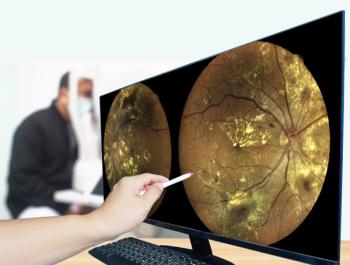
The meeting covered several topics in eye care, including how artificial intelligence (AI) can play a part in eye care.
Ultrasound AI models use radiomics and deep learning to predict DLBCL survival, enabling low-cost, noninvasive risk stratification.
A pair of newly developed models may help better predict outcomes in patients with
Corresponding author Zhenhu Lin, PhD, of the Fujian Medical University Hospital, in China, and colleagues, noted that DLBCL stands out for its heterogeneity. DLBCL is the most common aggressive non-Hodgkin lymphoma subtype, and yet individual cases can be indolent, while others are highly aggressive.
“While first-line therapy benefits over 60% of patients, refractory or relapsed cases have extremely low curability and poor prognosis, highlighting the urgency of early identification of high-risk patients for individualized treatment,” the authors said.
Current prognostic tools are limited due to their inability to incorporate tumor metabolism and function, as well as molecular characteristics of the tumor microenvironment.
However, a wave of new technologies has enabled scientists to generate novel, deeper insights into the unique features of particular DLBCL cases. The authors said computer-aided diagnosis can help in this regard by identifying complex features in imaging data. Radiomics, they added, can “extract massive subvisual image features to reveal microscopic biological information.” Furthermore, deep learning can enable effective lesion identification. Plugging all of that information into artificial intelligence (AI)-driven survival models has the potential to significantly improve risk-stratification.
The authors wanted to see if they could build DLBCL prognostic models using radiomics and deep learning. To do so, they chose to use ultrasound imaging, largely because it is noninvasive, radiation-free, low-cost, and highly repeatable.
“If the accurate prediction of DLBCL prognosis can be achieved through ultrasound imaging, it is expected to provide clinicians with a new, non-invasive tool, thereby improving the treatment planning and efficacy monitoring of lymphoma,” they said.
The new study outlines their experience creating the 2 models. They used a retrospective cohort of 149 patients with confirmed DLBCL. Half of the patients (n = 75) were randomly assigned to a training set, and the other half (n = 74) were randomly assigned to a validation cohort.
The authors evaluated their sets using 4 metrics: area under the curve (AUC), C-index (a measure of discrimination ability), decision curve analysis (DCA; to assess net clinical benefit), and calibration curves to calculate agreement between predictions and observed outcomes.
Lin and colleagues found that both the radiomics and deep-learning models were valuable predictive tools, though there were differences in how each performed.
In terms of AUC—the primary method of assessment—the authors found that the radiomics model performed better in the training group than in the test group. For instance, at 1 year, the AUC for the radiomics model in the training group was 0.819, compared with 0.686 in the test group. At 5 years, the radiomics model had an AUC value of 0.821 in the training group compared with 0.756 in the test group.
The deep learning model, however, performed better in the test group. At 1 year, the AUC for the deep learning model was 0.771 in the training group and 0.840 in the test group. At 3 years, the AUC was 0.782 for the training set and 0.832 for the test cohort. Likewise, DCA suggested that the radiomics model had a higher net benefit in the training group, while the deep learning model had a higher benefit in the test group.
“The calibration curve indicated that the radiomics model had better prediction and calibration capabilities, and might be more reliable in evaluating long-term prognosis,” they said.
A major strength of the findings is the fact that the models achieve “robust” predictive efficacy using noninvasive, objective methodologies, the authors said.
If further validated in multi-center cohorts and integrated with other variables, such as International Prognostic Index scores, these models can provide a cost-effective and easily accessible prognostic tool.
Reference
1. Yu Y, Liao S, Su H, et al. Development and validation of the ultrasound-based radiomics and deep learning prognostic models for diffuse large B-cell lymphoma. Ann Hematol. 2026;105(4):191. Published March 20, 2026. doi:10.1007/s00277-026-06917-1