

Two AAD 2026 posters highlight persistent melanoma disparities: men have worse survival, whereas minority patients are less likely to receive home or hospice end-of-life care.

Brooke is an associate editor for The American Journal of Managed Care® (AJMC®). She joined AJMC in 2023, where she produces content covering multiple disease states.
She has a BA in journalism from Seton Hall University. You can connect with Brooke on LinkedIn.
Two AAD 2026 posters highlight persistent melanoma disparities: men have worse survival, whereas minority patients are less likely to receive home or hospice end-of-life care.
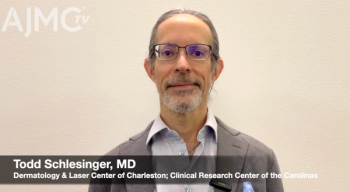
Proactive adverse effect management helps patients with skin cancer stay on treatment longer, according to Todd Schlesinger, MD.

Continuing conversations from last year, experts at the AAD Annual Meeting in Denver weighed the pros and cons of teledermatology and AI.

The FDA's March 2026 approvals marked significant regulatory milestones across multiple disease states.

This morning, experts delivered "short and sweet" updates on treatment strategies for common dermatologic conditions.

Experts at the 2026 AAD Annual Meeting urged dermatologists to engage in advocacy to protect practices and patient access amid growing challenges.

Two posters demonstrated povorcitinib's durable 54-week efficacy and a favorable safety profile in moderate to severe HS, including patients previously on anti-TNF therapy.

Experts at the 2026 AAD Annual Meeting noted that, together, PCP support, community outreach, and teledermatology help reduce care gaps.

Experts at the 2026 AAD Annual Meeting explained that teledermatology helps dermatologists manage their workload and expand patient access beyond traditional in-person care.

Ruxolitinib cream can meaningfully improve skin repigmentation and QOL for patients with vitiligo, but its full benefit depends on improved patient education, guidance, and support for consistent, long-term use.

This year's meeting in Denver, Colorado, features more than 275 sessions, including 40 new offerings, and a fireside chat with EGOT winner John Legend.
Industry payments to cardiologists are linked to higher Medicare spending, with $10,000 in payments tied to $14.10 more per beneficiary.

Subcutaneous amivantamab offers faster treatment, fewer infusion reactions, and improved convenience for patients with EGFR-mutated NSCLC, says Estelamari Rodriguez, MD, MPH.

Although they covered diverse topics across the cancer continuum, the event’s 4 panel discussions shared a common focus on advancing more equitable and coordinated care.

Insulin affordability improved for Medicare Part D beneficiaries between 2019 and 2023, with more paying $35 or less for a 30-day supply.

The standards under this rule will save providers time on paperwork, letting them focus more on patients, says CMS Administrator Mehmet Oz, MD, MBA.
The once-daily oral drug improves patients’ lives while maintaining early, durable, and central nervous system responses, says Estelamari Rodriguez, MD, MPH.

Higher social vulnerability was associated with lower dietary fiber intake and a hostile gut microbiome in patients with melanoma or sarcoma receiving immune checkpoint blockade.

Male patients and those from minoritized racial and ethnic groups face longer times to treatment, especially in urban areas.

The newly approved mosunetuzumab for relapsed/refractory follicular lymphoma improves clinic efficiency and patient experience, says Zahra Mahmoudjafari, PharmD, MBA, BCOP.

Racial gaps in curative treatment for early-stage NSCLC persist among Medicare beneficiaries, with Black patients less likely to receive surgery.
Subcutaneous mosunetuzumab simplifies the delivery of the bispecific therapy for patients with relapsed/refractory follicular lymphoma, says Zahra Mahmoudjafari, PharmD, MBA, BCOP.
Racial and geographic CRC disparities described in a recent report highlight the need for urgent research and prevention efforts nationwide.
Susan Cantrell, CEO of AMCP, discusses the impact of the CDC's recent changes to the childhood immunization schedule and the role of managed care pharmacy in addressing them.

Federal RHTP funding often misses states with the highest rural mortality and greatest projected Medicaid funding losses, researchers found.
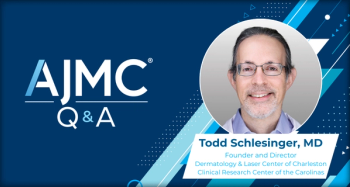
Clinicians must consider patient comorbidities and therapy safety when selecting immunotherapy for cSCC, says Todd Schlesinger, MD.

Phase 3 trials show deucravacitinib, the first TYK2 inhibitor approved for adults with active psoriatic arthritis (PsA), improves both joint and skin symptoms.

The politicization of public health is eroding vaccine confidence, risking lower uptake and potential disease outbreaks, says Noel T. Brewer, PhD.
Immunotherapies are transforming treatment and improving outcomes for patients with advanced cSCC, according to Todd Schlesinger, MD.
The rise in CRC in adults younger than 65 underscores the need for early screening and prevention efforts.