The FDA approved bepirovirsen, the first antisense oligonucleotide for chronic hepatitis B, offering a new treatment with functional cure potential.

Brooke is an associate editor for The American Journal of Managed Care® (AJMC®). She joined AJMC in 2023, where she produces content covering multiple disease states.
She has a BA in journalism from Seton Hall University. You can connect with Brooke on LinkedIn.
The FDA approved bepirovirsen, the first antisense oligonucleotide for chronic hepatitis B, offering a new treatment with functional cure potential.

Mark Fendrick, MD, discusses survey findings on deprescribing GLP-1 RAs after weight loss as the CMS GLP-1 Bridge Model nears expiration.

Cosibelimab received an NCCN Category 2A preferred designation for locally advanced CSCC, supported by durable responses and low immune toxicity.
Managed care pharmacy leaders will gather at AMCP Nexus 2026 to discuss safe AI adoption, evolving drug pricing policy, and practical solutions.

Satralizumab, a first-in-class IL-6 receptor inhibitor, was approved for adults with thyroid eye disease based on the phase 3 SatraGO program.

A higher PNR is associated with lower odds of MASLD and advanced liver fibrosis, but further studies are needed to validate findings.

SaTScan detects an acute HCV outbreak cluster in California, showing the potential of automated surveillance, though real-time testing is needed.

Proinflammatory diets were tied to higher mortality in MASLD and MetALD, whereas antioxidant-rich diets tracked with better survival.

An analysis finds distinct adverse event reporting patterns across immunosuppressive regimens, highlighting the need for tailored safety monitoring.

These phase 3 EXCALIBER-RRMM findings build on earlier MRD-negative complete response results supporting FDA approval of the iberdomide-based regimen.

At a roundtable in Cleveland, kidney experts said IgA nephropathy and FSGS often go unrecognized, calling for EHR flags and better referral channels.

Zidesamtinib offers better tolerability in ROS1-positive NSCLC, but adverse effects still need monitoring, and optimal sequencing remains unclear.

Medicare drug price negotiations lowered out-of-pocket costs for some beneficiaries, but those reaching the annual Part D cap saw no direct savings.

Medicaid expansion was associated with lower colorectal cancer mortality, with the largest reductions in Hispanic patients and stage IV disease.

Biomarker-driven care is advancing in mantle cell lymphoma, though cost and infrastructure limit access in community oncology, according to a review.

Remibrutinib (Rhapsido; Novartis) is the only treatment with approved uses in both chronic spontaneous urticaria and symptomatic dermographism.

Lean MASLD shows milder histology than overweight and obese MASLD but similar mortality and event risk, with fibrosis tied to prognosis.

Hepatitis reports after vaccination were more often serious in children, but the data lack dose counts and cannot show vaccine-specific risk.
Zidesamtinib offers a new treatment option for previously treated ROS1-positive NSCLC, with rapid, durable responses and strong brain activity.

The Autus Size-Adjustable Valve, which can be expanded as children grow, may reduce the need for repeat open-heart surgeries for congenital defects.

In part 2, Susan Sabo-Wagner, MSN, RN, OCN, NEA-BC, discusses how earlier referrals, AI, and less prior authorization can improve cancer outcomes.

A traditional Medicare out-of-pocket (OOP) cap could reduce beneficiaries’ costs but increase annual federal spending by $39 billion to $96 billion.
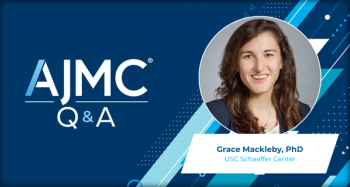
MA-to-MA switching among dually eligible beneficiaries rose sharply from 2016 to 2022, AJMC study author Grace Mackleby, PhD, found.
Susan Sabo-Wagner, MSN, RN, OCN, NEA-BC, discusses how data builds payer trust, reduces prior authorization, and expands access in community oncology.

Although PMOS Awareness Month has ended, the conversation continues, with experts saying closing diagnostic and care gaps requires ongoing efforts.

Weekend catch-up sleep was associated with lower odds of overactive bladder and milder symptoms, with the benefit concentrated in the first 1.5 hours.

A network meta-analysis found vibegron outperformed mirabegron and tolterodine on several OAB efficacy measures but had higher odds of adverse events.

A US modeling study found tirzepatide and semaglutide cost-effective for MASH, while resmetirom exceeded the $100,000/QALY threshold.
Grace Mackleby, PhD, explores why dually eligible beneficiaries more often switch MA plans than leave for traditional Medicare.

The analysis found a nonlinear association between systemic inflammation and overactive bladder, with stronger links at higher inflammation levels.

Published: January 27th 2026 | Updated: February 3rd 2026

Published: October 21st 2024 | Updated: October 24th 2024