
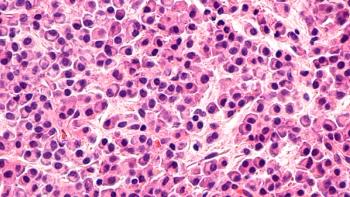
A recent study found that infection is a significant burden in patients with multiple myeloma who receive bispecific antibodies, and viral infections are the most common culprits.

Rose is an editorial director at The American Journal of Managed Care® (AJMC®).
She has a BA in journalism & media studies and Spanish from Rutgers University. You can connect with Rose on LinkedIn.
A recent study found that infection is a significant burden in patients with multiple myeloma who receive bispecific antibodies, and viral infections are the most common culprits.

The survival benefits of immune checkpoint inhibitors varied in young patients versus older patients with advanced non–small-cell lung cancer, a recent study found.

A prespecified overall survival analysis of the phase 3 ZUMA-7 trial found that axicabtagene ciloleucel (axi-cel) led to better outcomes vs the historical standard of care for relapsed or refractory large B-cell lymphoma (R/R LBCL).

A recent study found that microbiome-based biomarkers may be useful in predicting patient responses to CAR T-cell therapy for non-Hodgkin lymphoma.

Extended follow-up data from the ProtecT trial highlight the importance of weighing the risks associated with radical treatment versus active surveillance for newly diagnosed localized prostate cancer.

Different methods of DNA collection and needle sizes led to varied next-generation sequencing success rates among patients with lung cancer in a recent study.

The majority of CAR T-cell therapy recipients developed a humoral immune response to vaccination against SARS-CoV-2 in a recent study, with a more robust vaccine schedule linked to higher antibody titers.

A recent study identified disparities in cachexia incidence among patients with stage IV non–small cell lung cancer (NSCLC) across different racial, ethnic, and socioeconomic groups.

There may be discrepancies in the types of information patients want and the information they receive when multiple myeloma treatment decisions are made, a recent study found.

A session at the Association of Community Cancer Centers (ACCC) 2023 Annual Meeting and Cancer Center Business Summit highlighted ongoing issues in oncology policy and payment, from the Cures 2.0 Act to 340B drug reimbursement.

A meta-analysis and review of 9 randomized trials found high-quality evidence demonstrating the benefits of dupilumab in patients with severe atopic dermatitis.

A session at the ACCC 2023 Annual Meeting and Cancer Center Business Summit addressed the promise and potential drawbacks of multicancer early detection (MCED) testing for patients in the primary care setting.

In the first keynote session at the ACCC 2023 Annual Meeting and Cancer Center Business Summit, the history of CRISPR genome editing and its potential in cancer and other settings took center stage.

The extended follow-up results are consistent with the primary analysis of the CLEAR trial, supporting the increased efficacy of first-line lenvatinib plus pembrolizumab compared with sunitinib in patients with advanced renal cell carcinoma.
Lee Greenberger, PhD, chief scientific officer of the Leukemia and Lymphoma Society, discusses how the pandemic changed clinical trial enrollment in the leukemia/lymphoma space.

The Association of Community Cancer Centers (ACCC) 49th Annual Meeting and Cancer Center Business Summit will feature presentations and interactive workshops centered on the latest in technology, care delivery, and payment issues in oncology.

Eric Rackow, MD, cofounder and executive chairman of eFamilyCare, discusses the importance of virtual support for family caregivers.

Children with acute lymphoblastic leukemia living in US-Mexico border regions had worse 5-year survival rates compared with children living in other parts of Texas, a recent study found.

Adherence to annual lung cancer screening was only 22.3% among more than 1 million patients who underwent baseline screening between 2015 and 2019, a study published in the journal CHEST found.
Rates of active surveillance for low-risk prostate cancer have improved nationally but vary locally and remain subpar overall, according to findings from a study published in JAMA Network Open.

Lee Greenberger, PhD, chief scientific officer of the Leukemia and Lymphoma Society, discusses common questions that patients with leukemia and lymphoma ask about COVID-19 and vaccination.

Starting immunotherapy prior to surgical resection led to better outcomes vs standard, adjuvant-only immunotherapy in a phase 2 trial of patients with advanced melanoma.
Eric Rackow, MD, cofounder and executive chairman of eFamilyCare, discusses eFamilyCare's role for family caregivers and how the system can help overcome social determinants of health that may impact patient outcomes.
In this interview, Lee Greenberger, PhD, chief scientific officer of the Leukemia and Lymphoma Society, discusses key takeaways from using social media to grow a leukemia and lymphoma registry.

A newly published national report reveals a lack of financing, a shrinking workforce, gaps in care access, and nearly no federal funding for research within the US primary care space.

Individuals with multiple myeloma were 51% more likely to have a stroke and 36% more likely to have a heart attack compared with the general patient population in a large real-world assessment of arterial thrombotic events among patients with multiple myeloma in the United States.

Results from a phase 2 study suggests that the oncolytic virus talimogene laherparepvec has potential to improve therapy responses for patients undergoing neoadjuvant chemotherapy for triple-negative breast cancer (TNBC).



Relugolix was frequently used in combination with other medications for prostate cancer in patients both new to androgen-deprivation therapy and continuing androgen-deprivation therapy in a real-world study.