

Heidi Crayton, MD, and Maria Lopes, MD, discuss future research in multiple sclerosis that they find exciting and promising.
Heidi Crayton, MD, and Maria Lopes, MD, discuss future research in multiple sclerosis that they find exciting and promising.
Key opinion leaders discuss the single FDA-approved option for primary progressive multiple sclerosis and emerging therapies under investigation for this MS subtype, examine the PERSEUS trial, and address concerns they anticipate with the potential approval of BTKis for MS patients and strategies for mitigating these concerns.

The panelists provide their final thoughts, highlighting financial considerations in PNH treatment.
Barriers to care and treatment adherence for patients diagnosed with PNH is discussed.

A panel of experts discuss optimizing therapy sequencing in CLL.
A conversation on how to empower patients and the considerations for BTK inhibitor adherence.
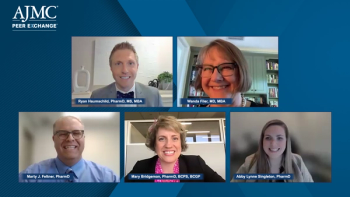
Mary Bridgeman, PharmD, BCPS, BCGP, discusses how providers and healthcare workers can address vaccine fatigue in patients eligible for the RSV vaccine.
As phase 3 data for the RSV vaccine are leading the FDA to consider expanding the age range to include patients aged 50-59, the panel discusses the potential clinical and economic benefits.
Medical experts discuss the failure of evobrutinib to meet its primary endpoint in phase 3 trials, review the primary outcomes of the phase 2B study of tolebrutinib in relapsing multiple sclerosis, examine payers' perspectives on the currently available data for tolebrutinib, and briefly describe the design of the HERCULES trial.
Heidi Crayton, MD, discusses the rationale for investigating Bruton tyrosine kinase inhibitors (BTKis) as a treatment for patients with multiple sclerosis and the current stage of development for evobrutinib, tolebrutinib, and other BTKis.
Following the recent approval of RSV vaccines, the panel discusses the financial and clinical benefits, highlighting the fiscal impact seen in hospitals and ICUs.
Experts on RSV vaccination discuss shared decision-making practices and the importance of getting at-risk patients vaccinated.
Specialists discuss factors influencing the choices of second-generation BTK monotherapy.
Experts evaluate the value of BTK inhibitors in CLL treatment.
Heidi Crayton, MD, discusses the typical coverage criteria requirements she encounters from payers for currently-approved therapies for multiple sclerosis.
Key opinion leaders discuss the challenges associated with step therapy requirements after initially selecting a drug class, the patient factors considered when deciding to switch a patient with non-relapsing secondary progressive multiple sclerosis to a different therapy, and whether payers commonly employ step therapy between different drug classes.
The expert panel discusses ways to increase awareness of the RSV vaccine for patients who would benefit from it.
Focusing on the diagnosis of RSV, Mary Bridgeman, PharmD, BCPS, BCGP, provides clinical insights on signs and symptoms and testing practices.
Experts in multiple sclerosis discuss the potential introduction of a subcutaneous form of ocrelizumab to the market in late 2024 and how they plan to incorporate it into their treatment algorithms.
Heidi Crayton, MD, and Maria Lopes, MD, discuss the most recent 2018 guidelines for multiple sclerosis treatment, emphasizing the need for updated guidelines, particularly in the payer space, to ensure coverage criteria for MS medications, and they also consider the factors that influence their decision-making process when selecting therapies for patients with relapsing multiple sclerosis.
A panel of experts outline who’s at risk for RSV and how it’s spread, highlighting how transmission can be minimized.
Focusing on the economic burden of RSV, the panel discusses financial considerations for multiple patient populations, highlighting hospitalization costs and the main drivers of healthcare resource utilization.
A panel of experts provide an overview of BTK inhibitors for the treatment of patients with chronic lymphocytic leukemia.
Experts on the treatment of chronic lymphocytic leukemia discuss recent trends and innovations in the therapeutic landscape.
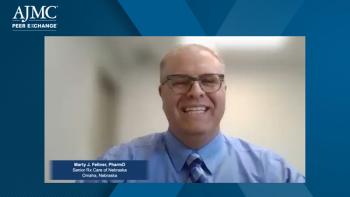
Marty J. Feltner, PharmD, provides insights on complications associated with RSV infections and how complications vary for different patient populations.
A panel of experts on respiratory syncytial virus (RSV) introduce themselves and give an overview of patients who are most affected by RSV.
Experts in multiple sclerosis discuss overall patient satisfaction with current disease-modifying therapies for multiple sclerosis, highlighting the need for more therapies that stave off decline and disease progression.
Key opinion leaders discuss the most significant unmet needs in the current treatment landscape for multiple sclerosis.
Heidi Crayton, MD, and Maria Lopes, MD, discuss the limitations of using relapse rates as a critical endpoint in trials for patients with non-relapsing secondary progressive multiple sclerosis experiencing disease progression without relapse, explore methods to assess therapeutic benefit in this population, examine the relationship between cost of care and disease severity, and highlight the impact of decreased mobility and cognition on MS patients along with strategies for improvement.
Heidi Crayton, MD, and Maria Lopes, MD, discuss the impact of multiple sclerosis on patients, families, and caregivers, differentiate relapsing forms (relapsing-remitting and primary progressive) from non-relapsing forms (non-relapsing secondary progressive) in clinical practice, and highlight the key pathophysiological features of relapsing multiple sclerosis and the impact of progression independent of relapse activity (PIRA) after an initial demyelinating event.